Vogue dedicates article to Armenian female chefs changing national cuisine
 20:18 16 August, 2024
American Vogue magazine has dedicated an article to Armenian female chefs who are rethinking national cuisine, adding a modern twist.
“Armenia is known for its magnificent hospitality,” writes Vogue. “Step into any bakery and they’ll happily slip you three extra loaves of bread as a gift. And if you’re hiking, don’t be surprised if you’re invited to khorovats, an Armenian barbecue, with just a few hand gestures as you pass one of the many picnic areas. Expect a few shots of homemade vodka to toast family, friendship, and a happy future. No language skills required, because food is a universal language.”
“Armenian cuisine reflects the country’s rich culture and natural beauty. Signature dishes include freshly baked lavash the size of a small tablecloth, juicy jingyalov hats (flatbreads stuffed with up to 40 types of herbs), and tender gata. In the spring, nature comes alive and people flock to the mountains to forage for wild herbs. With over 300 sunny days a year and a vast expanse of land covered by Lake Sevan, Armenia is home to some of the most delicious fruits and vegetables in the world.
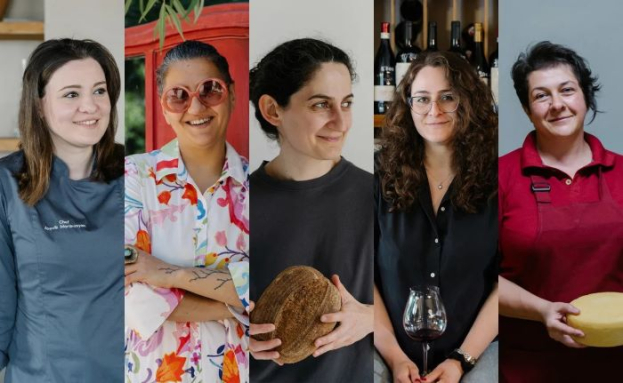
While women have traditionally been the cooks in Armenian culture, chefs like Arevik Martirosyan of Tsaghkunk Restaurant & Glkhatun are now gaining international recognition for their skill and innovation. Martirosyan focuses on using local ingredients and ancient recipes but presents them in modern forms, emphasizing the connection between culture, nature, and taste.
Another important innovator is Varda Avetisyan, the chef and owner of the restaurants Kchuch and Tava, who is known for her attention to seasonal and local ingredients. In her restaurants, Varda revives forgotten recipes and traditions, focusing on unique Armenian dishes such as khashlama and soups cooked in ceramic pots (kchuch), which is where one of her restaurants takes its name.
Ani Harutyunyan, the founder of Arm Food Lab and co-owner of Ootelie Bakery, also plays an important role in the development of modern Armenian gastronomy. Her projects are aimed at researching and adapting traditional Armenian techniques and ingredients into new, creative formats. Arm Food Lab has become a platform for experimentation and culinary research, uniting both local chefs and foreign guests. “I want to understand what Armenians ate, how they ate, what recipes and what ingredients they used,” she says.
Armenia is also considered the cradle of winemaking: the world's first winery was found in the Areni-1 cave in the south of the country.
In the context of the growing interest in Armenian wines, Mariam Saghatelyan, co-owner of the wine bar In Vino, actively promotes the best local wines, including natural ones, emphasizing the unique taste and potential of Armenian winemaking. "When we opened, we had only about 10 types of drinkable Armenian wine. Now there are more than 600," says Mariam. "Nobody drank wine, only vodka."
In addition to restaurants and wineries, cheesemaking is becoming an important element of the modern Armenian gastronomic landscape. Marina Shakaryan-Mikaelyan, head cheesemaker at the Mikaelyan Family Farm, brings a new perspective to this area. Although Armenia is traditionally known for only two types of cheese—Lori and Chanakh—Marina decided to take a different path. Having previously worked as a biochemist, she now applies her passion for science to cheese production. With knowledge from books and many experiments, she has created a collection of 10 different types of cheese. But, as she herself admits, the path has not been easy: “The number of experiments that went wrong exceeds 50,” says Marina. However, she is not afraid of mistakes: “Failures happen more often than good results, but we know that we must never stop.”
Photo: Jessica Jungbauer