Chulpan Khamatova: I am amazed that Armenians managed to preserve human light and warmth in this crazy world
 20:10 26 September, 2024
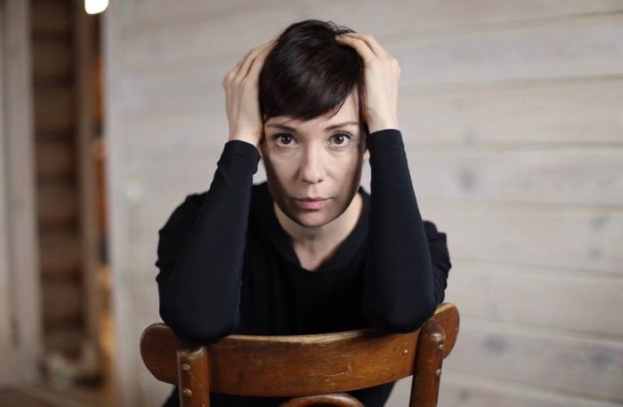
A petite woman with unruly hair and large brown and amazingly sad eyes appeared on the screen of my laptop. I was waiting for the “meeting” with famous actress Chulpan Khamatova on Zoom with impatience and slight excitement, which immediately receded as soon as we began to talk. This seemingly fragile—more on that later—woman is devoid of any star pathos. It is easy and simple to talk to her. And her face lights up with some unusual, warm light when she talks about the greatest love in her life: the theater.
Ahead of her upcoming performance “Dreams of a Piano” in Yerevan, I talked to Chulpan about everything a little—Armenia, the intricacies of acting, theater, men, style, and this “crazy, crazy world.”
"Dreams of a Piano"
I love Armenia very much, I have many close friends there. I have always come there with great joy, and now even more so. The last time I was in Armenia, I was amazed that the hall was overcrowded with spectators, and everyone was listening to poems in Russian. Hospitality and big hearts, and the nobility of your nation... The tragedy of the whole situation in which Armenia finds itself, but at the same time, somehow, people manage to remain human: open, kind, generous. Against the background of the rest of the world, which has gone crazy, I am amazed how Armenia manages to go through all these sorrows, but at the same time people retain human light and warmth.
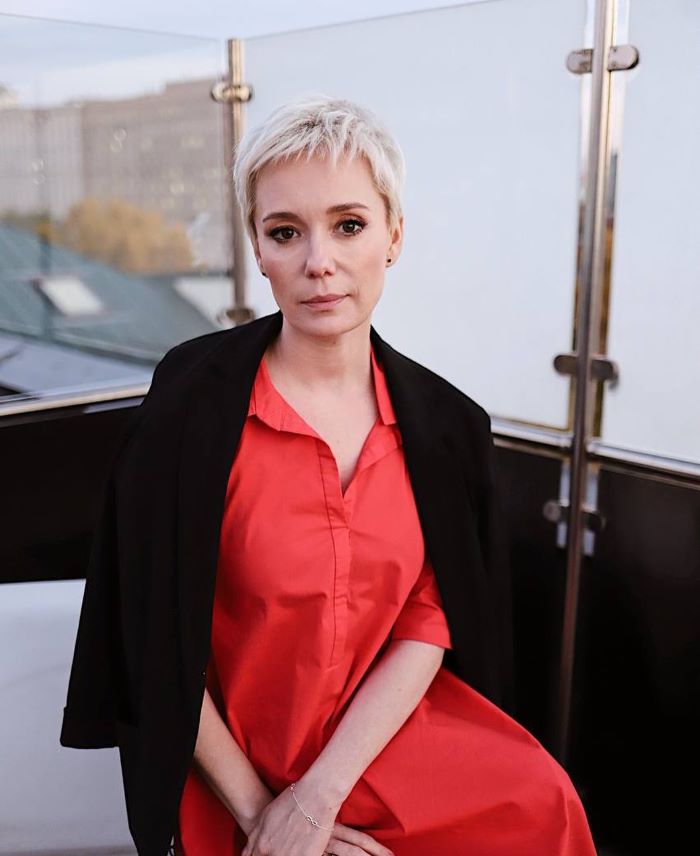
... "Dreams of a Piano" is not exactly a play, but a literary and musical program. There is a lot of music there, performed by Latvian musician Andreas Osokins. People come to this show who want to find answers, and there are many answers in these poems... To calm the soul in connection with where the world is heading... Humanity has always experienced some crazy abysses of grief and injustice, and yet someone managed to come out of it with dignity. Maybe this thought will calm someone.
Theatre is when a miracle is born
...I am closer to the theatre because there is more freedom and personal responsibility. In cinema, how you act will depend on the final touch of the director: how he edits you, what frame he chooses, how he composes the story. And if you do not work with a genius or with a person who loves the acting profession and trusts the artist, then in cinema it is very difficult to express yourself as an artist, but in the theatre you can be an artist yourself, not only with a brush, not only with paint, but also be an artist yourself... In the theatre you always feel the energy of the audience. The laws of physics have not been canceled. This energy is born, you feel it, it fills you, and you fill the hall, and the people in the hall fill each other. And when the performance goes well, you feel it because at that moment new energy is literally physically born. In the theater, you can change everything, correct, improve, try something new, but in cinema you can’t. Theater is when a miracle is born here: close, nearby, without anything, without any additions and super-technologies and everything else. That’s why I love theater.
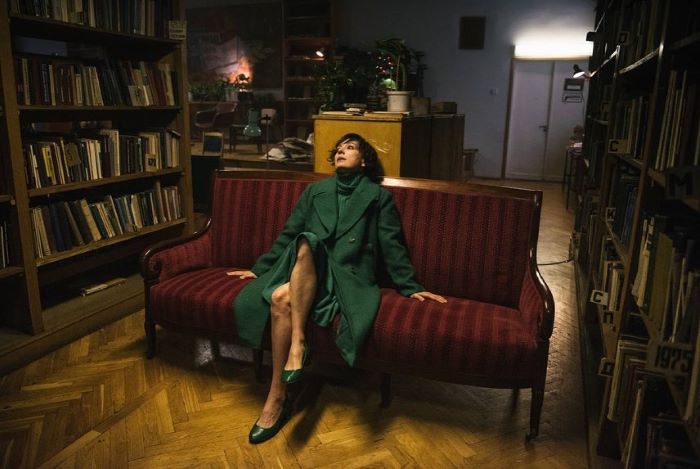
When I asked her if she felt the magic that opened up to her in the theater when she first got there as a little girl, during her first performance, Chulpan answered with a slight smile that she “just felt good.”
… I probably didn’t feel it [magic]. I just felt good, from the moment they sat me down to do makeup. It was a children's performance in a children's theater, I played in the corps de ballet, in the crowd. We were dolls, mice, some caramels, snowflakes. It was joy just from the fact that you went on stage. There was not a single word; there were only dances, some dances. But I had a feeling of happiness to such an extent that I apparently jumped out of the line, then older artists made me a rather harsh remark that I was not alone on stage and I should not be so happy and fill the entire space. But it was a feeling of joy, maybe there was no magic, but the feeling of joy was absolute…. Now, of course, this is not always the case. This is such a delicate profession, and gifts happen too rarely. So much must converge into one point of action: this is the rhythm of the performance, and the partner, and you yourself, the mood of the audience. It happens, but not often.
Emotional burnout
Chulpan gives her all on stage to the last drop of blood and cell of her soul, not sparing herself. Her latest performances "Post Scriptum" directed by Alvis Hermanis and "Notes of a Madman" by Dmitry Krylov require colossal emotional commitment. When asked how she copes with this in order to avoid emotional burnout, Chulpan says that she has no recipe.
…. Now a large block of the play "Notes of a Madman" has ended in Riga. And to be honest, it was already difficult to play the last performance. Because the apparatus still needs to recover... Probably, take more breaks, rest, go out into nature, communicate with children, listen to music with friends. It's like a vessel from which you pour and pour, give, but it still needs to have time to fill up with this rainwater back...
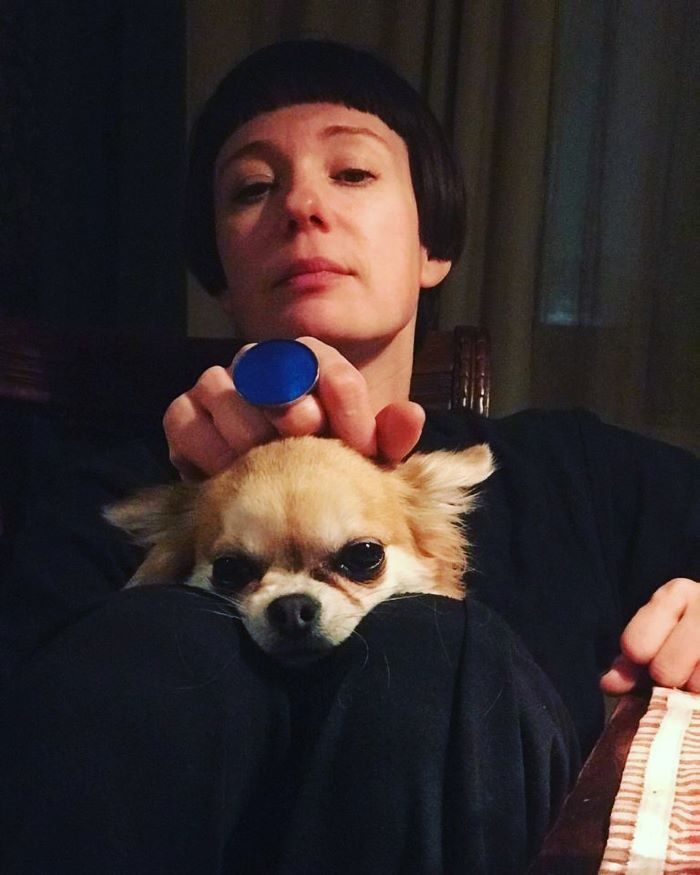
They say that Chulpan Khamatova does not know how to rest, I ask. Chulpan confidently says that this is not true.
... I like to relax, and I think that I know how to relax, but this is not always possible. Today, the situation has developed in such a way that my whole life has changed, the fees that I received for work have changed, but you still have to live, feed your family, pay for the education of your children [editor’s note: Chulpan has three daughters], live somewhere, so you have to work a lot. And it is fortunate that I have the opportunity to do all this, continuing to be an actress.
Let's return to the discussion of the play "Post Scriptum," speaking about which, Chulpan said earlier that it became an expression of her personal pain.
There is such a structure in this play that a certain woman, a teacher, tries to penetrate Dostoevsky's novel "Demons." And a specific chapter in Tikhon, where Stavrogin talks about the rape of a little girl. Stavrogin is trying to figure out how it happened, why this black energy inside a person defeated him at that moment, what to do with it, how to repent, how to ask for forgiveness. And then a long conversation between Stavrogin and Father Tikhon, where they try to figure out what repentance is.
Is this letter that Stavrogin wrote and honestly told about everything repentance or not. And to me as a person who suddenly found myself... I am almost 50 years old, and I still hope that the world is arranged better, that good will triumph over evil... And at 50 years old to find myself at that point (smiles sadly), that the world lives by some other law, and everything is not as fair as it was built in my head... This performance helps to understand the structure of the universe, in which there will always be good, there will always be evil, and they will always share a place under the sun in our lives, in our souls and fight for you, specifically. I play Stavrogin, and Matryosha, and Father Tikhon... These are like parts of some of my internal alter egos that are constantly raging with each other. And it depends on each person what force—light or darkness—they will put on a pedestal at a given moment in their life.
Getting into the role

I have a film called "Moon Park." We filmed it for almost nine months in Tajikistan. And during these nine months, I developed an accent. I returned to Moscow, speaking with this accent a little. Everyone told me: "Are you crazy?..." I played a Tajik girl, and there I spoke with some kind of soft accent, and then it all stuck. Then I couldn't get rid of it. In fact, I really like roles that open your horizons. When you can surround yourself with books, read about this or that historical time, about the situation in which people lived. I really love them, they help you not to stand still and you learn something new. I didn't go to a psychologist because of the roles. I went [to a psychologist] because of fatigue, personal things. I always leave a gap between the character and myself. In some performances more, in some—less. In this concert, which we will bring to Yerevan, this gap is practically non-existent because I really love the poems that I will read. Honestly, I can't even live without some of them because for me it is such a painkiller, my “oxygen mask” which helps me in difficult moments.
People will always need a fairy tale
Many actresses face pressure because of their appearance or age, and Chulpan is no exception.

... There was pressure, of course. That's how the film world works. You must always look great... On the one hand, that's right, of course, because that's your instrument. But on the other hand, we play for people and about people. We can't pretend that all women on this planet look like movie stars. People are different, and we also need to talk about these different people. That's why I'm certainly against this scraped-off image of a superstar, but I can't do anything about it. That's how the film industry works... Yes, people want to watch about themselves, to get to know themselves, but very often they need a fairy tale, about some non-existent life, a beautiful woman, or a handsome man for whom everything is wonderful and magical. The tale of Cinderella... That's why it will always be, no matter how much women and older actresses resist, the priority of the fairy tale will still be there, since people want to break away from everyday life.
A fragile, strong woman
I consider myself fragile, cowardly... Maybe this is the reason why I can't keep silent. My cowardice and fragility, it is precisely about the fact that if I keep silent and violate my nature, it will destroy me as a person. Maybe this happens precisely from a sense of self-preservation: to give myself the opportunity to breathe freely, so as not to put my head in a noose later, or... to drink myself to death, to break down. I understand that everyday difficulties are much easier to overcome than the difficulties of one's own moral choice and disagreement with one's own conscience. Personally, I... I am afraid of this state when you are ashamed to look at yourself in the mirror.
Men are no longer the "stronger sex"
This is a given. My personal life proves that this is a given... You can easily survive without a man by your side, raise your children, and become a professional. I am not talking about love now. I am talking about traditional roles: a man is a protector, a man is a breadwinner, a man is a shoulder. In our family, there is no man-protector, no man-protector, no man-shoulder. We exist perfectly well without lies. I already have two grown-up daughters, they are already my protectors, and to some extent already breadwinners, and my shoulders. Our family is complete proof that the traditional model is broken...
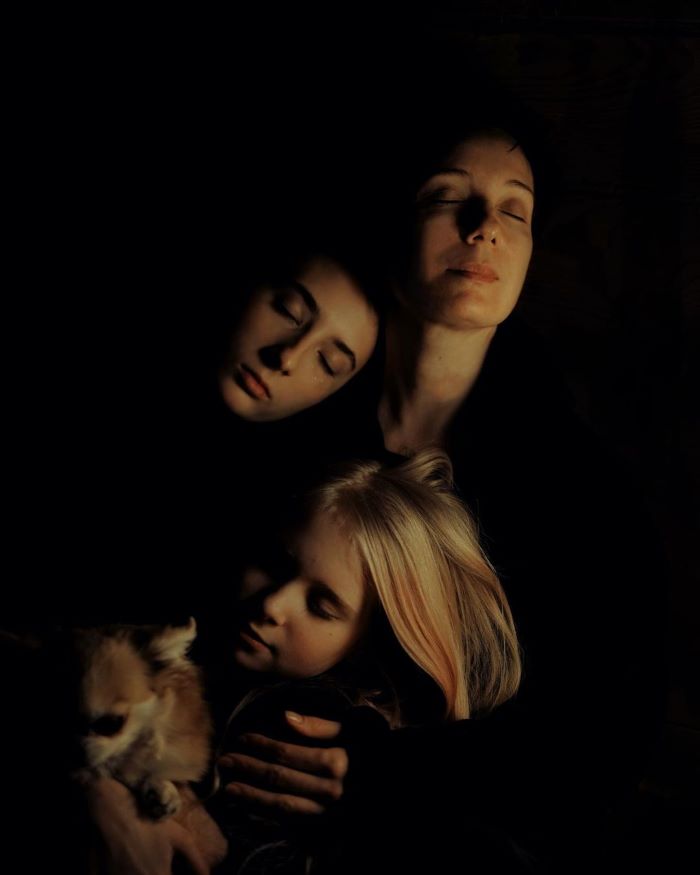
When I asked her if this makes her sad, Chulpan simply answered—no.
...Keeping a man by your side, lying to yourself, to your children, seems terrible to me. Men just haven't adjusted yet, they think that a woman will do everything possible to keep him, but this is far from true. After some time, everything will probably change to such an extent that men will do everything possible to keep a woman...
Chulpan Khamatova's ideal man
First of all, a man who respects himself. If he respects himself, then he will respect others and the woman next to him. A man who has inner dignity cannot help but understand that family life is a lot of work and a lot of dedication from all participants in this game.
Blonde or brunette after all
I have had no inner feeling for a long time because it is always connected with the role. I have erased it... According to my inner feelings, I am 12-year-old Chulpan from the photograph that stands on my bedside table, in the arms of her parents, with two pigtails. That's how I see myself... I see myself as a gray-haired grandmother, at some point. And who I am, a blonde or a brunette, I don't really pay attention to this. I change quite quickly. Such a number of changes, colors, haircuts, and hair lengths that the profession forces, apparently blurred the idea... Today I am a brunette, tomorrow I will become a blonde... Again, half will say how terrible it is, and the other half will say how it suits me. This is an inevitable story. Probably, this is due to the fact that I do not like to play myself. When I play a character, I play someone, and that someone looks different. That is why I have such a passion for changing my hair color, haircuts, wigs, and everything else that allows me to change my image.
Not all girls like diamonds
I have no style. My style is comfortable clothes. There are some rings that my friends gave me, which I wear as a memory of them. But I have no style. It somehow passed me by, and now it is already funny to look for it, to be honest. Before, it was some very strange clothes, almost clown-like. I really love strange, radical designers. But now it is not part of my life. Maybe it will come back... I don't know.
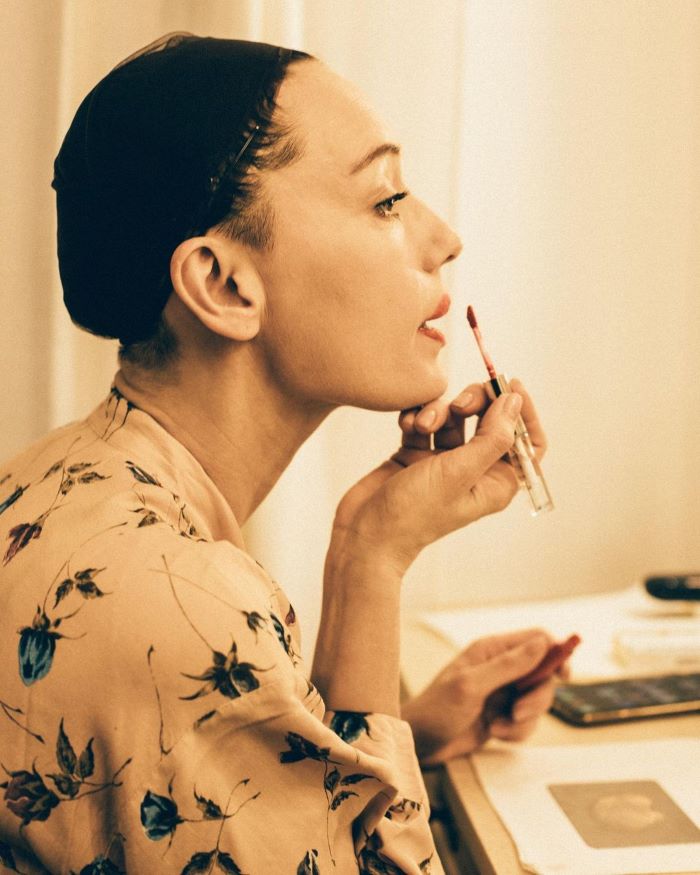
The main secret of beauty is sleep and walks in nature... For 2.5 years I have not yet been able to find a cosmetologist I trust because it is very dangerous; they will inject you with something, you will not be able to express emotions. For example, actors need to be injected with Botox very carefully, and you need to know how to do it so that the facial muscles are not affected, so that you can express with your face what you want. And when I see actresses who look great but cannot act because everything is so atrophied, I understand that no, I would rather have wrinkles, but I will have a lively face and will express what I want.
Quick questions
The biggest fear
- Safety, health, and life of children and parents.
“Guilty pleasure”
- To go traveling around the world for five years.
A role that you haven’t played but want to play
- I thought of something recently, but I can’t remember it now. There’s no such clear role, to be honest.
What movie does your life resemble?
- “The Road” by Fellini.
A thing from childhood that you still keep
This happened by accident. This is a little dress that I wore when I was about 2 or 3 years old. It’s really tiny. My parents found the dress when my grandmother died. They were sorting through things and found the dress. And I somehow remembered it, and I remembered the feeling, although in theory I shouldn’t have, well, it’s too tiny… It’s so faded, torn, but for some reason I keep it.
Interviewed by Lusine Vahramyan