How Fashion’s Richest Man Makes Billions: Bernard Arnault’s 3 Rules That Will Change the Way You See Success
 23:23 28 August, 2025
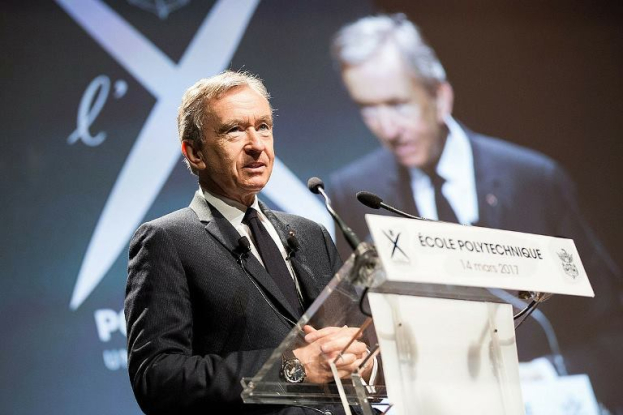
Bernard Arnault, the head of luxury empire LVMH (home to Louis Vuitton, Moët & Chandon, Hennessy, and dozens more), rarely dresses to impress. His uniform is understated: a dark navy suit, crisp white shirt, and a discreet tie. No gold watches, no flashy logos, no spectacle. Unlike Donald Trump’s strategy of branding himself as the product, Arnault chooses a style where the focus isn’t on him — but on what he creates.
And yet, he is the richest man in fashion, having built an empire of 70 brands, starting with his acquisition of Christian Dior — the perfume once worn by his mother, which, as he admits, first fascinated him with the magic of luxury.
Rather than chasing publicity, Arnault bets on timeless value and the philosophy of “quiet luxury” — subtle, restrained, but meticulously refined style built on durability, quality, and invisible yet undeniable power.
Here are Bernard Arnault’s three golden lessons in quiet luxury — and how they translate into real wealth.
1. Create desire — profit will follow
“The main goal is to maintain and strengthen the desirability of what you do. Don’t think about money. Profit is the consequence of desire you create around a brand,” Arnault says.
He doesn’t chase quick wins. Instead, he thinks long-term, building brands that inspire awe decades into the future. Not “fast fashion,” but meaningful quality — and that allows LVMH to set high prices based on perceived value, not cost.
During the pandemic, when other labels faltered due to Asian supply chain disruptions, LVMH grew sales by 13% by continuing to produce in Europe. Strategy and quality paid off.
2. Longevity is the real value
“A good product can last forever,” Arnault insists.
While fast fashion thrives on short-term thrills — buy, wear, discard — Arnault’s philosophy is the opposite: durability, craftsmanship, and permanence. His products are built not for a season, but for generations. And that is the foundation of true value.
3. People are not a resource — they’re family
“We keep our designers. With us, it’s like family,” Arnault says.
In fashion, turnover is the norm. Designers come and go. But at LVMH, the culture is different. Everyone who joins becomes part of a family — which is why talents like Nicolas Ghesquière (Louis Vuitton), Maria Grazia Chiuri (Dior), and Jonathan Anderson (LOEWE) remain for years.
“It’s a spirit we try to instill not only in our real family but in the corporate one too,” he emphasizes.
These long-term relationships built on trust and respect create not only stability, but extraordinary results.