Italy’s off-the-grid paradise: Palmarola, the island where silence rules
 19:35 20 January, 2026
Palmarola is an island that rarely appears on typical tourist itineraries. There is no town, no roads, no electricity, no mobile signal—and not even a ferry dock. Most days, the only way to reach the island is by a small boat from nearby Ponza, located about five miles across the Tyrrhenian Sea, CNN Travel reports.
The island lies west of Rome—close enough for a day trip, yet far enough to feel worlds away from the Italian capital’s constant noise, traffic and crowds. While Rome attracts millions of visitors with its forums, fountains and piazzas, Palmarola remains largely unknown: many travelers have never heard of it, and even many Romans have never visited.
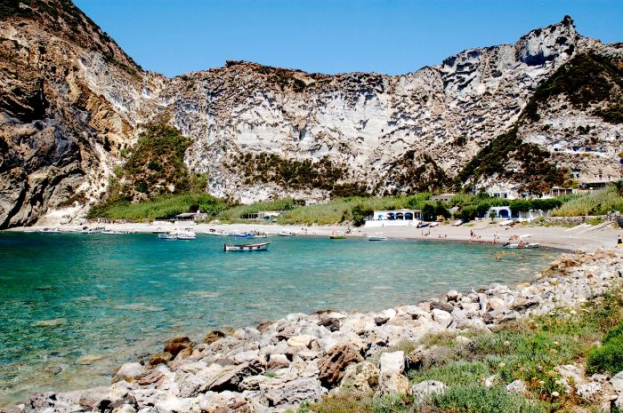
What draws those who do make the trip is not convenience, but the lack of it. Palmarola rises sharply from the sea with volcanic cliffs, sea caves and narrow bays. There is only one beach, a network of trails leading inland, and almost no sign of modern life.
To reach the island from Rome, visitors must take a train to the port of Anzio, then a ferry to Ponza, and finally arrange for a fisherman or private boat owner to transport them to and from Palmarola. The island has no permanent residents, so its pace is dictated not by tourism, but by weather, geology and the seasons.
There is just one restaurant on the island—O’Francese—which also offers a handful of simple rooms carved into old fishermen’s caves in the cliffs. Rooms are booked months in advance, accommodation is only available on a full-board basis, and prices start at around €150 per night.
Maria Andreini, a 44-year-old IT specialist from Treviso, visits Palmarola every summer with her husband Mario and their 15-year-old son Patricio.
“There is so much to do and yet so little at the same time,” she says. “During the day we snorkel and relax on the restaurant beach, which is covered in pink coral pebbles. At night we lie on the sand and look at the stars, walking around with flashlights. At sunrise, the owners wake us up and lead us on a hike to the island’s highest point to watch the sun come up. It’s incredible.”
Trails lead from the beach inland to the ruins of a medieval monastery and remnants of a prehistoric settlement.
“For dinner, we eat fresh fish straight from the net. The whole holiday feels like being in a primitive, almost lost world—like the Flintstones on vacation,” Andreini adds, advising visitors to bring not only swimwear but sturdy hiking shoes.
She has traveled the world, including the Maldives, but says Palmarola is unique. The scenery is “breathtaking,” she notes, and the most surprising part is that it is located right in Italy, “in our own backyard.”
Outside the main beach, the coastline is best explored by inflatable boat. The cliffs form sea stacks, tunnels and caves, and the surrounding waters attract snorkelers, kayakers and divers. On land, the most common residents are wild goats hiding among low palms—animals that gave the island its name.
Local historian Silverio Capone describes Palmarola as a journey back to prehistoric times. The island was once a source of precious black obsidian, used for weapons and tools, which can still be seen in dark streaks on the cliffs.
“Very little has changed in the landscape since then,” Capone says. He lives on Ponza, the nearest island and departure point for Palmarola, and often visits the island, sometimes leaving his son there for weekend camping trips.
“Palmarola has always been an uninhabited island—that’s its charm,” he adds. “The ancient Romans used it as a strategic observation point for their fleet, but they never settled there.”
The island has been privately owned since the 18th century, when families from Naples who relocated to Ponza divided Palmarola among themselves. Today it remains private and is split into plots owned by Ponza families.
Some sea caves in the cliffs have been converted into simple dwellings, painted white and blue. Fishermen used them as shelters during storms, and many still keep them stocked in case bad weather prevents a return to Ponza.
Atop one of the cliffs stands a small white chapel dedicated to Saint Silverius, a 6th-century pope who was exiled to Palmarola and is believed to have died there.
Every June morning, fishermen travel from Ponza to Palmarola to celebrate the feast of Saint Silverius. They carry flowers to the chapel and transport a wooden statue of the saint by boat. Participants climb steep rock steps to the altar and pray.
“It’s a sacred ritual. We pray to him every day,” Capone says. “Many men from Ponza, including myself, are named after him. We believe his spirit still lives in Palmarola’s waters.”
Local legends say sailors caught in storms prayed to the saint and were saved. “He appeared to them from the water and guided them to Palmarola, where they survived in the caves for weeks,” Capone recalls.