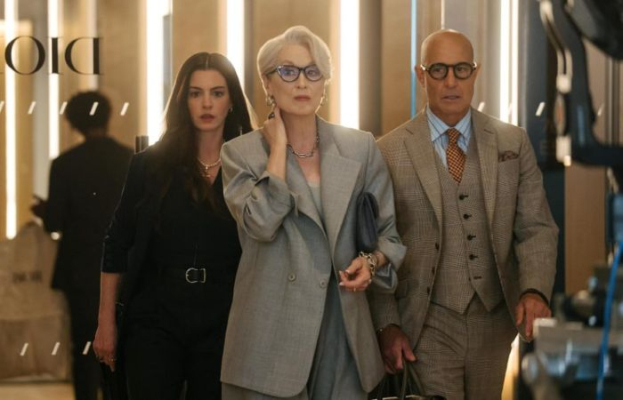
And of course, the first thing that stands out is the cast. The return of Meryl Streep, Anne Hathaway, and Emily Blunt works almost flawlessly. Their characters are instantly recognizable, and at some point you catch yourself with a strange feeling: as if time passed somewhere else, while they remained in place — only sharper, more precise, and just a little older. Just a little. That effect of nostalgia works here like a quiet sting of memory.
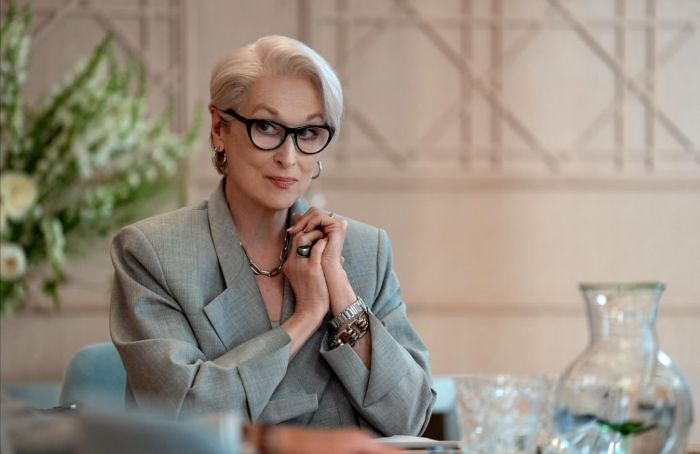
But if the original story was intimate and almost lyrical, the new film looks broader. It no longer simply tells a story — it dissects it. What we see is not the journey of a single heroine, but a system in which all the characters find themselves. And each of them is entangled in it in their own way.
The humor is still there — sharp, at times biting, but never vulgar. A rare balance today, where a joke does not need to be simplified in order to land.
There is less glamour now — and you feel it immediately. The camera looks more often behind the scenes than at the storefronts. Fashion here is no longer about taste, but about status, belonging, and the right to be “inside.” And the film states it quite directly: today people are not buying objects with stories, but logos with membership in the “luxury community.”
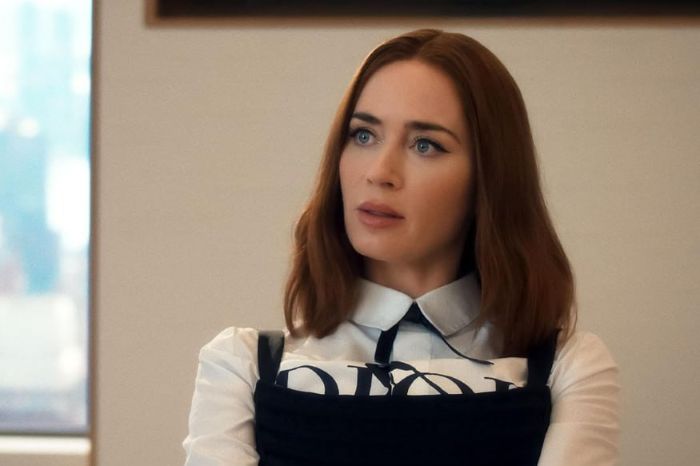
The plot is straightforward: there is a problem, there are solutions, there are consequences. But behind this simplicity lies an uncomfortable truth — people hardly change. They shift roles, adapt, and rationalize their actions. Real change only happens when there is nowhere left to retreat.
The relationships between the characters are especially interesting. The dynamic between Andy and Miranda still rests on the tension between admiration and resistance, but now it feels like a dialogue between equals — even if unspoken. Against this backdrop, Emily’s storyline stands out unexpectedly strongly. She is no longer just the strict assistant from the past — she has her own game here. A double one, in fact. She is both part of the system and someone trying to outplay it. Through her, it becomes especially clear how thin the line is between adaptation and inner fracture.
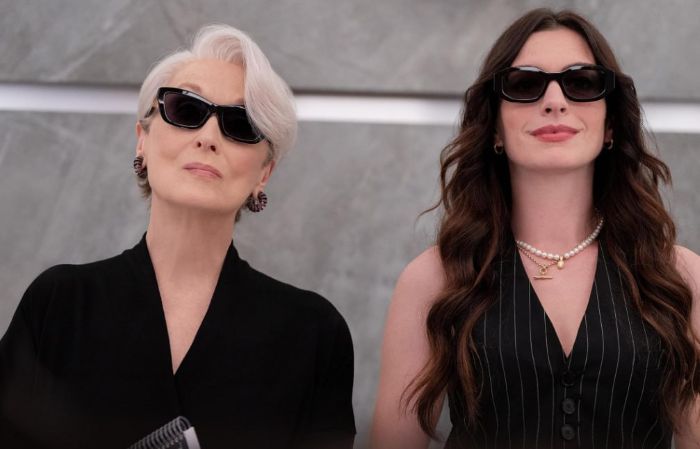
The film preserves one of the key questions from the first installment: who is the “devil” here? Once, audiences debated whether it was Miranda or someone else entirely, even Andy’s ex-boyfriend. Now the question remains open again. There is no clear antagonist. But there are choices, mistakes, and consequences. And there is a difference between those who can admit their mistakes and those who keep playing until the end.
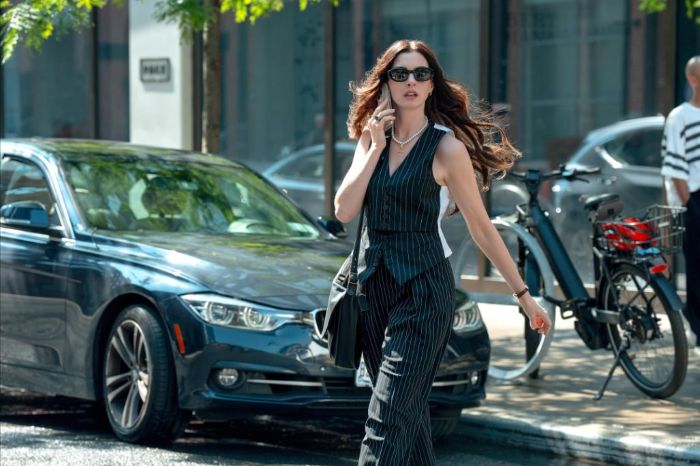
And of course, the clash of generations is palpable. The old world of glossy magazines, built on taste and authority, collides with a new reality where trends, algorithms, and instant approval dominate. The journalistic environment is shown without romance or glamour — even when it is a fashion magazine. The industry no longer shapes meaning; more and more often, it reacts to it.
If the first film made you dream about the world of fashion, this one makes you ask: what really lies behind that world — and do you even want to be part of it?
Images sourced from IMDb.
 20:19 30 April, 2026