Eurovision 2026: a dull contest of cheap satanism, second-rate vocals and plagiarism
 13:15 16 May, 2026
It is no longer even funny how much the world’s song contest, which this year marks its 70th anniversary, has turned into a parade of recycled ideas and weak vocals. Eurovision 2026 can truly be described as one of the weakest, most exhausting and artificial editions in recent years. An endless carnival of anxiety, eccentricity and identical “deep” numbers, where artists compete not with songs, but with the level of psychological discomfort they can provoke in the viewer...
And what is most surprising is that, compared to previous years, one could almost overlook the endless politicisation of the contest. Yes, there have been scandals. Yes, once again protests, boycotts and tension around Israel. But the problem of this season is not that at all. The problem is that Eurovision 2026 turned out to be monstrously boring.
The atmosphere of the contest has completely degenerated into an endless parade of freaks. Every third entry is either “dark energy”, pseudo-metal, or yet another exorcism featuring claws, smoke and a tortured stare into the camera. It is as if countries noticed that TikTok once again likes rock and anxious aesthetics and began mass-producing clones of one another.
And the most alarming thing is the vocals.
Eurovision was once, after all, still a singing competition. Even in its madness, there were strong voices, classical training, powerful live performances. And now? Every third act can barely carry its own song. People are out of breath, drifting off key, hiding behind backing vocals, or simply shouting instead of singing.
A logical question arises: where are the vocalists? Where are the artists who can actually sing? Where is even the attempt to make music, rather than three-minute TikTok content?
Croatia: three minutes of darkness for a song nobody will remember
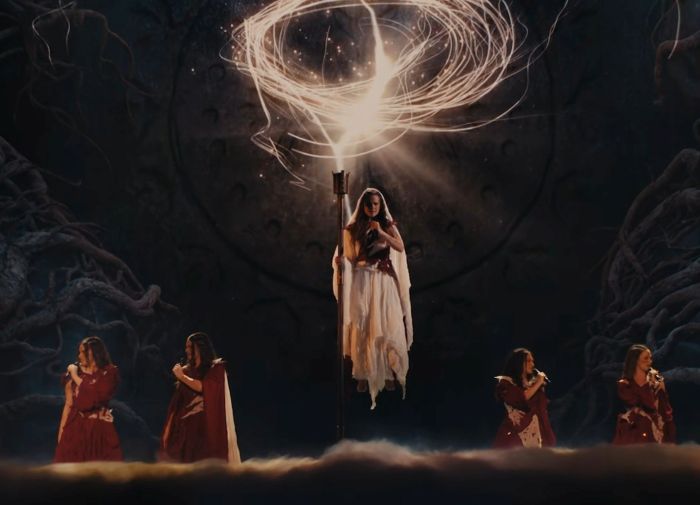
The group LELEK clearly wanted to create a “deep” and atmospheric performance, but “Andromeda” ultimately became overloaded with concept and far too slow for Eurovision.
A gloomy, drawn-out introduction, heavy pacing, ethnic drama, complex symbolism — everything felt as though the performance was desperately trying to appear more important than it actually was. By the time the song slowly built towards its climax, the audience had already lost interest.
The situation was worsened by sound issues: the vocal harmonies sounded muffled and disconnected, while the strong final notes simply got lost. In the end, instead of an emotional ethno-performance, it became just another “dark” act dissolving among dozens of similar anxious performances this season.
Serbia: TikTok metal for depressed teenagers
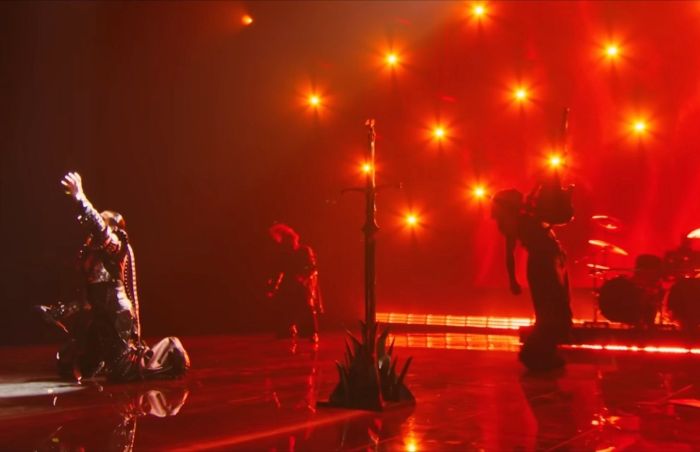
At Eurovision 2026, Serbia was represented by the metal band LAVINA with the powerful and emotional song “Kraj mene” (“Beside Me”). Their performance is one of those cases where a number tries to look dangerous but only creates exhaustion. Claws again. Screaming again. A dark stage again. Another feeling of being forced into someone’s teenage crisis.
In discussions, this act has already been described as “edgy for the sake of edgy” — darkness for the sake of darkness — which, incidentally, perfectly describes almost the entire current contest. The whole song exists only for those final ten seconds. The rest of the time, the viewer is faced with a grey mass of anxious lighting, a heavy stare, and an attempt to appear “different from everyone else”.
Ironically, in Eurovision 2026, that applied to almost everyone.
Lithuania: when art-house becomes torture
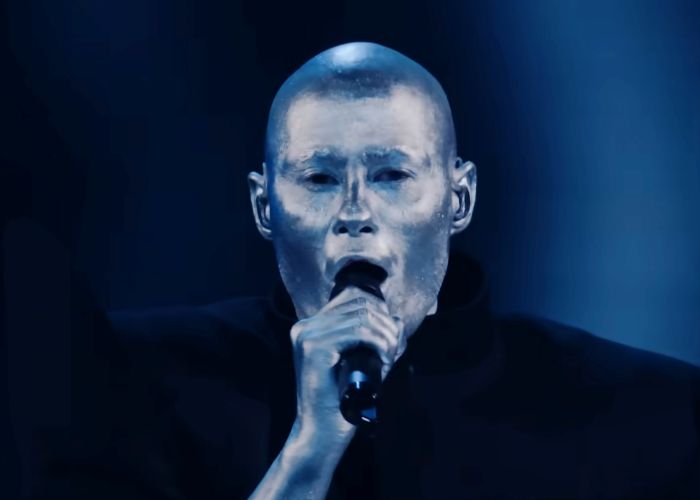
Lithuania tried very hard to appear “deep”. So hard, in fact, that at some point the performance began to resemble theatrical torture. Stylised vocals, heavy breathing, camera tricks, black-and-white visuals, pseudo-intellectual atmosphere — all for a song that goes absolutely nowhere.
It was one of those performances after which you genuinely ask yourself: “What did I just watch?” There is barely any music here at all. What remains in memory is only a silver-painted face and the feeling that for three minutes someone very earnestly tried to sell you “art”.
Poland: vocal hysteria instead of music
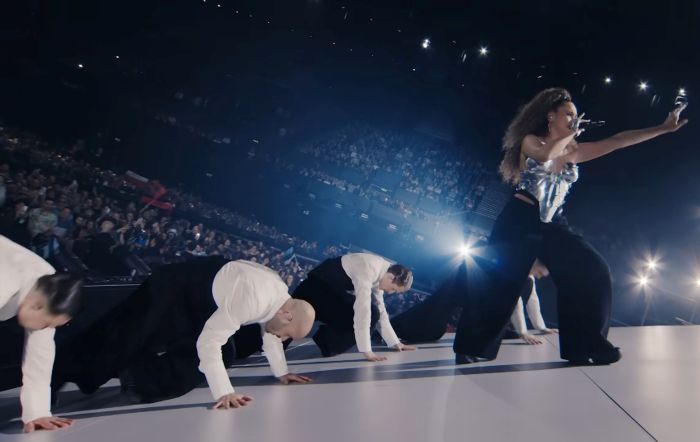
At Eurovision 2026, Poland was represented by singer ALICJA (Alicja Szemplińska) with the English-language song “Pray”. Which, listening to it, is exactly what you end up doing — hoping it ends sooner.
Because what she delivered was a full-blown vocal hysteria. It felt as if the artist was told: “You have three minutes. Show absolutely everything you can do.” And she proceeded to attack the song like an obstacle course.
Melismas, shouting, genre-jumping, endless vocal embellishments — all of it overloaded the performance to the point where the song itself simply disappeared. And that is the core problem of Eurovision today: after Poland, all that remains in your head is noise and exhaustion.
Cyprus: yet another “Shakira”, accidentally in the final
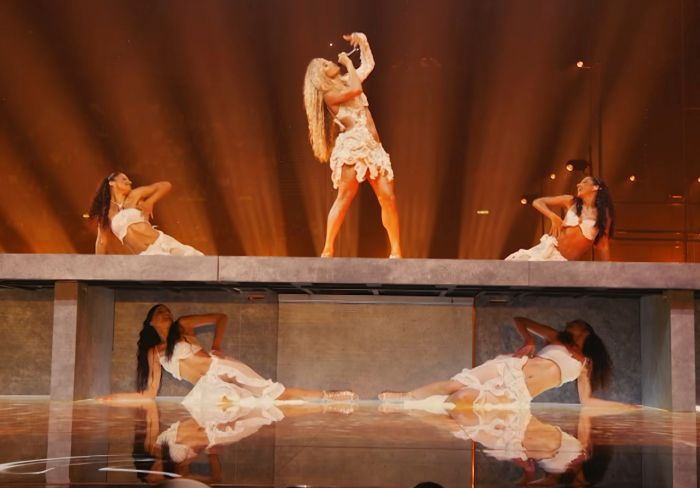
Cyprus is no longer even a musical entry. Just another “Temu Shakira” who somehow made it into the final. The entire performance relied solely on an overtly sexualised image, suggestive movements, and an attempt to sell “hot Eastern energy” to the audience.
At the same time, the vocals were falling apart from the very first seconds. It was obvious the singer was out of breath, failing to sustain phrases and simply trying to survive her own performance. The choreography also looked strange: no confidence, no power, no charisma.
Romania: BDSM, choking and spikes
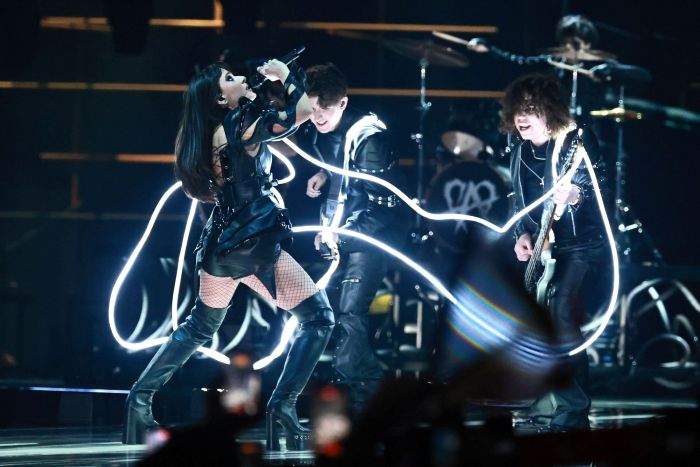
Romania at least openly admitted it was aiming for shock value. Alexandra Căpitănescu brought Romania back to the contest after a break with an aggressively styled entry clearly designed to provoke controversy. Nu-metal, gothic staging, dark aesthetics, heavy visuals and a chorus repeating “Choke Me” so many times that by the middle of the song it feels like you are the one asking to be choked.
The main controversy centred on the lyrics. Activists and critics accused the performance of romanticising choking, violence and BDSM aesthetics, especially due to lines such as “I want you to choke me”. The Romanian team later had to defend themselves, explaining that the song is actually a metaphor for inner fears.
In the end, Romania was once again remembered not for the music, but for the amount of noise and controversy generated around a three-minute performance — apparently enough to qualify for the final.
As we can see, this year’s finalists were mostly either entries already surrounded by scandal, or performances so overloaded with “concept” and attempts to appear deep that the actual song disappeared beneath it all. The other group of finalists, on the contrary, consisted of overly safe and generic entries that are forgotten immediately after they finish.
Australia, for example, with Delta Goodrem — whom foreign press strangely listed among the season’s favourites — in reality sounded like a completely standard pop song with no strong hook or emotional impact. Or Finland with Linda Lampenius and Pete Parkkonen: yes, violin, yes, it looks impressive, but there is Alexander Rybak, whose “Fairytale” people still revisit years later because it is genuinely memorable. Here… well, it was a decent attempt.
And from these extremes the entire contest was ultimately formed: either another dark performance filled with screaming, smoke and pseudo-deep symbolism, or an overly sterile, safe entry that you forget even before the results are announced. And the most frightening part is that almost everything was both painfully identical and unbearably boring.