“The World Is Only Beginning to Discover Armenian Wine”: Wine Journalist and Expert Thomas Brandl on Armenia’s Wine Revolution
 21:31 22 May, 2026
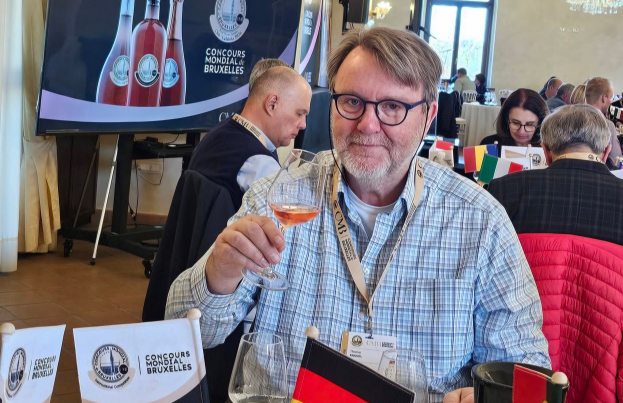
As Armenia hosts Concours Mondial de Bruxelles for the first time, Yerevan has welcomed hundreds of international experts, sommeliers, buyers and wine journalists from around the world. Among the competition’s key guests is Thomas Brandl – a well-known German wine journalist, PR expert and Concours Mondial de Bruxelles ambassador for Eastern Europe, whom many in the wine industry consider one of the leading promoters of Armenian wine in Europe.
Brandl has been working with Wines of Armenia for the past six years, helping promote Armenian wines in Germany and across Central Europe. In an interview with NEWS.am STYLE, he said Armenia has undergone a “true quality revolution” in recent years: the number of wineries has multiplied, wine quality has dramatically improved and international interest in the country is rapidly growing.
According to the expert, today’s wine world is searching for new flavors and new stories – and Armenian wine, with its indigenous grape varieties, especially Sev Areni, fits perfectly into that global demand.
.jpg)
This isn’t your first visit to Armenia. How did you first discover the country, and what has changed since your first impression?
“If we talk about Armenia, it’s incredible to witness the evolution that has happened over the past years. In the last decade, the number of wineries has tripled, production volumes have doubled, and the quality – and this is probably the most important part – the quality has truly risen enormously.
“I’ve held presentations and masterclasses for Wines of Armenia at international exhibitions in Paris, at Wine Paris, in Düsseldorf at ProWein, where I represented the country over the last few years. And for me, it’s a huge joy to see how much the quality has changed. It’s a genuine quality revolution, there’s no other way to describe it.
“Five or six years ago, almost nobody in the world knew anything about Armenia. Now everything is changing. I spoke with many colleagues during this tour, and they’re all amazed. Amazed by Armenia, by the wines, by the landscapes.
“We had an incredible opening ceremony at the Garni Temple, and before that we visited Zorah Wines and the Noravank Monastery. I know these places because I’ve been there many times, but my colleagues didn’t. For most of them, this is their first trip to Armenia, and they’re stunned.
“They’re literally overwhelmed, and that also makes me happy because I feel connected to this whole story.”
Do you prefer Armenian white wines or reds? What do you think of Armenian wines overall?
“Well, for me, Areni is definitely a great grape variety. Possibly one of the best red grape varieties in the world. I love it for its finesse because it’s delicate and elegant, without excessive acidity, phenolics or aggressive tannins. It’s very charming, but still has character and depth.
“So for me, Areni is definitely number one. But I also believe Armenia has other interesting red varieties, like Aghtanak, Tozot and even Tigrani. There are several truly impressive grapes.
“And of course, when people talk about white wines, everyone immediately thinks of Muscat, but I think there are already some excellent whites made from Kangun and Garandmak.
“That’s exactly what the world is looking for today: new experiences, new aromas, new wines. I think in the coming years, the world will discover even more new Armenian wines.”
Tell us about Concours Mondial de Bruxelles. It’s considered a very influential competition in the wine world.
“It’s the second-largest wine competition in the world. And it’s the only one that takes place in a different country every year. Other competitions, like Decanter World Wine Awards, are always held in London. Mundus Vini takes place every year in Neustadt an der Weinstraße in Germany. Berliner Wine Trophy is always in Berlin.
“But for tasters, it’s ten times more interesting to travel, to see different countries, wine regions and wine cultures. And for the regions and countries themselves, hosting the competition – like Armenia is doing now – is a huge opportunity.
“Three hundred international experts from around the world come here. Journalists – and I’m a journalist myself – will naturally write about Armenia. There will be many publications, articles and reports.
“And beyond that, there are many buyers here. Recently, there was a B2B tasting attended by numerous tasters who are also wine buyers. That’s already real business. And if even half of them decide to add Armenian wines to their portfolios in the future, it will be a massive step forward.”