Dubai Riviera Turns Into a Ghost Town for Millionaires: Empty Restaurants, Abandoned Supercars, and a Tourism Collapse Amid War With Iran
 20:30 2 June, 2026
For years, Dubai offered the exhausted British middle class the perfect “all-inclusive” escape from reality: no taxes, no endless rain, and no economic decline. It was a glittering Gulf sanctuary where ambitious people fled national crises for rooftop infinity pools, champagne brunches, and a taste of luxury life, Daily Mail writes.
For a megacity built on being richer and more dazzling than anywhere else on Earth, there is no greater embarrassment than being accused of looking… cheap.
That uncomfortable accusation now hangs over the emirate’s flagship luxury showcase after the war with Iran damaged its reputation as a must-visit destination. Although some expats from the UK and elsewhere have returned to the tax-free haven, popular attractions, hotels, and restaurants have failed to recover the massive international flow that once turned sandy paths into streets paved with gold.
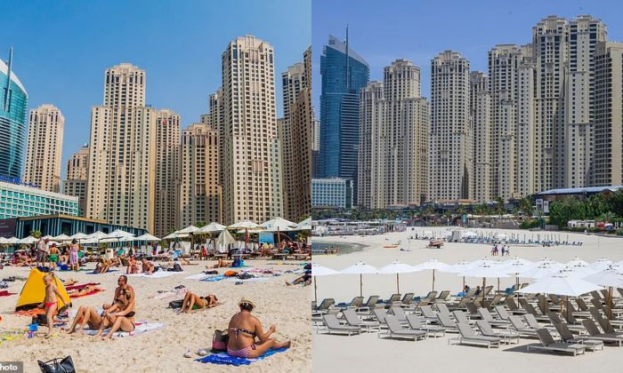
At the luxury J1 Beach in the La Mer district — once promoted as Dubai’s answer to Cannes and Saint-Tropez — signs of crisis are visible to the naked eye. Before Iranian missiles and drones began targeting the UAE in late February, this strip of high-end restaurants and glamorous beach clubs was a daily gathering place for the local elite. Getting into the trendiest venues on the so-called “Dubai Riviera” required reservations weeks or even months in advance.
Today, some of these venues offer free entry, heavy discounts, and readily available tables. A Dubai influencer told the publication: “At J1 in La Mer, all beach clubs have special deals: free entry for women and minimum spend for men that can be fully used at the bar. It feels like they are surviving, and the summer season will make things even worse. And these are places that used to be impossible to get into.”
J1 Beach is also home to Dubai’s most expensive seafood restaurant, “Sakhalin” (a project by Russian restaurateur Boris Zarkov), where even influential guests once had to book in advance. Customers typically spent around $230 per person on Kamchatka crab and Siberian lobster. The wine list ranges from Portuguese Vinho Verde at £100 to a Montrachet Grand Cru from Burgundy at £4,700.
Now, due to the war, “Sakhalin” is empty. During a reporter’s visit, the terrace was deserted, decorative umbrellas fluttered meaninglessly in the wind, and no one was swimming in the sea. Only one table was occupied — by a Russian-speaking man and his elegant companion.
At a nearby restaurant complex, African Queen, guests are even offered free sunbeds on the private beach if they agree to order at least something to eat or drink.
“The restaurant is empty due to the current situation. We are doing everything possible to attract customers,” explains guest relations manager Michelle Sartini. “When the war started, it was very scary. Many cities were hit much harder than Dubai, but no one expected missiles to come here — even if only a few.”
Or as a young Italian woman put it: “The bombings were terrifying. At night you could see missiles flying over the sea and hear explosions. Nobody expected this in Dubai. We all thought of it as part of Europe. Now, unfortunately, we’ve been reminded that it is the Middle East.”
The Illusion of the “Middle Eastern Switzerland” Shattered
Dubai’s carefully built image as the “Switzerland of the Middle East” has been broken by Iranian strikes carried out in response to US and Israeli attacks on Tehran. Dozens of Iranian drones crossed the narrow Persian Gulf to undermine Washington’s promises of security for Arab monarchies. Several breached the UAE’s expensive defense shield.
As a result, glass facades of some hotel skyscrapers caught fire, at least one residential block in the working-class Al Satwa district was destroyed, and industrial sites on the outskirts were reduced to ruins.
The Gulf crisis has destroyed Dubai’s most valuable asset — confidence.
Moody’s issued a grim forecast: hotel occupancy in Dubai could fall to a historic low of 10% by July, compared to 84.7% in February. “This means an effective shutdown of major parts of the hospitality industry,” analysts concluded.
Some of Dubai’s biggest hotel players have already begun sealing rooms or quietly closing for “renovations,” including the Burj Al Arab, the Armani Hotel Dubai, and the St. Regis on Palm Jumeirah.
At Atlantis The Royal on Palm Jumeirah, the atmosphere is strikingly quiet. The sound of pearl fountains barely covers the conversations of the few guests at reception. The cocktail bar with its white grand piano is almost empty. Waiters, with little to do, eagerly approach any passerby. Outside, all sun loungers are vacant, with views over the iconic Dubai skyline and the Persian Gulf, where stranded oil tankers, container ships, and a naval vessel sit at anchor.
In the nearby parking area, more than a dozen luxury cars — Ferraris, Porsches, Range Rovers — sit under dust covers. Their owners have left for safer regions.
Traffic Collapse and Price Shock: The Numbers Behind the Crisis
“We haven’t seen a drop like this in Dubai since the Covid-19 pandemic,” says Bram Gallagher from AirDNA. “There is cautious optimism that by August the market may return to normal, but it depends entirely on how long the conflict lasts. The longer it goes on, the more Dubai becomes associated with regional instability. That is a dangerous trajectory.”
The emirate’s oldest market, the Gold Souk, is also empty. Vendors look dejected, and street cats now occupy the tourist benches.
Cost Crisis: Inflation and Locked-In Workers
With the Strait of Hormuz effectively disrupted, fuel and food prices have surged. British teacher Eleanor, living in Dubai, said the cost of filling her modest Fiat Uno rose from 90 dirhams (£18) to 140 dirhams (£28). Eggs, bananas, and bottled water have also become significantly more expensive, with water up by 30%.
Dubai’s government has allocated a 1 billion dirham (£200 million) aid package to support hotels and tour operators. However, this does not guarantee security for ordinary workers. Many hotels have placed large portions of staff — mostly from South Asia — on indefinite unpaid leave, effectively trapping them in the emirate as a “living reserve.”
Despite Everything: Who Benefits From the Crisis?
Still, for the ultra-wealthy, the crisis has created opportunities. According to a British real estate agent, major investors are buying luxury property at discounts, with prime real estate prices falling by around 15%.
Local media are trying to maintain a positive narrative. The Dubai Chronicle rejected Moody’s warnings:
“On the ground, things look different. Boutiques are open. Coffee shops are full. People are happily paying 30 dirhams for specialty coffee. Families are dining out midweek. The appetite for small luxuries remains unchanged. When you can’t travel, you simply go to a good restaurant.”
Some upscale venues like Zuma, Iris, and the Be Beach club still see elite nightlife activity.
“Places I go to are still full, and the atmosphere is great,” insists Australian banker Tracy. “Social life is back to normal. Time is needed for business to recover.”
However, entrepreneurs remain skeptical. One British businessman said anonymously:
“I’ve lived in Dubai for ten years and I love it. We all hope everything returns to normal after summer. Otherwise, we’re done. My life is here, we just had a child. But living in Dubai requires money. If the war drags on and people keep leaving, it will be over for us — and for many others.”