The Flower of Saladin and Christ: Can the Legendary Damask Rose Survive Global Warming?
 22:30 3 June, 2026
The Damask rose (Rosa damascena) has survived the fall of empires, the Crusades, and a devastating civil war. Today, however, this legendary flower faces a new and far more dangerous threat — global warming and the climate crisis, writes Atmos.
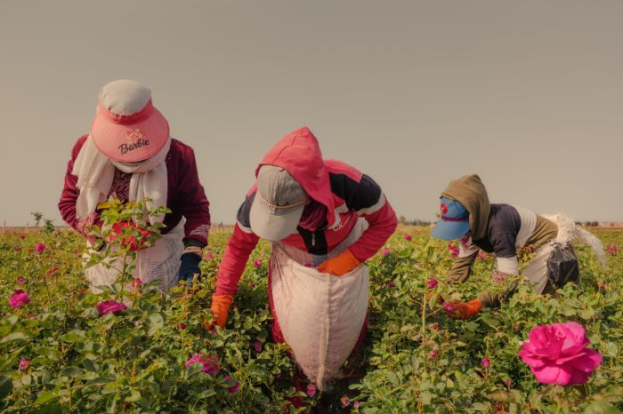
Photographer Emily Gartwaite traveled from Damascus to Aleppo to document how Syrian farmers and distillers are trying to save a plant that lies at the heart of the country’s cultural heritage.
A flower with a 2,000-year history
The Damask rose is deeply intertwined with the history of Middle Eastern and global civilization:
- In the 1st century AD, its properties were described in detail by Pliny the Elder.
- Medieval Arab physicians used the rose to treat melancholy and heart-related illnesses.
- In 1187, Sultan Saladin refused to enter the Mosque of Omar in Jerusalem until its walls had been cleansed with rose water brought from Damascus on 500 camels.
- In the 13th century, thanks to a Crusader knight, the flower reached France and is still cultivated in Grasse, the world’s perfume capital.
- In Syria itself, rose petals are used to decorate the altar in Maaloula — one of the oldest active Christian monasteries, where Aramaic (the language of Jesus Christ) is still spoken today.
Beyond its cultural value, the Damask rose has for centuries served as a kind of “medicine hiding in plain sight.” With antiseptic, anti-inflammatory, and antidepressant properties, it has been used across generations of Syrians to relieve anxiety, stomach pain, and other ailments.
Climate shock: stark numbers
Syria is on the front line of the global climate crisis, and the statistics reveal the scale of the damage:
- Rainfall in the 2024–2025 season was 60% below the average, leading to a 40% drop in wheat production.
- Before the war in 2011, 270 hectares were dedicated to Damask rose cultivation. Today only 120 hectares remain.
- Due to extreme heat and irregular rainfall, the plants’ life cycle has more than halved. Rose bushes that should live for around 60 years are now dying after just 25.
An additional threat comes from a hardier rival variety introduced in the 1980s from Saudi Arabia. It yields seven times more per hectare and is gradually displacing the historic flower. However, scientists warn that the original Damask rose contains a unique genetic drought-resistance code that cannot be artificially replicated or replaced.
Hope for revival
Despite severe economic challenges in the country’s transitional period, Syrian farmers and the new government are searching for ways to save this national treasure.
Proposed solutions include drip irrigation, rainwater harvesting systems, and climate-resilient farming methods. Local producers are requesting subsidies for solar panels (around $7,000 per farm) to power water pumps. Meanwhile, the Syrian Ministry of Agriculture has announced plans to restore around 741 acres of land and distribute 30,000 rose saplings to farmers free of charge.
Local entrepreneurs remain determined. Rula Ali-Adib, a farm owner south of Damascus, says she intends to plant more roses this season than ever before, despite everything.
“The rose has survived every empire that tried to claim it. Whether it can survive a warming planet and return to the Syrians on their own terms is a question still waiting to be answered,” Emily concludes.