Secret Tour of the Sagrada Família: 5 Divine Mysteries and Hidden Treasures of the Great Cathedral
 22:23 11 June, 2026
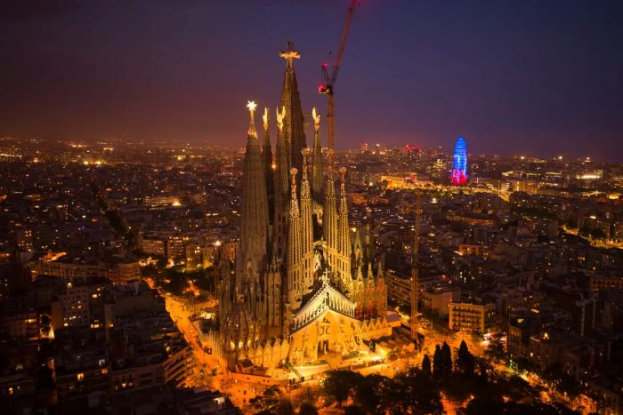
With spires resembling sandcastles, lush flora frozen in stone, kaleidoscopic interiors, and hiding places hidden in plain sight, Barcelona’s world-famous Sagrada Família never ceases to amaze even its regular parishioners.
Josep Turull, the Catalan rector of the Sagrada Família and the priest responsible for parish life, gave the Associated Press an exclusive behind-the-scenes tour. He shared his favorite corners of the church ahead of a historic milestone: a solemn mass to be celebrated by Pope Leo XIV.
"We say that the Sagrada Família is a basilica that can never be fully exhausted," Turull admits. "I’ve served as rector here for the last eight years, and I still discover something new every single day."
Below are the five greatest mysteries and hidden treasures revealed by this legendary, long-running construction project.
1. Cryptograms and Labyrinths on the Facades Every morning, Father Turull begins his day by examining the church's richly decorated facades. While some religious themes are obvious to any Christian, others are bound to mystify or even shock.
Facing west, the Passion Facade looks stark: angular, tormented figures are frozen in tense poses. This was precisely the intent of architect Antoni Gaudí—to make the facade "hard and cruel, as if built from bones," to convey the raw agony of Christ’s final days.
Decades later, sculptor Josep Subirachs added several enigmatic elements to this scene of sorrow. For instance, next to the depiction of Judas' kiss, there is a carved grid of numbers resembling a Sudoku puzzle. This is a "magic square": no matter how you add up the numbers (vertically, horizontally, or diagonally), the sum is always 33—the age of Jesus at the time of the crucifixion.
And if you look closely at the scene where the Apostle Peter denies Christ, you can spot a small square labyrinth. According to Turull, it symbolizes the need to maintain faith in God, even when a person feels completely lost.
2. Live Predators atop the Towers The peaks of the basilica are practically teeming with natural motifs, from the stone rooster that crowed for Peter to reptiles serving as gargoyles and clusters of fruit atop the spires.
Yet, there is also real, living nature here. A family of peregrine falcons has nested on the St. James Tower. These birds of prey perform a vital mission: they scare away pigeons, protecting the unique facade from their droppings. The Sagrada Família has become an ideal habitat for restoring the population of peregrine falcons, which had virtually disappeared from Barcelona in the 1970s. The birds have successfully nested on the cathedral's towers for more than two decades.
3. Journey Underground: The Crypt of Antoni Gaudí Millions of tourists visit each year to watch the multicolored light stream through the stained-glass windows, but few notice what Father Turull calls the "spiritual heart" of the Sagrada Família. To find it, one must pass through a modest side entrance and descend a flight of stairs.
Below, in the subterranean crypt, lies a cozy, quiet chapel. There are no noisy tour groups here, and parishioners pray in absolute silence. It is in this unassuming niche that Antoni Gaudí himself rests—a devout Catholic who tragically died exactly 100 years ago (in 1926) after being struck by a tram.
"People come here to ask for his intercession," Turull says, pointing to the tombstone in the floor. "See how many candles are lit here? People trust him, and many have received help after praying at Gaudí's grave."
The Vatican is currently conducting a multi-year process that could lead to Gaudí's sainthood. In 2025, Pope Francis declared the architect "Venerable," and the Church must now verify miracles attributed to his intercession to proceed with his beatification and canonization.
4. A Real Ocean Shell for Holy Water Before heading back up to the main nave, the rector points out an enormous sea shell that serves as a holy water font. Remarkably, it is not carved from stone—it is completely real. Gaudí brought this giant bivalve shell from the Philippines, ordering it to be encased in wrought iron and mounted to a column. The architect always maintained that nature was his primary teacher and finest engineer.
5. The Papal Sacristy: A Secret Room Ascending a spiral staircase leads to a sun-drenched, private room. It houses two oak cabinets featuring delicate wrought-iron hardware, designed by Gaudí himself, which hold the church's most valuable relics and vestments. Among them is the chasuble worn by Pope Benedict XVI when he consecrated the Sagrada Família in 2010.
It is in this very room that Pope Leo XIV will change into a unique vestment currently being crafted in the workshops specifically for his visit. The chasuble will be embroidered with symbols referencing the giant Cross of Christ recently installed on the main tower (which officially made the Sagrada Família the tallest church in the world, reaching a height of 172.5 meters). The remaining details of the vestment are being kept strictly secret.