Matild Manukyan: The Life, Legend, and Secrets of the "Queen of Turkish Brothels"
 19:38 3 July, 2026
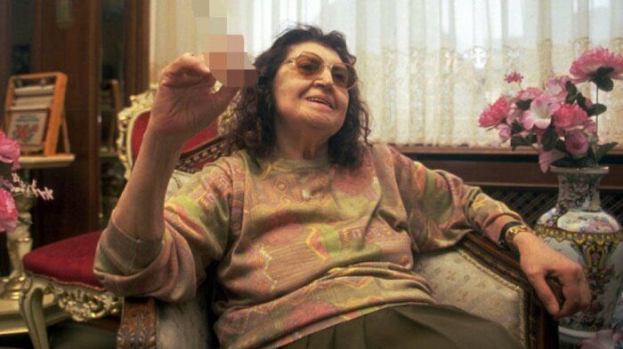
She was called the "Queen of Turkish Brothels," the country’s top taxpayer, and one of Istanbul’s most generous philanthropists. She survived an assassination attempt, planned to build a mosque, rubbed shoulders with politicians, and remained one of the most influential women in Turkey for decades. Yet, the deeper one dives into her story — combing through Turkish archives, rare interviews, documentaries, and academic research — the more one realizes that a completely different narrative lay beneath the carefully crafted image. A narrative that, to this day, holds far too many mysteries.
The Girl Who Was Meant to Be a Couturier
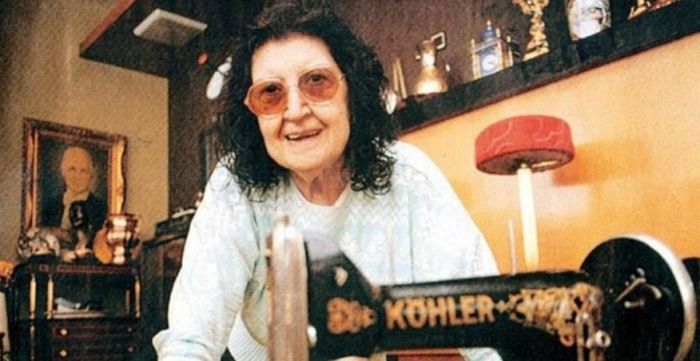
If the name Matild Manukyan is famous far beyond the borders of Turkey today, it is certainly not because of her initial profession. Born in 1914 into a wealthy Armenian family in Istanbul, she graduated from the prestigious French high school Notre Dame de Sion and opened her own haute couture atelier. Her future seemed set in stone: affluent clients, a vibrant high-society life, and a successful career as a fashion designer.
However, fate had other plans. There are two competing versions of how Manukyan ended up in the world of brothels. According to one, a client unable to pay for expensive dresses handed over a brothel instead of cash. The other version suggests that she inherited several buildings after her husband’s death, and a tenant later settled a debt by giving her his establishment. Which story is true remains unknown, but this turning point altered her life forever.
"I Sell Women Honestly": How Manukyan Corporatized the Brothel Business
What began with a single brothel eventually ballooned into a massive business empire. Manukyan gradually expanded her holdings, buying hotels, office buildings, apartments, and commercial real estate. Over time, she came to be viewed not merely as a brothel madam, but as one of Turkey’s largest private real estate investors.
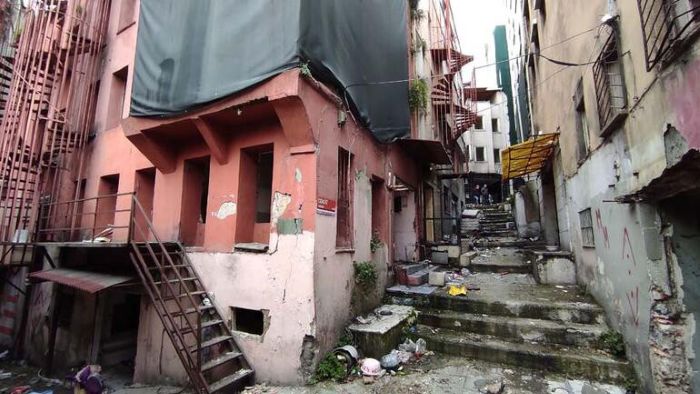
Matild herself, however, preferred to frame her business quite differently. "For me, it makes no difference whether it’s a grocery store, an insurance company, or a brothel. I lease walls," she would explain, emphasizing that she viewed herself primarily as a landlord.
Yet, it was another phrase of hers that gained far more notoriety: "I sell women honestly." Today, these words sound highly provocative. But Manukyan attached a different meaning to them. She repeatedly stated that honesty is defined not by the line of work, but by one's relationship with the law. "I don’t steal. I pay my taxes down to the last penny," she reiterated in almost every interview.
The Most Respectable Madame
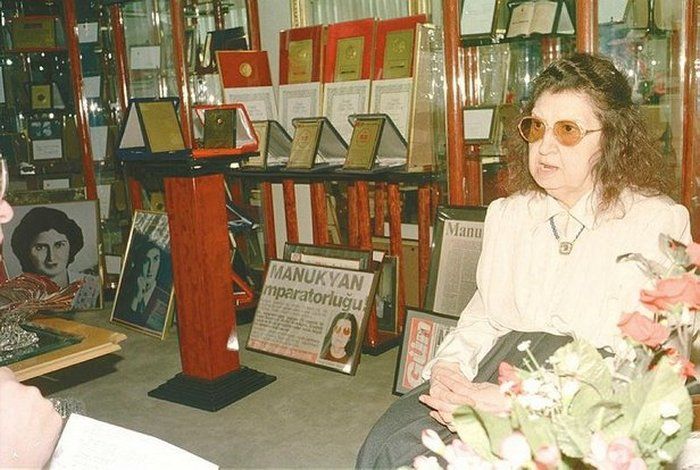
The woman who owned Turkey’s largest network of brothels was named Istanbul’s top taxpayer for five consecutive years. In her home, she dedicated an entire room to state awards, certificates, and letters of appreciation from government ministers and the president. Her chief source of pride was not her immense wealth, but this official recognition by the state.
Manukyan was equally dedicated to philanthropy. She funded hospitals and universities, and once even announced her intention to build a mosque using her own money. This sparked fierce public debate: some deemed such a donation unacceptable, while others argued that charity should not be judged by the source of the funds. This was the ultimate paradox of her biography: for years, the state viewed a woman who grew rich off a legalized sex industry as a model of upstanding entrepreneurship.
An Image Begins to Crumble
Everything changed in the mid-1990s. During police raids on properties owned by Manukyan, underage girls were discovered. She categorically denied the allegations, arguing that she could not personally oversee the day-to-day operations of every single brothel. Nevertheless, this was the first time her reputation faced a severe threat.
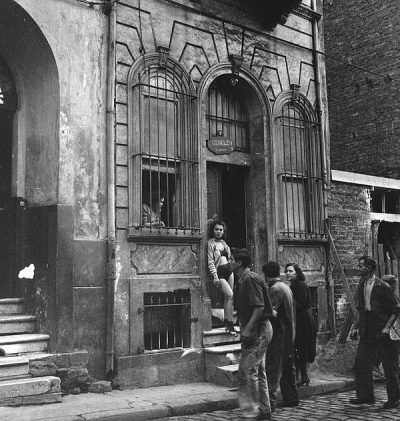
Yet, the most baffling discovery had nothing to do with the girls. During one of the raids, police reported finding underground tunnels connecting several of the brothels. The story seemed poised to become a massive scandal, but within a few days, the newspapers abruptly dropped it. Who built the tunnels, where they led, and what they were used for was never explained.
Another detail emerged years later. Researchers noticed that Turkish newspapers of the era rarely used the words "children" or "minors," preferring to write about "young women." Furthermore, journalists almost never interviewed the workers themselves. Their stories only came to light after Manukyan's death, when several former employees took legal action, claiming they had been brought to the brothels as teenagers and subjected to exploitation. While these testimonies never brought about a definitive legal conclusion, they offered a grim alternative view of the woman who claimed to be in absolute control of her empire.
The Assassination Attempt That Changed Everything
In the autumn of 1995, Matild Manukyan’s name hit the front pages of Turkish newspapers once again: a bomb exploded near her home in Istanbul. Her driver and bodyguard were killed instantly, while Manukyan herself suffered severe injuries. Doctors performed twelve surgeries, but she would never fully recover.
The masterminds behind the attack were never officially identified. The investigation explored various angles, though the prevailing theory blamed criminal syndicates involved in racketeering against wealthy entrepreneurs. However, no definitive conclusions were ever reached, allowing the incident to quickly become shrouded in rumors and speculation.
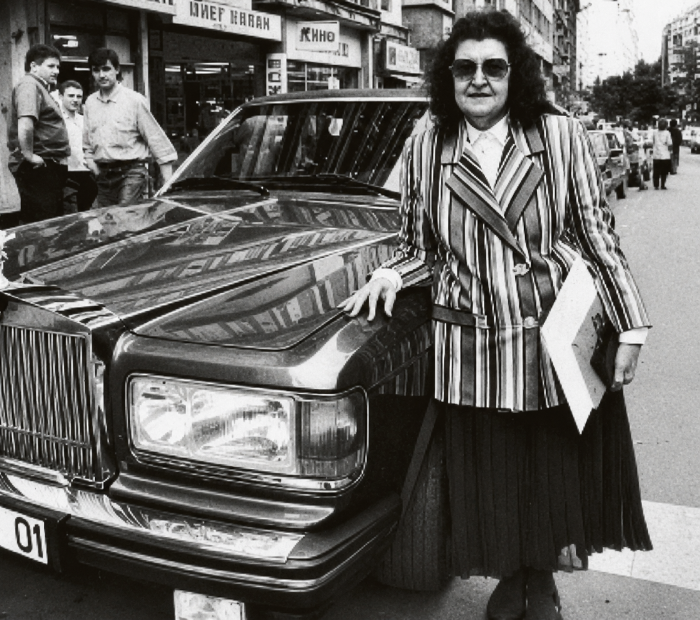
Following the assassination attempt, she virtually vanished from public life. In a documentary by the German television channel WDR, viewers saw a completely transformed woman. She rarely left her house, reminisced about the Istanbul of old, and scarcely used her famous Rolls-Royce, which at the time was said to be the only one of its kind in the entire country.
The Armenian Who Called Herself a Turk
Perhaps the most controversial chapter of Matild Manukyan’s biography concerns her national identity rather than her business.
Though born into an Armenian family, over the years she increasingly emphasized her love for Turkey. Manukyan converted to Islam, spoke about observing religious traditions, and stated on multiple occasions that she wished to live out her days and die in Turkey.
She made no secret of her deep admiration for Mustafa Kemal Atatürk. His portraits hung in her home, she dedicated poetry to him, and she publicly declared herself a devoted citizen of Turkey.
Her biggest public scandal erupted after one of her interviews. Condemning the attacks by Armenian militant groups on Turkish diplomats, Manukyan stated she felt no sympathy for them and went on to call Armenians a "cowardly people." The remarks were swiftly picked up by the press and triggered a massive backlash. While some supported her stance, others accused her of turning her back on her heritage simply to secure her elite standing in Turkish society. Even years later, this interview remains one of the most hotly debated episodes of her life.
Her desire to build a mosque with her own money caused a similar uproar, deeply dividing the public. Critics argued that a mosque could not be erected using money earned from the sex industry. Yet, others unexpectedly came to Manukyan's defense. The head of Turkey's Directorate of Religious Affairs (Diyanet) publicly stated that upon converting to Islam, a person's past sins are considered forgiven, meaning there was no religious ground to reject her donation.
A Woman Without a Private Life?
The more one learns about Matild Manukyan, the more one striking fact stands out: the woman who was known for decades as the "Queen of Turkish Brothels" left virtually no trace of a private life behind.
The Turkish press wrote exhaustively about her millions, her taxes, her charity work, the assassination attempt, her properties, and her clout. She was rumored to have close ties with politicians, high-ranking officials, police chiefs, and even figures within the criminal underworld. While concrete proof of these connections never materialized, talk of her influence followed her throughout her life. Some believed these connections helped her construct her empire; others were convinced the media merely exaggerated her reach.
Yet, remarkably little is known about the men in her life. The newspapers almost never carried stories of lovers, high-profile romances, a second marriage, or domestic scandals. It is only known that Manukyan was married to an engineer named Aram Chilingir. In a documentary, she fondly recalled their walks through the Pera district and their trips to theaters and cinemas. According to one version of events, it was his untimely death that abruptly fractured her life. She was survived by her only son, Kerope Chilingir, who inherited her vast fortune after her passing.
It appears that Manukyan consciously barred outsiders from this sphere of her life. She was perfectly willing to talk to journalists about taxes, charity, religion, and the state, but she almost never spoke of love, family, or her personal feelings. Turkish media frequently attributes a specific quote to her: "In worship and in business, secrecy is everything." It is highly likely that she applied this guiding principle not only to her empire, but to her heart as well.
And while many secrets of her business empire eventually came to light, the mystery of Matild Manukyan herself seems to have gone entirely unsolved.