"The Ultimate Trophy": Bloomberg Explains Why Billionaires Are Buying Up Dinosaur Skeletons En Masse
 19:36 20 July, 2026
Dinosaur skeletons have turned into the latest obsession for the world’s billionaires. The planet’s wealthiest collectors are willing to part with tens of millions of dollars for rare fossils, transforming these ancient giants into one of the most lucrative alternative asset classes on the market.
According to Bloomberg, the frenzy over fossilized remains among the ultra-wealthy has reached unprecedented levels in recent years. For some, it represents a high-yield investment; for others, the ultimate status symbol. Billionaire Dan O’Dowd, who purchased a T. rex skeleton named "Samson" for $600,000, candidly admitted that he considers the purchase "the ultimate trophy you could possibly imagine."
Prices Shatter Every Record
Prices across the paleontological artifact market continue to skyrocket:
-
2020: At a Christie’s auction, the famous T. rex named "Stan" went under the hammer for $31.8 million.
-
2024: Citadel founder Ken Griffin paid $44.6 million for a Stegosaurus named "Apex."
-
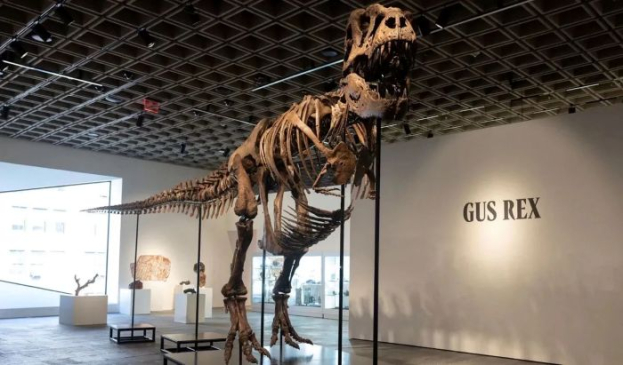
July 15, 2026: An absolute record was set at a Sotheby’s auction in New York. The T. rex skeleton named "Gus" (with 75–80% bone completeness) sold for $50.1 million—nearly double its initial pre-sale estimate. The specimen features 183 original bones, rare gastralia (belly ribs), and a complete set of six intact teeth.
Hollywood stars such as Leonardo DiCaprio and Nicolas Cage, along with other high-profile collectors, have also been spotted among the fossil hunters.
How Are These Ancient Giants Valued?
According to Bloomberg, the valuation of a fossil skeleton today follows the exact same principles as pricing a masterwork painting. The primary drivers are provenance (ownership history), authenticity, rarity, and buyer demand.
That said, the market value of a specific lot hinges on several key criteria:
-
Species: Carnivore remains command the highest prices, as predators are significantly rarer than herbivores.
-
Completeness & Preservation: Valuations heavily depend on the percentage of original bones present in the skeleton and the lack of damage.
Controversies and Challenges for Science
The fossil market remains largely unregulated, drawing fierce criticism from the scientific community. Exorbitant price tags give private investors immense buying power while effectively pricing out museums and research institutions from acquiring unique specimens.
Furthermore, several high-profile lots have sparked intense debate. For instance, ahead of the planned auction of a T. rex named "Shen," paleontologists raised concerns that it might largely be a replica of "Stan," casting doubt on its $15 million valuation.