Fatal Selfies: What Happens When Influencers' Obsession with Shark Selfies Goes Too Far
 14:40 17 August, 2026
Scientists and marine life experts have issued a serious warning to influencers and content creators: the pursuit of dramatic footage and shark selfies for social media is becoming deadly. Over the past three years, researchers have recorded an alarming spike in predator attacks on individuals attempting to film them up close, touch them, or even ride them.
Dangerous Trends and Real Victims
While overall statistics for shark attacks on humans have remained stable (around 70 cases per year for three decades), the behavior of tourists and content creators is causing panic among biologists.
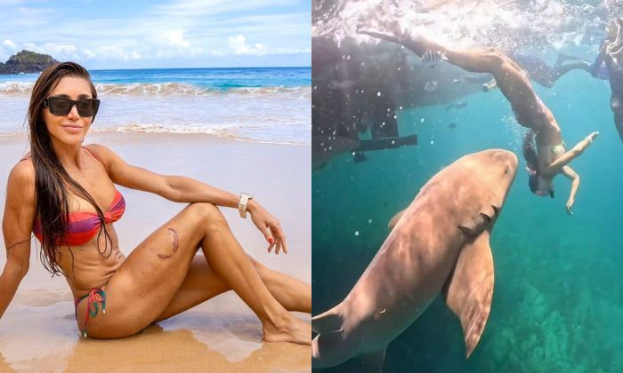
New Zealand fisherman and influencer Henry Gibbs nearly lost his right leg following a reef shark attack while spearfishing in Fiji in July. He required four surgeries and a skin graft. Brazilian lawyer and blogger Taiana Dalazen sustained deep thigh wounds after a seven-foot nurse shark locked onto her and held her underwater for several seconds in the Maldives (it was later revealed that tour operators were chumming the water to attract tourists).

In February, a tourist lost both hands while attempting to photograph a bull shark in shallow waters in the Caribbean. Just two months later in Israel, a snorkeler with a selfie stick trying to take a picture was killed.
As shark specialist Christian Parton notes, footage of attacks appears online literally every week. "We are talking about a super-predator, a very large wild animal. You wouldn't walk up to a lion in the Serengeti and touch it on the snout."
Research shows that approaching or touching sharks causes them severe stress and a spike in hormones (glucocorticoids), which weakens the animals' immune systems and can lead to the loss of offspring.

Marine biologist Éric Clua from Paris emphasizes that social media creates a false sense of security in people. "The message from influencers is: 'Touch the shark, nothing will happen to you.'"

At the same time, prominent content creators hold a different view. Popular American shark conservationist Ocean Ramsey, known for her free-diving with great white sharks, maintains that her goal is purely education and animal advocacy. "I'm observing their behavior, and they choose to interact with me. You have to give the public some credit. Most people understand the educational message and don't try to replicate it."

Nevertheless, experts like Dr. Jack Cooper counter that chasing and creating chaos for the sake of a good video has nothing to do with real conservation or science, turning wild animals into props for social media.