Revenge for a Nephew: Murder Trial of Tupac Shakur’s Killer Begins in Las Vegas
 12:15 18 August, 2026
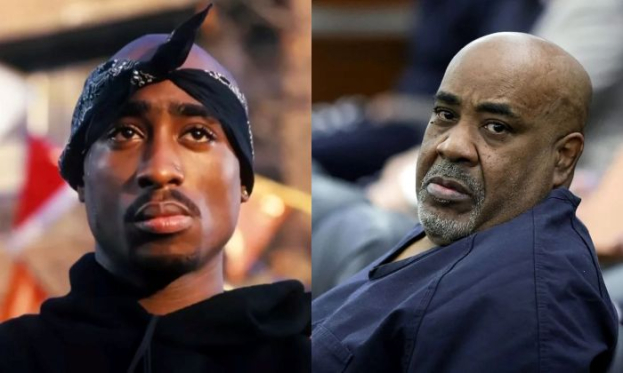
On the first day of the murder trial for Tupac Shakur, prosecutors painted former gang leader Duane "Keefe D" Davis as a man consumed by a desire for revenge who orchestrated the drive-by shooting that claimed the legendary rapper's life, according to the BBC.
Witnesses transported the jury back to Las Vegas three decades to the night Shakur was gunned down. In those years, street gangs held immense influence over 1960s/90s hip-hop, and deep mistrust of the police led to a complete lack of cooperation with investigators, turning the crime into one of the most high-profile cold cases of the past century.
The 63-year-old Davis is charged with Shakur’s murder. Prosecutors argue that while Davis did not pull the trigger himself, he directed the preparation of the murder. Davis denies the charges and has pleaded not guilty.
Key Takeaways from the Start of the Gang Leader's Trial
The prosecution characterized Davis as the ringleader of the group responsible for the shooting and pointed to his co-authored memoir, which details that fateful night.
"Let’s be clear: Duane Davis did not pull the trigger. But he orchestrated the shooting as revenge for the beating of his nephew," Chief Deputy District Attorney Binu Palal told the jury. "Remarkably, you will learn this from Duane Davis himself."
Davis’s attorneys called this version "fiction," describing the case as the result of decades of shoddy investigations. Davis himself distanced himself from the memoir, claiming he didn’t write it alone and that parts of the information were embellished for higher sales.
Dressed in a dark navy suit and blue tie, Davis sat beside his defense team as lawyers questioned why no one had been charged in thirty years and emphasized that "nobody is backing this up with anything."
"What facts do they have 30 years later?" questioned his attorney, Michael Sanft.
Testimony and Background of the Conflict
The prosecution's first witness was Harry Dale, who worked for the Las Vegas Police Department during the September 1996 shooting. The officer described riding in an ambulance with the wounded Shakur. According to him, the rapper refused to provide any information about the incident or who shot him.
"We'll handle this ourselves," Shakur said at the time, according to the police officer's testimony.
At the core of the case are the East Coast-West Coast rap rivalry and the territorial wars between the Bloods and Crips street gangs, immortalized in 1990s song lyrics and news reports.
Police long stated that a lack of cooperation from witnesses led to an impasse in the investigation. However, members of the rapper's entourage accused law enforcement of initially viewing them as suspects and ignoring critical leads.
During the trial, prosecutors explained to the jury that formal charges were not brought for a long time due to the unwritten gang code of silence: "silence means survival."
Nevertheless, "the only person" who found it difficult to keep quiet was the defendant himself, prosecutors noted, pointing to "numerous" statements Davis made on the case between 1998 and 2003.
Prosecution's Version and Eyewitness Testimony
According to the prosecution, Davis planned the shooting after his nephew, Orlando Anderson, got into a fight with Shakur in Las Vegas hours earlier. Prosecutors argued that Davis believed letting the attack on his nephew go unpunished was unacceptable.
The iconic rapper was killed at the age of 25 on September 7, 1996.
Prosecutors assert that Davis—former leader of the South Side Compton Crips street gang—acted as an "on-the-scene commander" who "ordered the murder" of Shakur.
The case largely remained a "cold case" until Davis himself made a series of public statements and published a 2019 memoir. In the book and various interviews, he claimed he was in the car from which shots were fired at Shakur's vehicle that night. He also wrote that he handed the weapon to his nephew Anderson, who shot the rapper.
The defense insists the book is fiction and cannot be used as evidence in a criminal trial three decades later, but the judge ruled to allow its use in court.
Davis’s lawyers pointed to missing police reports, disputed evidence, and "biased, sloppy, and incomplete" detective work, stating that the prosecution relied on "unreliable people with criminal pasts, financial motives, and contradictory testimony." Attorneys also claimed witnesses changed their stories over time under the influence of money, media attention, or information from investigators.
Ingrid Stokes, who was at the scene, told the court that she was driving around Las Vegas with friends that night until they accidentally ran into Knight and Shakur. According to her, one of her friends knew Knight, and he invited the girls to follow them to a club.
At some point, when they stopped at a traffic light because a suspicious car was following them, the situation spiraled out of control.
"We were leaning over and unbuckling our seatbelts when we heard gunshots," Stokes recalled. "All hell broke loose."