€100,000 in Two Minutes: How Hermès Clients Live When Money Is No Object
 23:01 19 August, 2026
Stories from a Parisian Hermès boutique reveal what true luxury looks like without financial limits: clients buy one-of-a-kind pieces without asking the price, while the ultimate status symbol is no longer the cost of an item, but the ability to own something no one else has, reports Paris Select Book.
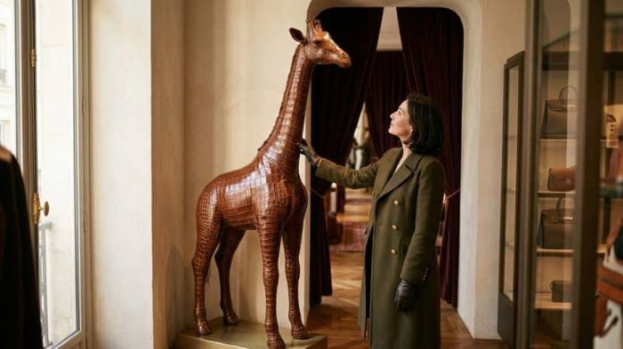
Christmas 2001. One of the Hermès boutiques was hosting a special Petit h exhibition-workshop, where the brand presented unusual objects created from leftover materials.
Among them was a two-meter-tall “crocodile giraffe.”
That day, a couple walked into the boutique. They were planning to buy a handbag, but the model they wanted was not available. So Pascale, a Hermès sales adviser at the Paris boutique, jokingly suggested that they take a look at the giant sculpture instead. Their children were immediately fascinated. Two minutes later, the €100,000 crocodile giraffe was sold.
According to Pascale, the amount meant very little to the family.
When €100,000 Is Just Pocket Change
The story may sound extraordinary, but in the world of the ultra-wealthy, it is far from unusual.
Pascale, who later moved to Hermès’ after-sales department, spent years observing the behavior of the brand’s wealthiest clients and noticed a clear distinction between the simply wealthy and the ultra-rich.
The former earn well, occasionally treat themselves to a cashmere sweater or silk scarf, and gradually build up a Hermès dinnerware collection.
The latter walk into the store and buy whatever catches their eye without even looking at the price tag.
And the difference between these two groups is not simply the size of their bank accounts.
Affluent customers often choose items that signal their social status. At one point, for example, a classic beige Birkin 40 could serve as such a status symbol.
Ultra-wealthy clients are looking for something else entirely: absolute exclusivity. They want a limited edition. A rare material. The first example. Something that none of their friends owns yet.
One Hermès client is such a devoted fan of the brand’s signature sandals that he owns them in virtually every available color. At around €800 a pair, that already amounts to a substantial collection.
But what he really wanted was another pair — sandals made from Himalayan crocodile leather, now valued at more than €7,000.
And it is not even about the €7,000 price tag. The real prize is being first.
From a €2,700 Charm to a €150,000 Kelly
To understand the scale of prices in the Hermès universe, consider a few examples:
- Gris-gris key ring or charm — around €2,700;
- Belt with the signature H buckle — around €1,000;
- Throw — up to €5,500;
- Signature sandals — nearly €800 a pair;
- Himalayan crocodile sandals — more than €7,000;
- Kelly bag — between €25,000 and €150,000, depending on the material and craftsmanship.
The particularly high prices of exotic-skin pieces are explained not only by the rarity of the material but also by the craftsmanship involved.
Hermès crocodile bags are made by hand. From selecting the skin to the final assembly, the process takes considerable time, and the pieces are produced in limited quantities.
That is why simply walking into a boutique with enough money is often not enough to buy the rarest models.
At Hermès, Relationships Matter More Than Money
Access to the most coveted pieces is built through long-term relationships between clients and sales advisers.
Sometimes, that relationship develops over months or even years.
Certain rare bags and limited-edition pieces are offered primarily to the brand’s most loyal clients — those who shop regularly and are not looking to resell their purchases on the secondary market.
That is how the unique Hermès world works, where money alone does not guarantee access to the most coveted pieces.
Close relationships with clients can sometimes lead to completely unexpected situations.
On one occasion, a grateful customer gave Pascale a €35,000 watch. However, she was not allowed to keep the gift.
Less patient clients, meanwhile, can react far more emotionally when their desired item is unavailable.
One 19-year-old woman came into the store looking for a Kelly that she wanted to buy immediately. When she learned that the model she wanted was not in stock, she burst into tears and said she could not go on vacation with her friends without the bag.
Luxury That Is Expected to Adapt to the Client
Today, Pascale works in Hermès’ after-sales department, where she encounters a very different side of the luxury lifestyle.
On one occasion, a man brought in a pair of leather sandals that he had practically destroyed within a month.
The care instructions clearly warn against wearing the shoes to the beach, as water, salt, sunlight and sand can seriously damage the leather.
Yet the customer returned with the badly damaged sandals, with sand still visibly embedded in the split leather.
When he was told what had caused the damage, the man simply shrugged: it was private beach sand, after all.
That phrase perhaps best captures the unique philosophy of the ultra-wealthy client: if an item costs several thousand euros, it should be able to withstand anything its owner wants to do with it.
And that is why, in the world of Hermès, true status is no longer measured by the price of a handbag. True luxury is the ability to buy something no one else has — without even having to think about how much it costs.