Why Are We So Fascinated by Vampires? From Lestat to the Sexiest Bloodsuckers on TV
 23:01 25 August, 2026
Vampire Lestat has captivated fans around the world with his outrageous antics. But our obsession with sexy vampires goes far beyond forbidden love, bare torsos and a taste for LSD-laced blood, as The Guardian writes.
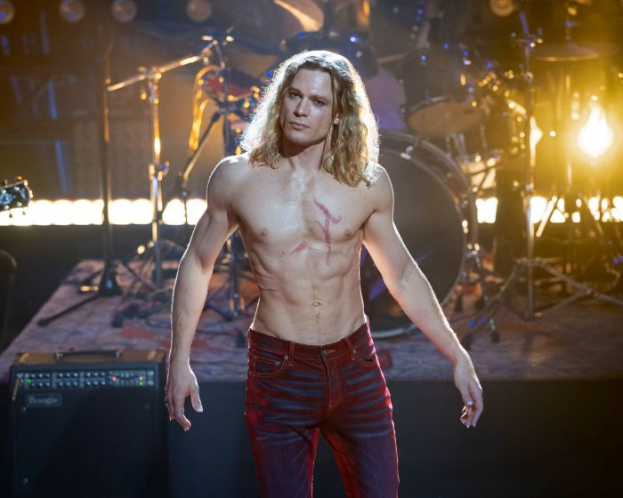
If you want television audiences to forgive a fictional man for practically anything, all you have to do is sharpen his fangs and dress him in velvet. A striking example is the provocative drama The Vampire Lestat, which became a cult hit in the US earlier this year. The series has now arrived in the UK, and Sam Reid’s searing performance as Lestat has fans practically falling at his feet.
The first two seasons, released under the title Interview with the Vampire, centered on an interview in which Louis (Jacob Anderson) revealed the details of his toxic relationship with Lestat to journalist Daniel Molloy (Eric Bogosian). Now the story focuses directly on Lestat — hence the new title and a new narrator. The golden-haired Prince of Darkness trades centuries of life in the shadows for a career as a glam-rock star.
As a result, Lestat has become the ultimate “dandy of the underworld.”
On stage, he writhes, growls and moves seductively while playing the violin and belting out deliberately theatrical songs. Glitter sparkles across his eyelids, while his long hair is styled in ribboned braids.
And offstage, his life becomes even more unhinged: he is involved in a sexual relationship with his mother, gets high on LSD-laced blood and comes out with lines such as, “I carry with me an immortal erection.”
But Lestat is far from the first vampire to win over audiences with his looks and seductive appeal.
Eric Northman from True Blood helped make Alexander Skarsgård a star — and who could forget his full-frontal appearance as he lounges on an icy mountaintop reading a book? Lady Gaga, as the Countess in the fifth season of American Horror Story, proved that bloodlust can be the ultimate fashion accessory.
Seductive vampires also regularly appear in The Vampire Diaries, Supernatural and virtually the entire cast of What We Do in the Shadows, where the characters somehow remain ridiculously attractive despite their utterly absurd behavior.
Claes Bang in the chaotic BBC version of Dracula was also undeniably easy on the eye. Even Jeff’s brief appearance as a vampire in the Community episode “Horror Fiction in Seven Spooky Steps” is enough to make Annie swoon over her tame bloodsucker.
But why are we so drawn to vampires?
They embody absolute freedom, power, immortality, beauty and, often, forbidden love. Vampires also tap directly into our darker side, becoming the perfect on-screen embodiment of the toxic romantic fantasies we secretly indulge in.
Popular culture has long conditioned us to sympathize with the romantic hero who relentlessly pursues a woman despite her rejection until he eventually wins her over. With vampires, that trope becomes the ultimate version of the “I can fix him” fantasy.
What could be more intoxicating than a dangerous immortal capable of wiping out entire cities, yet willing to kneel at your feet?
Just look at Spike from Buffy the Vampire Slayer — the ultimate leather-clad bad boy who is quite literally transformed by the love of a good woman.
His opposite is Angel, whose curse is structured so that one night of incredible sex with Buffy drives him insane, destroys his moral compass and turns him back into a psychopathic monster.
But beneath the leather jackets, bad-boy redemption stories and razor-sharp cheekbones, there is something deeper at work.
In her book Vampires: A History and Folklore of the Undead, Agnes Hollyhock explores how gothic literature used the vampire figure to challenge Victorian moral panic.
In a society where any form of non-normative intimacy was strictly condemned, the vampire’s bite symbolized forbidden desire — a complete surrender of control, an exchange of bodily fluids and a rejection of the rules of polite society.
Vampires disrupt heteronormative expectations because they exist outside the familiar human concept of time. They do not fit into traditional family structures or conform to rigid gender roles. Their power is based on charisma and seduction rather than conventional ideas of masculinity or femininity.
Lestat embodies all of this through his flamboyant, powerful and unapologetically queer persona. That is precisely why fans cannot stop discussing his wild romance with Louis — especially the passionate kiss that suddenly turns into a brutal murder in the second season.
Lestat has become a true symbol of sexual freedom. And perhaps that is why viewers seem willing to accept even his scandalous affair with Gabriella (Jennifer Ehle), the woman he turned into a vampire — and who also happens to be his mother.
So what is it that fascinates us — the danger? Immortal beauty? The possibility of breaking free from social constraints?
The television vampire remains irresistible. No wonder so many viewers are willingly lining up to offer their necks to Lestat.