Leonardo da Vinci as a Culinary Genius: What the Great Artist Ate, Cooked and Created in the Kitchen
 22:12 26 August, 2026
Imagine Leonardo da Vinci not standing in front of an easel in his workshop, but in a kitchen. Instead of a paintbrush, he has a knife; instead of a palette, a chopping board. Nearby lies a drawing of a mechanism designed to make a cook’s work easier, while Leonardo himself is jotting down unusual food combinations and creating his own recipes.
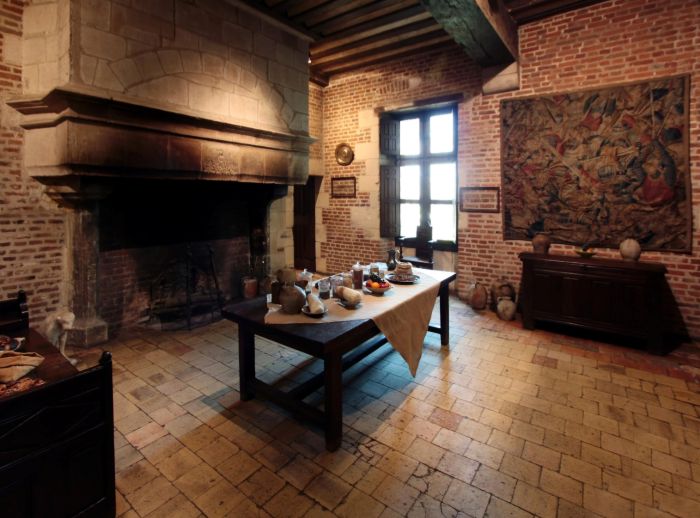
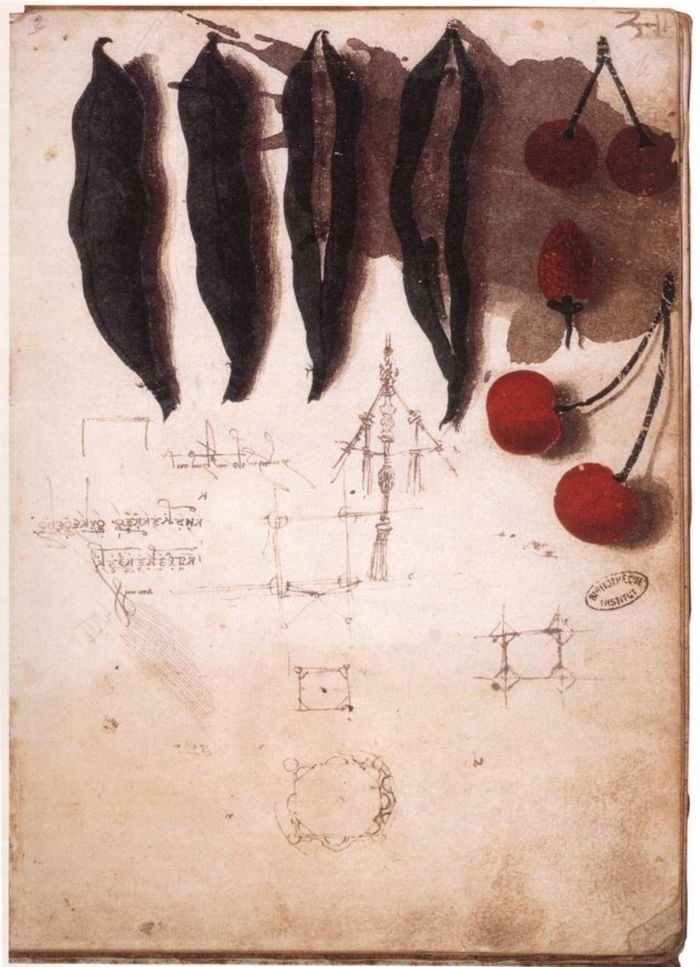
The kitchen actually occupied a much larger place in his life than is commonly believed. Da Vinci was fascinated by ingredients, cooking techniques, the design of kitchens and even how people should eat in order to stay healthy. His notebooks contain shopping lists, observations about nutrition, food prices and designs for kitchen machinery. Together, they offer a glimpse into everyday Renaissance life — without the museum dust and gilding.
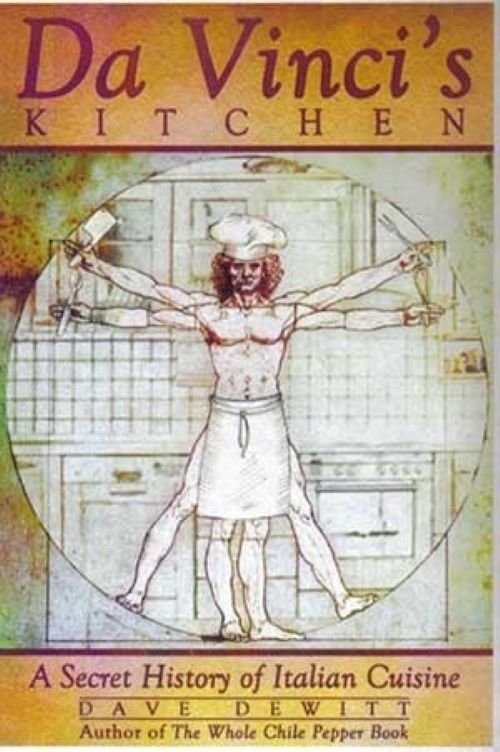
There is also Dave Dewitt’s book Da Vinci’s Kitchen: A Secret History of Italian Cuisine, which brings together culinary stories, notes and recipes associated with Leonardo. It offers a different perspective on the artist we think we know — not only as the creator of the Mona Lisa, but also as a man fascinated by what happens to food before it reaches the plate.
Leonardo Had His Own Food Philosophy
To begin with, Leonardo was interested in more than simply eating delicious food. He was fascinated by the relationship between diet and well-being.
His notes contain recommendations that could easily appear today in a wellness app: don’t eat without an appetite, avoid overeating, chew your food thoroughly, choose simple and properly prepared ingredients, don’t drink wine on an empty stomach and dilute it with water.
Five hundred years later, we call this mindful eating. Leonardo simply recorded his observations in mirror writing.
He was particularly fond of simple foods. His lists mention bread, mushrooms, vegetables, fruit, legumes, eggs, cheese, herbs and spices. Meat is a more complicated matter: it does appear in household and purchasing records, although some evidence suggests that Leonardo himself may have avoided meat. Historians still cannot confidently describe his diet as entirely vegetarian.
Another fascinating detail is that Leonardo’s personal library contained Bartolomeo Platina’s De honesta voluptate et valetudine — one of the earliest printed European treatises on food, health and cooking. Published in 1470, the book combined recipes with discussions of the health benefits of different ingredients.
So yes, Leonardo had his own culinary reference guide.
Recipes That Sound Like a Gastronomic Dream
Dave Dewitt’s book brings together recipes associated with Leonardo’s culinary notes. Some sound perfectly familiar today. Others make you read them twice.
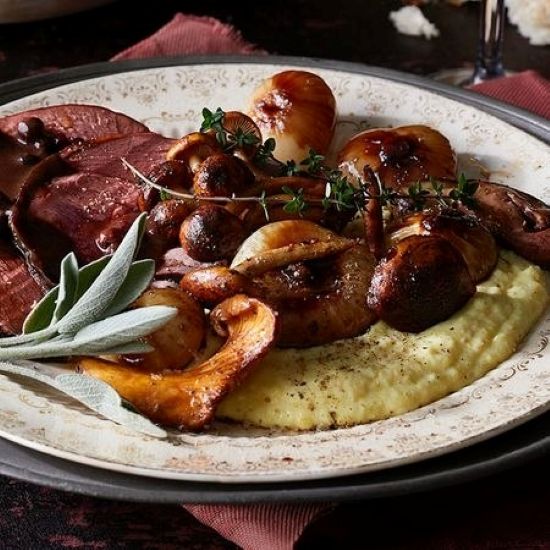
For example, one recipe calls for a pitted plum to be cut into four pieces and placed on a thin slice of raw beef that has first been dried in the sun for three months. On top goes an apple blossom.
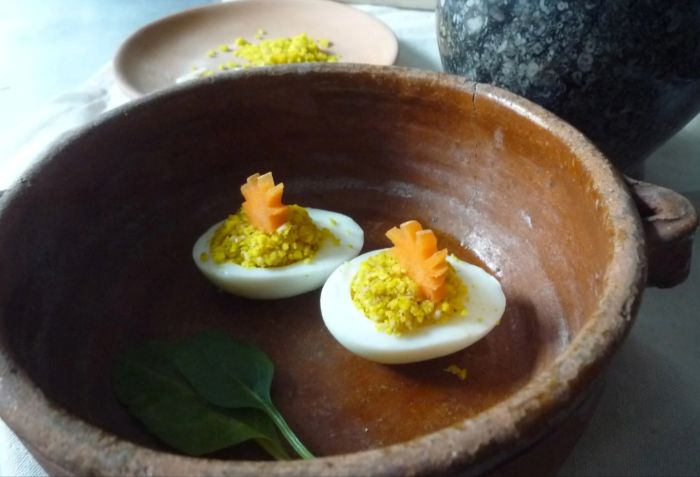
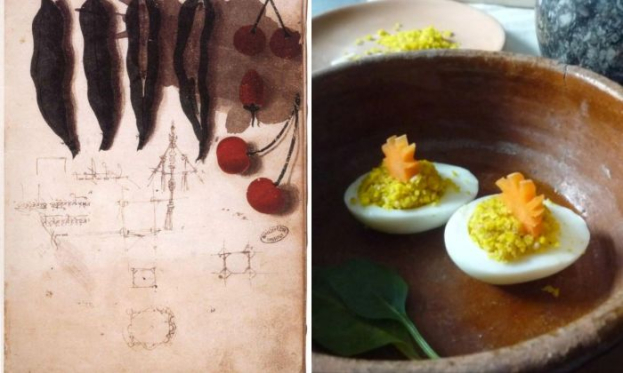
Another recipe calls for a hard-boiled egg to have its yolk removed, mixed with peppered pine nuts and then placed back inside the egg. A cream sauce can be added if desired.
There is also a dish made with tender boiled pork. The meat is finely mashed, mixed with grated apple, carrot and egg, shaped into balls, fried until golden brown and served over rice.
Renaissance fine dining was considerably more adventurous than we tend to imagine.
What is particularly interesting is that recipes inspired by Leonardo have found their way back into modern culinary culture. PBS, for example, has published a collection of dishes titled Eat Like Leonardo da Vinci, featuring recipes with mushrooms, lentils, root vegetables and other simple ingredients.
Leonardo’s Secret Dietary Weapon: Wine
Despite his love of moderation, it would be difficult to imagine Leonardo as someone who deliberately avoided wine. His notebooks contain prices for food and drinks, including wine. In one note, he even compares the price of a bottle of wine, a pound of veal and a basket of eggs: according to his record, each cost one soldo.
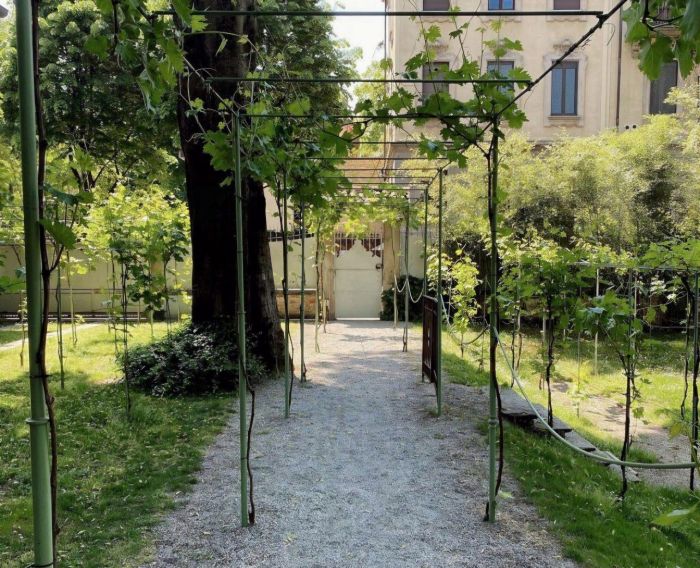
But the more interesting detail is that Leonardo left specific recommendations for drinking wine. He advised diluting it with water, drinking it in moderation and avoiding it between meals or on an empty stomach. In his view, wine could certainly be part of a healthy lifestyle — as long as dinner did not turn into a contest with your own liver.
This fits neatly into his broader philosophy of eating. Leonardo advised against eating without an appetite, recommended moderate dinners, encouraged thorough chewing and favored simple, well-prepared foods. Even after a meal, he suggested standing for a while rather than immediately going to bed.
Five centuries later, the advice sounds remarkably familiar: no overeating, moderate alcohol consumption, simple food and a little movement.
Leonardo also had another reason to regard wine as more than simply a dinner drink. In Milan, he owned his own vineyard, a gift from Ludovico Sforza. The vineyard was located near Santa Maria delle Grazie — just minutes from where Leonardo was working on The Last Supper.
A Taste of the Renaissance: Leonardo da Vinci’s Recipes
Dave Dewitt’s Da Vinci’s Kitchen brings together recipes associated with Leonardo’s culinary notes and the gastronomic culture of his era. Some dishes could easily be imagined on the menu of a good modern Italian restaurant. Others sound as though a chef decided to see just how far culinary experimentation could go.
Here are some of the most intriguing.
Thinly Sliced Meat With Vegetables
One dish associated with Leonardo’s courtly culinary world follows a simple principle: meat is sliced very thinly, while vegetables are arranged on top to create a decorative pattern.
This was particularly characteristic of Leonardo’s approach: food should not only taste good, but look beautiful.
Vegetable Soup
Simple vegetable soups fit perfectly with Leonardo’s ideas about healthy eating. His culinary world valued seasonal vegetables, legumes, greens and other minimally processed ingredients.
Mushrooms With Herbs and Spices
Mushrooms feature prominently among the foods mentioned in records of the period’s diets and purchases. They were combined with herbs, spices and other simple ingredients.
Lentils With Vegetables
Legumes were an important part of the Italian diet of the period and fit well with Leonardo’s appreciation for simple plant-based foods. Lentils could be combined with seasonal vegetables, herbs and spices.
By Liana Aghajanyan