A Legend Is Gone: Yayoi Kusama, the Artist Who Turned Polka Dots Into a Global Art Symbol, Dies at 97
 13:16 27 August, 2026
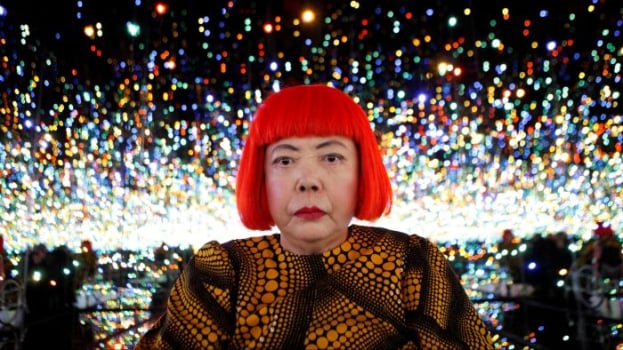
Japanese artist Yayoi Kusama, one of the world’s most famous and commercially successful artists, has died at the age of 97. The news was announced in a statement published on the artist’s official website.
“It is with deep sorrow that we announce the passing of Yayoi Kusama at a hospital in Tokyo on August 14,” the statement said.
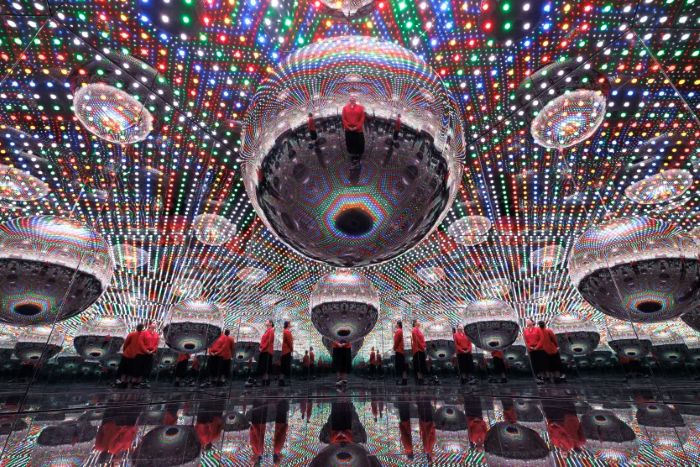
By the time of her death, Kusama had become one of the most popular and commercially successful figures in contemporary art. Her celebrated Infinity Mirror Rooms — immersive installations that surround visitors with seemingly endless reflections of light and color — have attracted millions of people to museums and galleries around the world, CNN reports.
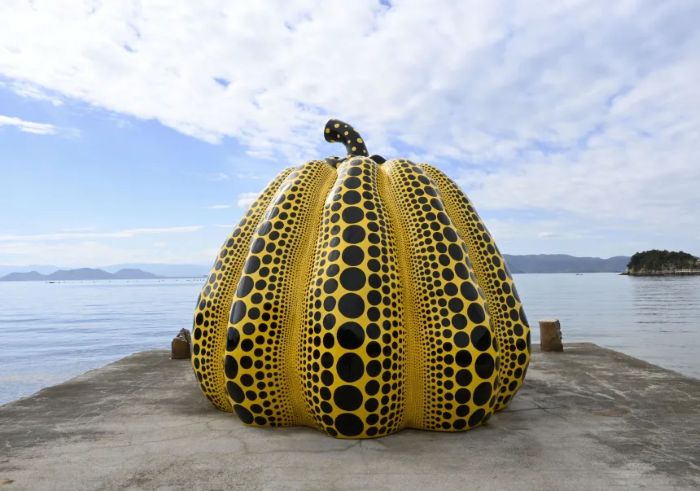
Her instantly recognizable pumpkin sculptures and polka-dot paintings became equally iconic, fetching millions of dollars at auction.
Yet the global recognition Kusama achieved later in life was particularly remarkable given the many hardships she overcame, including childhood trauma, mental illness and decades of relative obscurity.
Kusama was born in 1929 into a troubled family where she experienced abuse. Much of her childhood was spent at a military factory, sewing parachutes for the Japanese Imperial Army during World War II. Even then, she experienced vivid hallucinations in which the world around her appeared to be filled with endless patterns of dots — a motif that would eventually become one of the defining elements of her art.
Early in her career, she embraced abstraction and repetitive dot patterns, which later became the foundation of her celebrated Infinity Nets series.
At 27, Kusama moved to the United States in the late 1950s. She initially arrived in Seattle before relocating to New York, where the Pop Art movement was beginning to take shape.
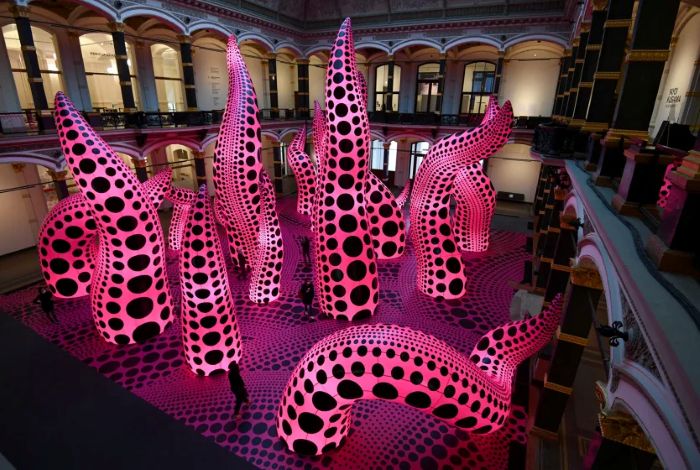
There, she effectively turned the traditions of Abstract Expressionism on their head, filling her works with swirling dots, vivid colors and phallic forms. She produced an enormous body of work across painting and sculpture, as well as film, literature and performance art.
In the spirit of the counterculture of the 1960s, Kusama staged so-called “happenings,” turning participants’ nude bodies into living canvases covered in dots.
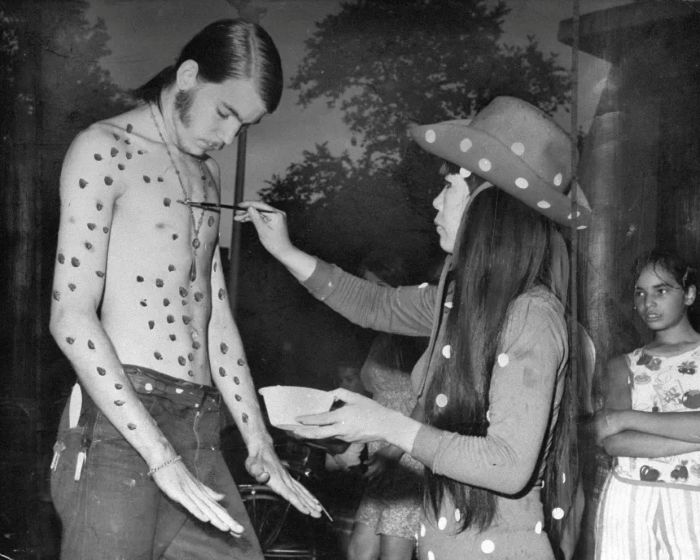
In 1968, she also made headlines with an extraordinary open letter to US President Richard Nixon, in which she offered to have sex with him in exchange for ending the Vietnam War.
Apparently, Nixon did not respond to the proposal. The Vietnam War ended only in 1975 following the fall of Saigon. But episodes like this demonstrated that behind Kusama’s colorful, exuberant works was an artist willing to confront some of the most pressing issues of her time, including gender equality, gay rights and the anti-war movement.
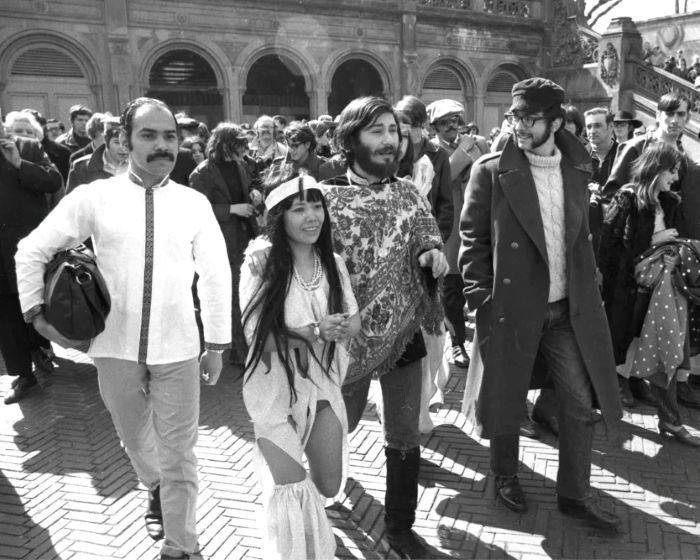
The art establishment frequently borrowed Kusama’s ideas and, at times, directly copied her work. Yet it never fully embraced her. Despite friendships with artists including Andy Warhol and Donald Judd, Kusama remained something of an outsider.
As Alexandra Munroe, senior curator of Asian art at the Solomon R. Guggenheim Museum, wrote, several factors separated Kusama from the Western artistic mainstream, including her background and the psychological dimension of her work.
In the early 1970s, Kusama returned to Japan and soon virtually disappeared from public life. Several years later, she voluntarily moved into a psychiatric hospital in Tokyo, where she continued to live for the rest of her life.
Obsessed with art and extraordinarily prolific, Kusama rarely made preliminary sketches before beginning a work. She continued creating art at the hospital and in a small studio nearby. After more than a decade of relative obscurity, a major reassessment of her work began in the late 1980s.
As contemporary art was viewed through a new lens, Kusama’s work received the recognition it had long deserved. Her once-forgotten paintings began appearing in major Western exhibitions. In 1989, a major retrospective of her work was held in New York at the Center for International Contemporary Arts.
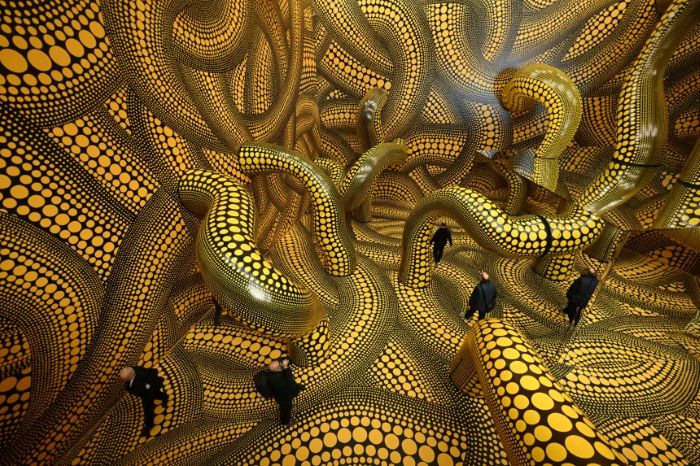
Then, in 1993, the international art world finally gave Kusama its full recognition by inviting her to represent Japan at the Venice Biennale. Remarkably, 27 years earlier she had effectively shown up at the event uninvited, installing 1,500 mirrored spheres on the lawn outside the Italian Pavilion. Organizers eventually intervened to stop her from selling the plastic spheres for $2 apiece.
As her reputation grew, so did the value of her work. In May 2022, one of the artist’s early paintings, Untitled (Nets), sold for nearly $10.5 million, setting an auction record for Kusama’s work. She also consistently ranked among the world’s best-selling artists: in 2023 alone, her works sold for a combined $190.5 million at auctions in Hong Kong, New York and other cities.
Her iconic pumpkins became highly coveted art objects, often appearing at museums, cultural institutions and contemporary residential developments for enormous sums. One such sculpture stood on the Japanese island of Naoshima before being swept into the sea by a typhoon in 2021.
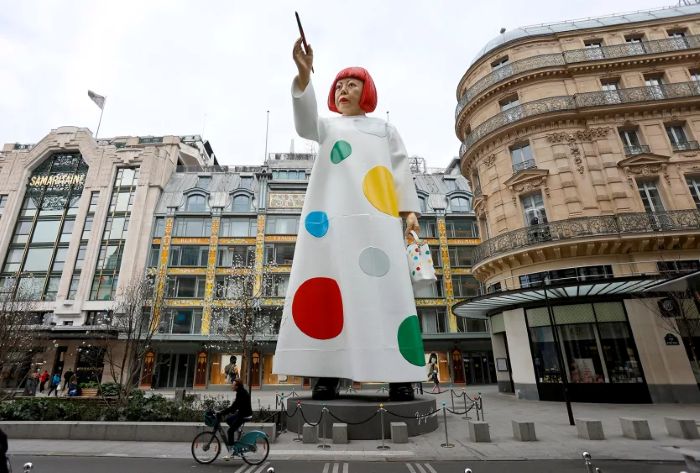
In 2017, a museum dedicated exclusively to Kusama’s work opened in Tokyo. Meanwhile, photographs taken by visitors inside her Infinity Mirror Rooms flooded Instagram. Her collaboration with Louis Vuitton and the 2018 documentary Kusama: Infinity made the artist’s face recognizable far beyond the art world — from advertising billboards to movie theaters.
Yayoi Kusama may have been an artist ahead of her time. But eventually, the world caught up with her.