Archaeologists May Have Found Jesus Christ’s Tomb After 2,000 Years
 16:16 28 August, 2026
Italian archaeologists excavating beneath the Church of the Holy Sepulchre in Jerusalem have uncovered an ancient burial landscape and tomb that appear to closely match descriptions found in the Gospels.
The discovery, which researchers have spent years investigating, was detailed in a preliminary study published in the Jerusalem-based archaeological journal Liber Annuus.
“We found evidence of a unique burial landscape,” said the study’s lead archaeologist, Francesca Romana Stasolla of Sapienza University of Rome.
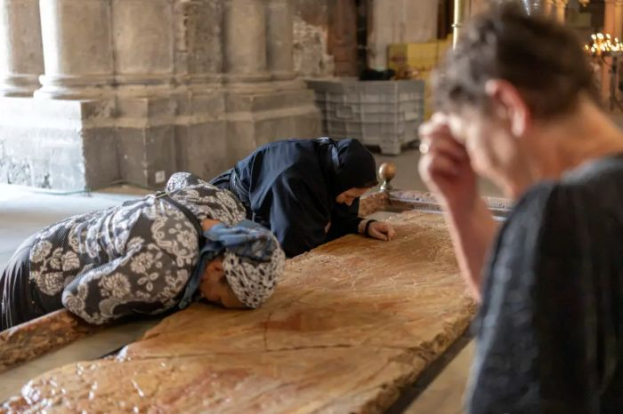
Researchers have been excavating beneath the Church of the Holy Sepulchre, a fourth-century Roman church built over the sacred site where millions of Christians believe Jesus Christ was crucified, buried and resurrected on Easter Sunday. The church attracts around four million pilgrims from around the world every year.
During the final stages of excavations in 2025 — work that began three years earlier as part of a floor restoration project — the team uncovered an unusual landscape:
- An abandoned quarry;
- Cultivated plots of land;
- Rock-cut tombs;
- An ancient garden.
The discovery closely echoes a passage from the Gospel of John:
“In the place where he was crucified, there was a garden, and in the garden a new tomb, in which no one had ever been laid” (John 19:41).
Although, naturally, no body was found inside the tomb, the number of apparent parallels is striking:
- The location: The Gospel of John states that the crucifixion took place near Jerusalem, while the Letter to the Hebrews says it occurred outside the city gates. That is precisely where the quarry was located during the time of Christ.
- Agricultural use: Sections of the quarry, which reached depths of up to 6 meters, were filled with soil and used for agriculture. Researchers found traces of olive trees and vineyards dating to the first century AD — around 33 AD, the approximate time of Jesus’ death.
- Rock-cut tombs: The tombs carved into the rock are consistent with descriptions found in the Gospels of Matthew, Mark and Luke.
“The Gospel mentions a green area between Golgotha and the tomb, and we have identified these cultivated fields,” Stasolla said.
From Emperor Hadrian to Constantine: the site’s historical trail
The archaeological evidence extends far beyond the biblical texts:
- In the second century AD, one of the chambers was sealed off by a Roman structure built during the reign of Emperor Hadrian.
- Around 200 years later, builders working under Emperor Constantine demolished the Roman structure and excavated the site to uncover the tomb. They separated it from the other chambers and built a Christian shrine around it for pilgrims.
While the discovery does not provide 100-percent scientific proof that Jesus himself was buried there, the extensive efforts of early Christians to preserve the site suggest that knowledge of the tomb may have been passed down from generation to generation since the first century.
“The real treasure we are uncovering is the history of the people who, through their faith, made this place what it is,” Stasolla emphasized. “Whether someone believes in the historicity of the Holy Sepulchre or not, the fact that generations of people believed in it is objective. The history of this place is the history of Jerusalem and the history of devotion to Jesus Christ.”