Where to Survive the End of the World? Scientists Name the Best Place on Earth
 15:30 15 September, 2026
Have you ever wondered where you would run if the end of the world came one day? Scientists appear to have found an answer.
A new study has identified the countries considered the most and least suitable for survival in the event of a global catastrophe. The researchers took into account population size, geographical features, food and energy resources, as well as a country’s ability to maintain stability during a crisis.
According to the study, published in the journal Global Challenges, the ideal refuge in an apocalypse would be a remote location with sufficient food and energy supplies and an effective government capable of keeping the situation under control during the most difficult times.
Experts advise those seriously preparing for the end of the world to stay away from major cities. In the event of a full-scale apocalypse, they could become genuine “death traps.”
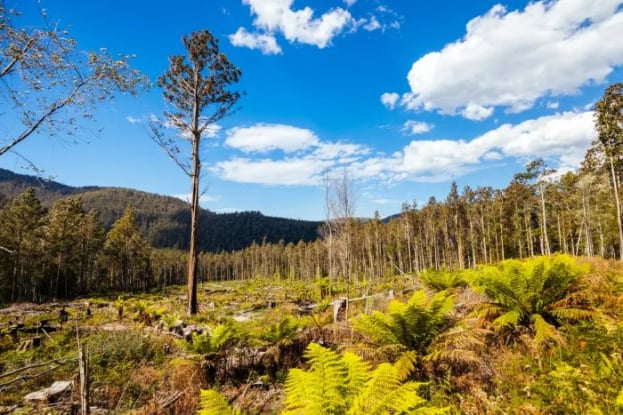
The researchers concluded that Australia is probably the most resilient place on Earth — particularly the island of Tasmania.
The reason is Australia’s geographical isolation from the rest of the world, its significant reserves of minerals that can be used for energy production, and its high levels of food production, The Times of London reports.
Florian Yen, a professor at Goethe University Frankfurt and the study’s lead researcher, believes that those hoping to survive the end of the world would be better off avoiding countries such as Russia.
“It is one of the main targets for a nuclear strike, and it also receives low scores for the effectiveness of government, levels of inequality and corruption. These are the factors that matter most, and they are extremely difficult to change,” Yen said.
The United Kingdom would also not be the safest choice, according to the researchers.
On the one hand, the country’s island status provides a certain degree of protection, while its advanced healthcare system could prove to be a major advantage during a pandemic.
On the other hand, the UK remains a potential target for a nuclear strike and is located in a region vulnerable to severe space weather events. In the event of a global catastrophe, this could potentially disable much of the technology on which modern society has come to rely.
Even Australia, which received the highest scores as a place to ride out the end of the world, has serious drawbacks. Researchers cite flooding and wildfires among them.
Moreover, Australia’s isolation from the rest of the world, which would be a huge advantage in the first days of a catastrophe, could eventually become a problem. Virtually any prosperous society would ultimately need to maintain connections with the outside world.
And although the researchers identified several attractive places where people might try to ride out a global catastrophe, their final conclusion was grim and blunt: “In reality, there is nowhere to hide.”