‘Let’s Make Death Optional’: How Billionaires Are ‘Playing God’ in Their Own Caribbean Paradise
 21:35 28 September, 2026
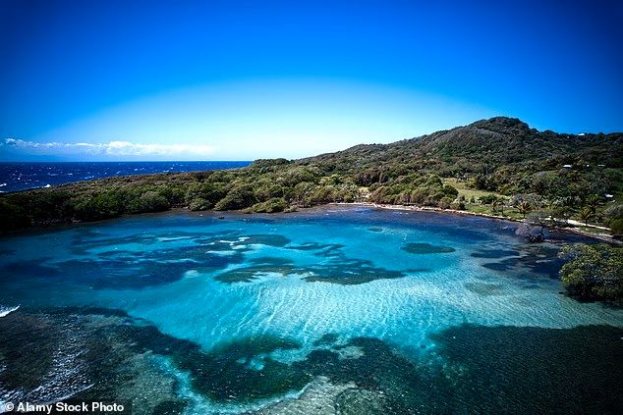
Roatán, an island in the Caribbean, is surrounded by the second-largest coral reef in the world, which is why most tourists come here for world-class diving.
But take a turn off the main road and drive about 25 minutes northeast of the airport — as a Daily Mail reporter did last week — and another, far more controversial attraction comes into view, one that has put the island on the global map.
Armed security guards stand at the gate. Beyond it, Honduras seems to end in many respects — and the private city-state of Próspera begins.
Before allowing a visitor through, a guard requires them to sign a “temporary tourist access permit” and a “coexistence agreement.” By signing the document, visitors agree to abide not by Honduran law, but by Próspera’s own legal framework.
Then comes an almost symbolic miracle: the quality of the road suddenly improves.
This is the controversial territory often described as a “country within a country.”
Silicon Valley billionaires who have invested hundreds of millions of dollars in Próspera and other so-called “special economic zones” around the world believe they are creating a model for the future of human society.
More precisely, they are creating a model of the future as they envision it: minimal regulation, minimal taxes and maximum technology. It is a libertarian utopia in which the state has as little power as possible and individuals have as much freedom as possible.
For some, it is even a matter of survival. They believe the world is gradually descending into chaos.
Among Próspera’s investors are Palantir co-founder and PayPal co-founder Peter Thiel, OpenAI CEO Sam Altman and venture capitalist Marc Andreessen. Together, they have invested at least $200 million in the project.
For now, Próspera occupies roughly 405 hectares.
The project continues a highly eccentric tradition dating back at least to the Principality of Sealand — the “micronation” created by a British pirate radio broadcaster on a former offshore platform in the North Sea, which he declared independent in 1967.
Unlike Sealand, which has never been recognized by any country, Próspera’s existence is officially recognized by Honduras.
It cannot, however, fly its own flag, while foreign policy and criminal law remain under Honduran control. Próspera nevertheless insists that local police cannot enter its territory without being accompanied by its own personnel.
In many other respects, however, the impoverished Central American country has effectively transferred part of its territorial sovereignty to a private commercial entity that describes itself as “the future of human governance — private and profit-oriented.”
That has angered many Hondurans, who question how much benefit the project has actually brought them.
Supporters of private cities argue that such glossy technology enclaves will attract entrepreneurs who, freed from excessive regulation and high costs, will be able to achieve major scientific and technological breakthroughs. In their vision, this will help lift local residents out of poverty and persuade talented Hondurans not to leave a country plagued by corruption and crime.
Under a 2017 agreement, Próspera pays the Honduran government 12% of the taxes and fees it collects. At the same time, 90% of jobs are supposed to be held by Honduran citizens.
Próspera founder Eric Brimen, a Venezuelan-born investment fund manager, says he created the project eight years ago as an “anti-poverty initiative.”
Today, the effective business tax rate in Próspera is just 1%, personal income tax is 5%, VAT is 2.5%, and there is no capital-gains tax at all.
Companies operating in the city can choose the rules governing their businesses from a special “menu” compiled from regulations in more than 30 countries. If none of the options suits them, they can create their own rules.
There is no minimum income or wealth requirement to live or work in Próspera. Foreigners who want to settle there permanently, however, must pay an annual fee of $1,300.
The American company that owns Próspera hopes eventually to attract thousands of entrepreneurs. They are expected not only to move their businesses there, but to relocate with their families to a beautifully designed city that will be built by robots and giant 3D printers.
Critics, however, argue that the noble intentions behind the idea of “charter cities” or “startup cities” have been distorted by wealthy and influential investors who simply want to become even richer and more powerful.
In Próspera’s case, critics say, these are the same “tech bros” who dream of escaping politicians with “progressive” views and expensive bureaucracy.
Skeptics argue that residents of such places want to “play God.” And because most companies registered in Próspera are not even physically located there, opponents also describe the territory as a potential tax-avoidance haven.
Próspera sits on a picturesque stretch of coastline with sandy beaches and jungle-covered hills. Bright green hummingbirds and enormous butterflies flit among the trees.
The city has its own currency — the cryptocurrency Bitcoin. It also has its own courts: non-criminal cases are handled online by several retired judges from Arizona.
The founders claim that around 500 companies, mostly technology firms, have invested in Próspera. Yet only about 30 are physically present on the territory.
The project’s main asset is its emerging biotechnology industry. In a quiet corner of the enclave, a clinic conducts research that is prohibited in the United States and some other countries.
Much of the research focuses on longevity — one of Silicon Valley’s most persistent obsessions.
In 2024, Próspera even hosted a conference called Make Death Optional, bringing together dozens of people obsessed with extending human life.
One of the clinic’s projects involves follistatin gene therapy. It involves introducing DNA molecules designed to stimulate the body to repair its own tissues.
Experiments on mice have shown that the therapy can extend their lifespan by almost one-third.
The therapy is prohibited in the United States, but the clinic’s clients have included Khloé Kardashian, who received “follistatin” in Mexico, and billionaire Bryan Johnson, the eccentric tech entrepreneur who has spent years attempting to outsmart death by experimenting on his own body.
Próspera is actively promoting so-called medical tourism, according to its representative Ricardo González, who describes it as just one example of the city’s business-friendly approach.
But despite the idyllic scenery and blazing sunshine, it is unlikely that many Silicon Valley billionaires would want to move here permanently just yet.
Próspera does not even have a supermarket. If you need so much as a bottle of water — and you very well might, since Próspera is located close to the equator and the heat can be unbearable — you have to go to the only store. And you have to pay for your purchase in bitcoin.
Próspera’s leadership hopes that within 20 to 30 years, the number of young, ambitious entrepreneurs and their family members living there could reach 100,000.
For now, however, there are few amenities and even fewer residents, and Próspera remains more of a vast construction project than a finished city.
The business district consists of only a handful of buildings, including a small factory where $100,000 robots manufacture designer furniture.
There is also a luxury seaside resort with a golf course and expensive villas, most of them owned by wealthy Hondurans. However, the road that is supposed to connect the resort with the business district has still not been built.
Próspera’s permanent population is around 200. Its residents insist that they are working to create a better world.
Perhaps they are sincere. But that does not necessarily mean all of their ideas seem particularly sound.
In the 14-story Duna Tower lives biohacker Alice Chen, who has developed a drink that does not sound especially appetizing: it consists of living algae. She claims the drink can add 20 years to a person’s life.
Chen says Canadian regulators would not allow her and a team of volunteers to test the drink’s safety for human consumption.
There is also Rich Lee, an American “grinder” — someone who practices extreme body modification. He wants to persuade people to implant microchips under their skin. Lee himself already has seven.
Among them is a bank-card chip with contactless payment capability implanted in the back of his right hand, Bluetooth earbuds implanted in his ears and magnets in his fingertips that, he says, allow him to “touch the invisible world of electromagnetic fields.”
The latter ability, Lee claims, particularly impresses people at the bar. For example, he can supposedly suspend a bottle cap from his finger.
Body-modification technologies exist in a legal gray area when it comes to safety. But in Próspera, of course, that is not considered a problem.
If something goes wrong, there is no hospital here either.
Próspera is far from the only startup-city project under development, although it is one of the few that actually exists.
Similar projects are emerging across Latin America, the Caribbean, Africa and Asia. And, critics note, they are particularly common in poorer countries willing to surrender part of their sovereignty in the hope of gaining economic benefits.
Perhaps the most ambitious project is called Praxis. Its founder, technology entrepreneur Dryden Brown, sees it as a way to restore Western civilization.
“Just as warrior kings once sought the Holy Grail, so too will we build an empire where true power flows from heroic courage and alignment with divine order,” the Praxis “Declaration of Ascension” states.
The project is envisioned as a high-tech Shangri-La where all education will be delivered through AI and all food will be prepared by robots. Even the police could be robotic.
A former Praxis employee described Brown’s ideal system of government as “authoritarian fascism.”
Brown himself claims to have already secured at least $500 million in investment, with Peter Thiel once again among the major backers. More than 150,000 people have allegedly expressed interest in relocating.
Yet despite exploring potential sites in the Mediterranean and Greenland, Brown has still not found a location where he can bring his vision to life.
On the small Caribbean island of Nevis, part of the federation of Saint Kitts and Nevis, local residents are currently opposing plans by Belgian crypto billionaire Olivier Janssens to turn one-tenth of the island into Destiny — a futuristic settlement for 10,000 wealthy people.
Like Próspera, Destiny is supposed to have its own courts and currency.
Janssens calls the planned project “the Monaco-Dubai of the Caribbean.” But because Nevis has a population of only around 13,000, opponents fear that Destiny could effectively take over the entire island and trigger its secession from Saint Kitts and Nevis.
In Europe, dozens of technology billionaires are attempting to create a self-proclaimed “crypto-state” on a marshy stretch of disputed territory along the Danube.
On the Serbia-Croatia border, the “Free Republic of Liberland” was founded by Czech libertarian politician Vít Jedlička, who declared the territory independent in 2015.
Liberland is roughly comparable in size to Gibraltar. Around 200 companies are now registered there, although there is still no full-scale infrastructure.
The irony is that Serbia and Croatia cannot agree on who owns the territory, but they agree on one thing: Mr. Jedlička is not allowed in.
Even British actor Idris Elba is involved in the creation of a special economic zone — in his case, an “international city” on Sherbro Island in Sierra Leone, his father’s homeland.
The culturally diverse “eco-city” is supposed to be powered by a wind farm and, according to Elba, will “combine African traditions, dynamism and pride with modern infrastructure and services.”