Mark Zuckerberg Reinvents His Look: How the Billionaire Turned Fashion into Part of Meta’s Strategy
 20:30 30 September, 2026
Just a few years ago, Mark Zuckerberg was known primarily for gray T-shirts, hoodies and the stereotypical image of a programmer who had little interest in fashion. Today, the Meta founder is experimenting with designers, luxury brands, jewelry and unconventional silhouettes, and his clothes are increasingly becoming part of the company’s public image.
The shift has become particularly noticeable as Meta pushes aggressively into wearable technology. At Meta Connect, Zuckerberg took the stage wearing a custom Amiri T-shirt emblazoned with the words “Creation is my love language,” trousers by The Row and several models of the company’s new smart glasses.
About a month earlier, he met with a New York Times journalist at his Lake Tahoe residence wearing blue knitted shorts, an oversized white T-shirt, Adidas sandals and an expensive watch. His public wardrobe had already undergone a noticeable transformation: gray Brunello Cucinelli T-shirts had given way to looser silhouettes, designer shorts and more carefully considered looks.
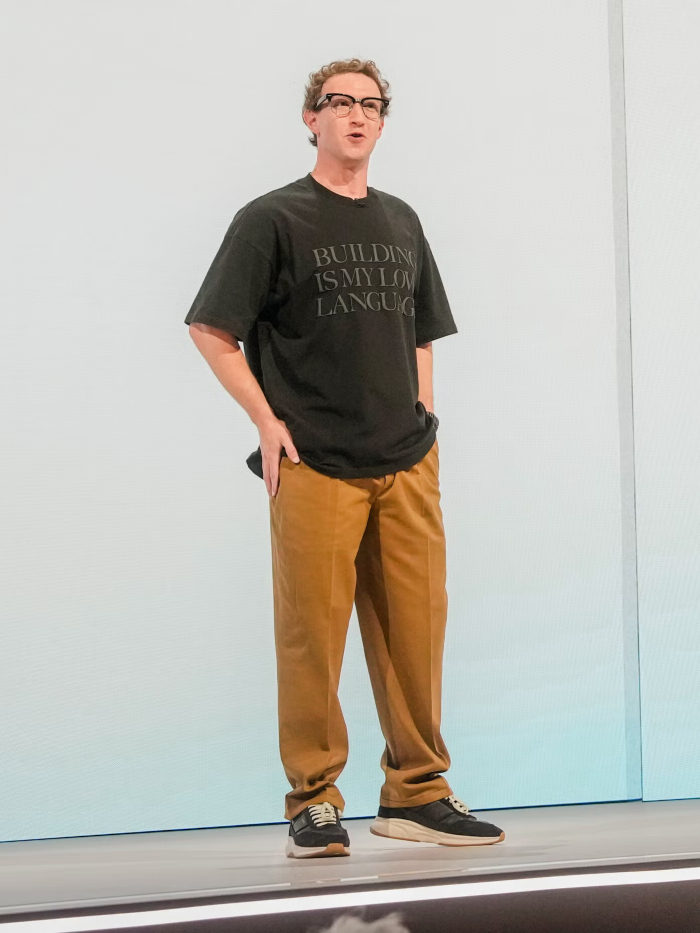
Zuckerberg himself acknowledges that he now thinks much more about the signals he sends to the people around him.
“I want to make sure that we’re really getting into the things that matter to people,” he says.
At the same time, the entrepreneur understands that his personal style inevitably reflects on Meta. “It matters to me,” Zuckerberg says. “I think the company is an embodiment of my values.” And, he adds, he wants to “program that intentionally.”
The Story of a Pair of Shorts
Zuckerberg’s Lake Tahoe residence looks much as one might expect a billionaire’s retreat to look: several wooden houses nestled between the forest and the lake, a private dock, a giant inflatable water slide and a trampoline.
After a workout, Zuckerberg relaxes in knitted Reuben Oliver shorts, his favorite Adidas sandals, a Barbier-Mueller Mosaïque watch and an oversized white Evan Kinori T-shirt.
His interest in clothing changed noticeably during the pandemic. While in Hawaii, Zuckerberg began experimenting with “fun shorts” that nobody could see during Zoom meetings. Later, friends introduced him to MMA, and he gradually moved toward looser silhouettes.

According to Zuckerberg, fighters often wear oversized clothing — a kind of reverse flex: “Everyone knows I’m in great shape, so I don’t need to show my muscles.”
When Zuckerberg’s colleagues first saw his new wardrobe, the reaction was mixed.
“We had an off-site in Hawaii, at Mark’s ranch,” Meta CTO Andrew Bosworth recalls. “I remember arriving and thinking, ‘Oh my God!’”
The team discussed in a private chat whether they should even comment on the sudden transformation. Bosworth himself considers the new style entirely authentic.
“He knows he’s going to be judged anyway,” he says. “So why not?”
There were rumors that celebrity stylist Karla Welch was working on Zuckerberg’s wardrobe, but that turned out not to be true. Zuckerberg says he mostly dresses himself. The multicolored Loewe shorts he wore at the Sun Valley conference, for example, were entirely his own idea.
Designer Mike Amiri, who has collaborated with Zuckerberg, compares the transformation to a delayed adolescence. “You’re trying to figure out, ‘Am I a relaxed-fit person? Am I a vintage person? Who am I?’” he says. “It’s just that Mark is doing it in his 40s with unlimited resources.”
Shopping as a Data Set
Zuckerberg now admits that he thinks more about the impression his clothes make. He does most of his shopping through Instagram, sometimes scrolling through products before bed because he finds it relaxing.
When he first began using the shopping app, the entrepreneur placed orders under his real name, using his personal email address, credit card and home address.
At one point, a small retailer even suspected fraud and rejected an order. “They thought, ‘Someone is pretending to be Mark Zuckerberg and trying to buy one of everything from our tiny little assortment,’” his wife, Priscilla Chan, recalls.
Lately, Zuckerberg has also developed an appreciation for polo shirts and collared clothing — a compromise between the tech world’s aversion to suits and the need to meet with world leaders.
His goal is to find the “20 polo shirts that I like the most.”
The algorithmic shopping experience he describes paradoxically resembles the system social platforms are often criticized for: the more a user buys, the more personalized advertising they receive.
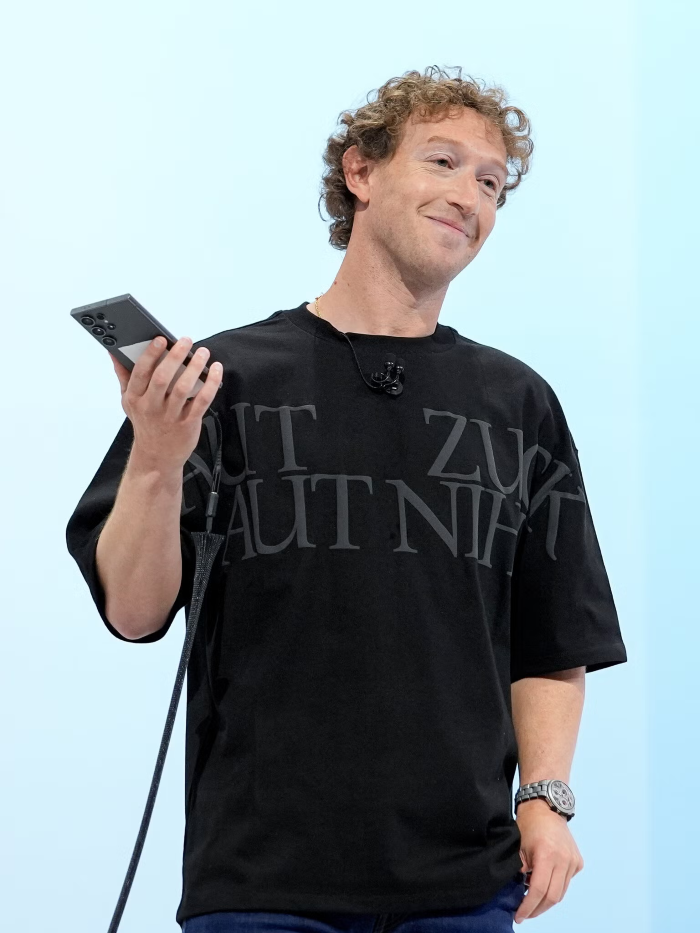
Yet when asked whether this experience has made Zuckerberg view the system differently, he initially responds, “I’m not sure.” After a pause, he adds: “No.”
According to Chan, her husband has become so enthusiastic about shopping that she prefers not to see how many packages arrive.
Zuckerberg buys so much Loro Piana that he receives special chocolate wafers reserved for the brand’s top customers.
“He has a lot of things with slight variations, and he considers them completely different,” Chan says. “I look at them and think, ‘You have 10 things in your closet that are exactly the same.’”
Designers, Jewelry and “Side Quests”
Zuckerberg’s interest in design began long before his fascination with fashion brands. He refers to these pursuits as “side quests.”
Near his office in Palo Alto is a workshop equipped with tools for making things, including a 3D printer. Using it, Zuckerberg and one of his daughters created a lime-green chainmail dress.
He has also designed matching ski suits for the entire family and clothing for recovering after surfing.
Jewelry design is another particular interest. Since 2012, he has helped create around 20 pieces of jewelry for Priscilla Chan. Among them is an unusual wedding ring made from a single piece of diamond.
Because a conventional gold setting could be cut off in an emergency while diamond cannot, Zuckerberg incorporated a special break point into the design.
He then used the material left over from making the ring to create a necklace for Chan featuring small rough diamonds.
Zuckerberg has also collaborated with jeweler Ana Khouri on a piece for his wife inspired by the trees at their Hawaiian ranch.
Khouri acknowledges that working with Zuckerberg generated mixed reactions.
“He asks smart questions. Most clients don’t,” she says.
Amiri describes a similar experience: Zuckerberg constantly questioned him about how clothing is made, trying to understand even the smallest details of the production process.
From Personal Style to Product Strategy
Zuckerberg’s interest in fashion is gradually becoming part of Meta’s broader strategy.
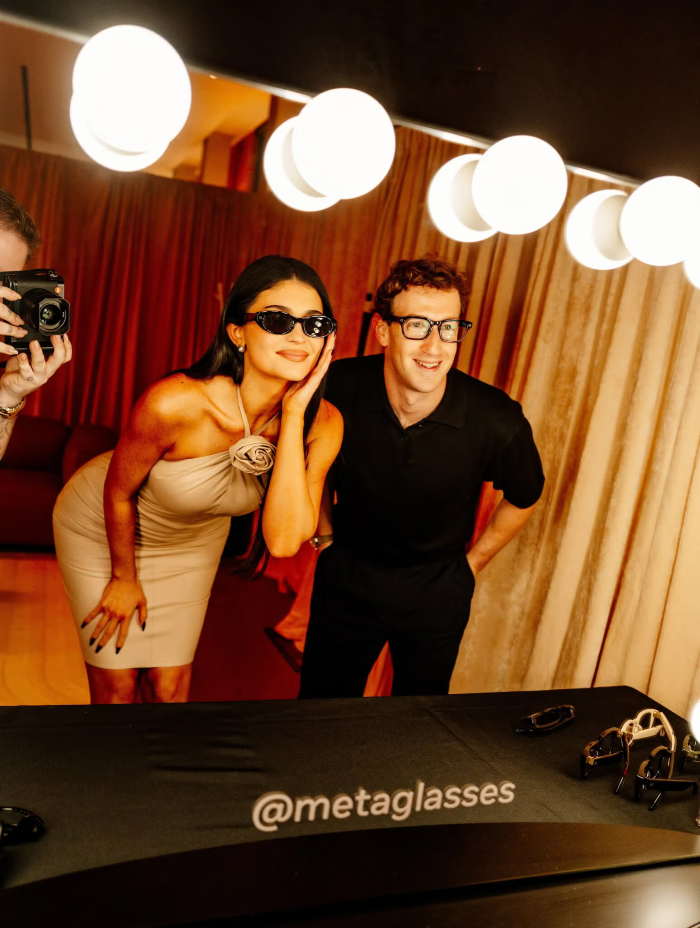
In June, he appeared in New York at an event dedicated to smart glasses alongside Kylie Jenner. Later, at a cocktail party attended by Jenner, he mingled with fashion editors and industry figures.
Despite criticism of Meta’s smart glasses, sales continue to grow. EssilorLuxottica reported that more than 7 million pairs of Ray-Ban Meta and Oakley Meta glasses had been sold over the previous year, while revenue from smart glasses doubled in the second quarter of 2026, according to the company.
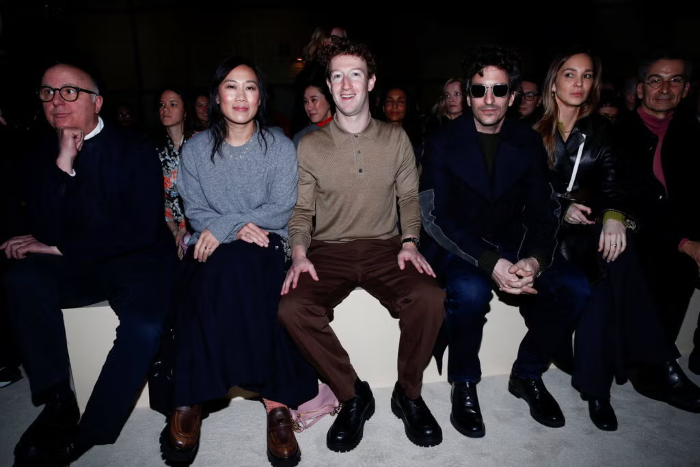
After Zuckerberg and Chan appeared at a Prada show, rumors emerged that the two companies might collaborate. A Prada representative, however, said there were no confirmed plans.
Luca Solca, Bernstein’s senior luxury analyst, believes the controversy surrounding the glasses could complicate Meta’s relationships with major fashion houses.
Zuckerberg himself attributes much of the criticism to communication problems. Meta says it has taken measures to prevent covert recording and has also introduced a new glasses model without a camera, offering audio functions only.
Alongside Ray-Ban and Oakley, Meta is developing its own line, collaborating with Lisa and Kylie Jenner and expanding the number of models available. By the end of the year, there are expected to be around 100.
His experiments with clothing have unexpectedly helped Zuckerberg recognize the power of individual taste.
“I’m used to creating things that billions of people use,” he says.
But the entrepreneur now understands that he does not necessarily have to create a single product for everyone.
“You can just keep creating lots of different things, and that’s fun too.”
“That’s probably a basic principle of branding,” Zuckerberg acknowledges. “But from my perspective, it’s a pretty new way of thinking about things.”