Pierpaolo Piccioli Reimagines Balenciaga with Couture Techniques, Bold Color and New Lightness
 20:14 2 October, 2026
Pierpaolo Piccioli continues to develop his concept of “couture as culture,” bringing sophisticated haute couture techniques into the realm of everyday dressing.
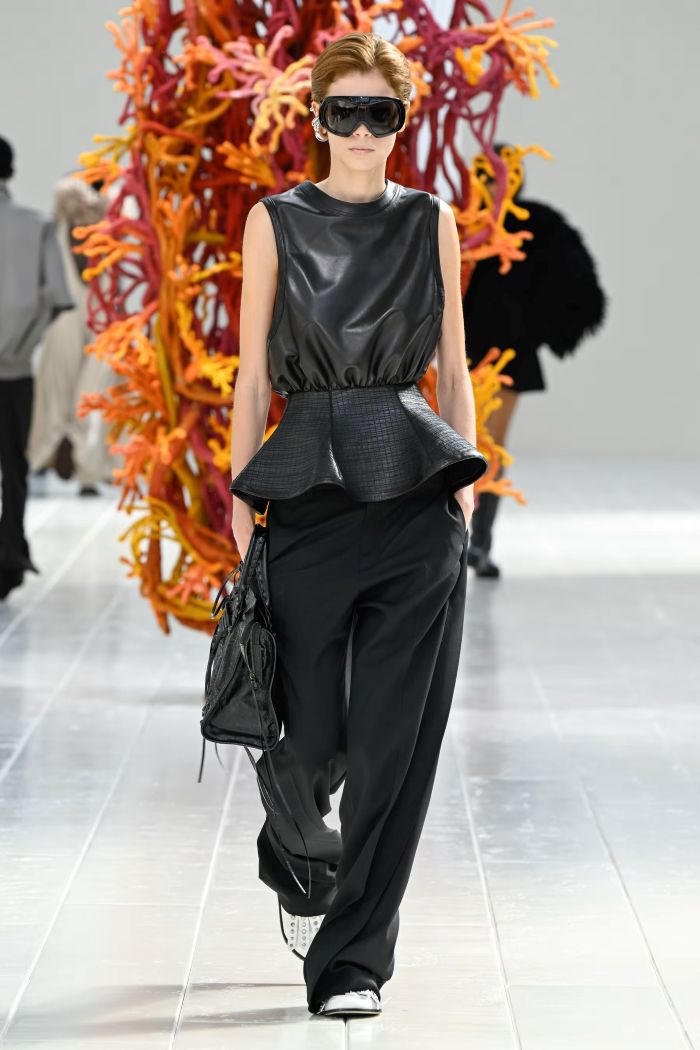
The technique used in a vivid green corseted couture gown was carried over into shirts, T-shirts and leather jackets. On a white shirt, a second layer of fabric and dense stitching accentuated the waist, creating a soft, undulating peplum. Piccioli paired it with white bias-cut jeans — one of the collection’s freshest silhouettes.
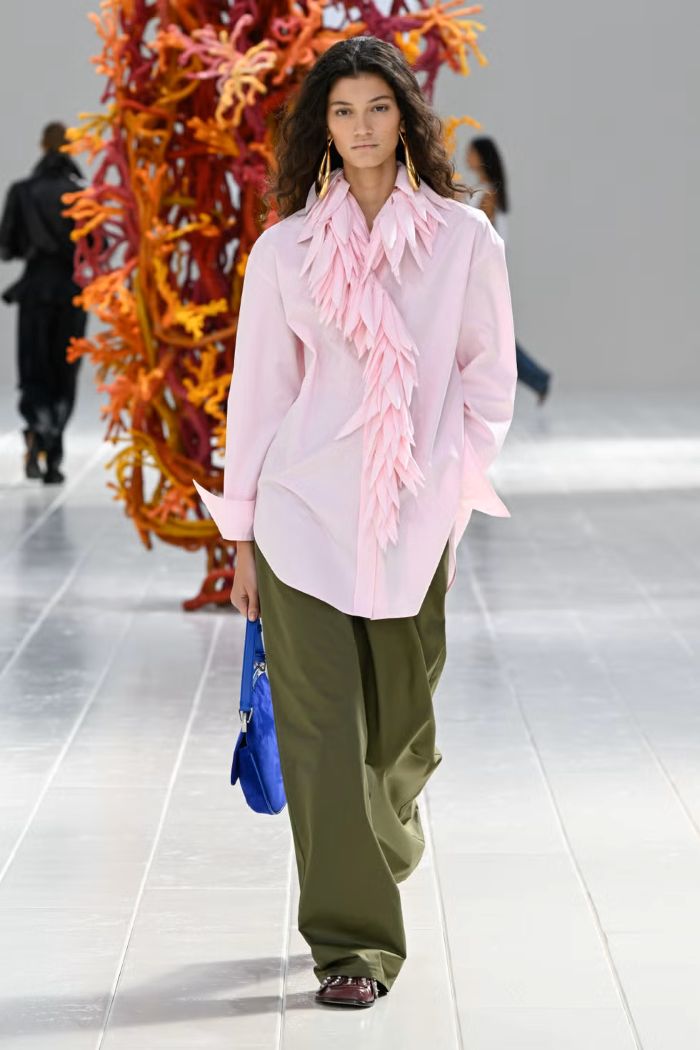
Dense stitching on collars and yokes softened the structured stand collars, adding texture and a subtle sheen to the clothes.
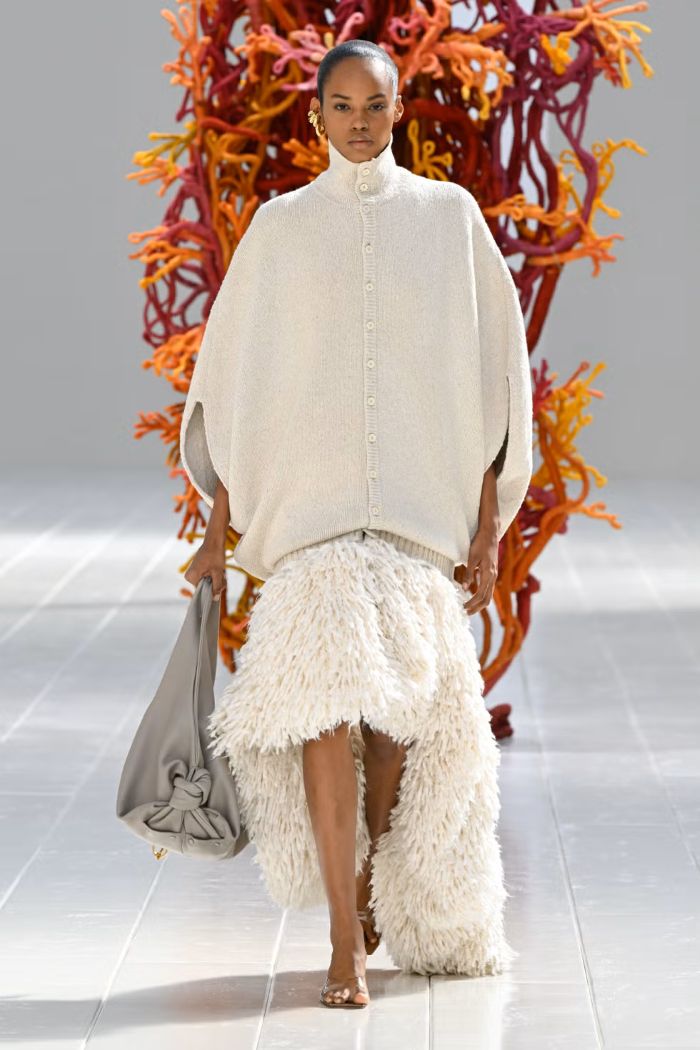
Another important technique was the bias cut, which Cristóbal Balenciaga never used. Piccioli applied it to jeans, eliminating the side seams, as well as to unlined wool suits for both women and men.
“Changing the silhouette, the feeling and the attitude of the clothes, but not changing their authenticity,” the designer explained.
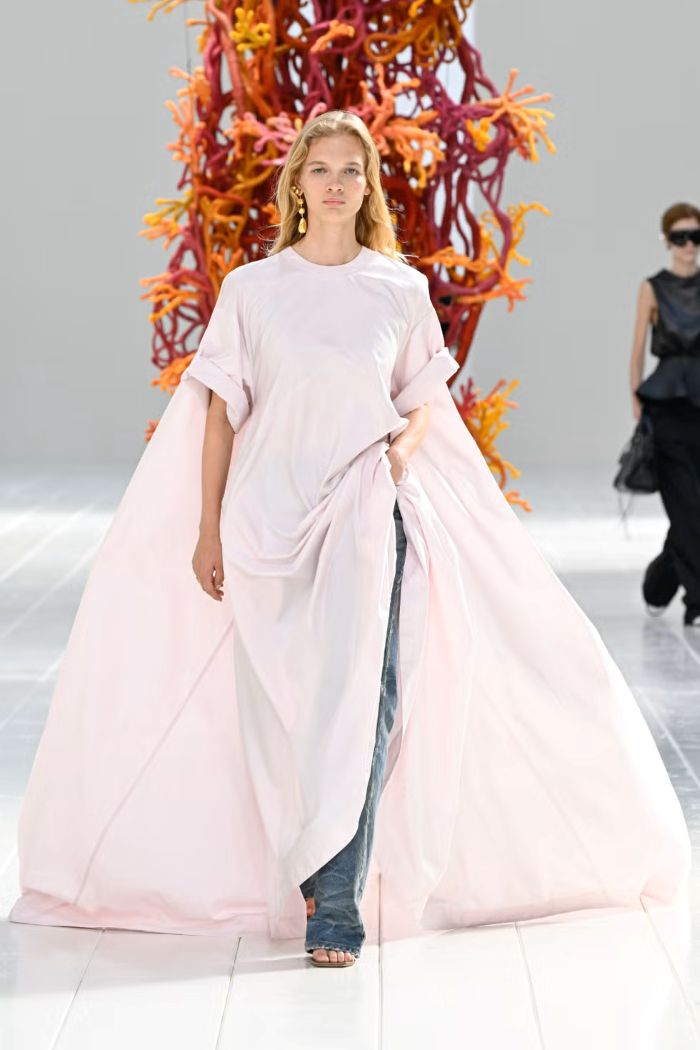
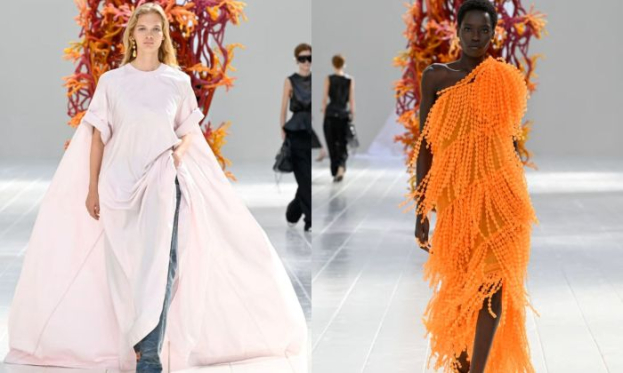
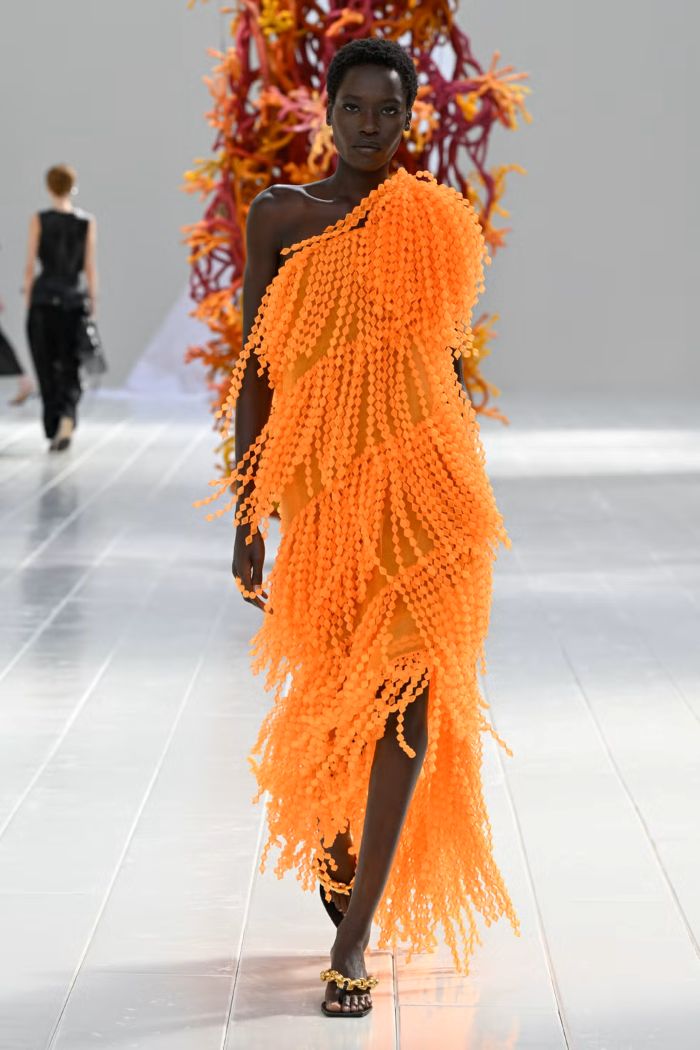
Piccioli is determined to make Balenciaga feel lighter and more contemporary, with particular emphasis on comfort and functionality. Unstructured cotton jackets were given shirt-style backs, while an asymmetrical dress in lightweight mango-colored jersey was so weightless that, according to the designer, it “weighs less than the hanger.”
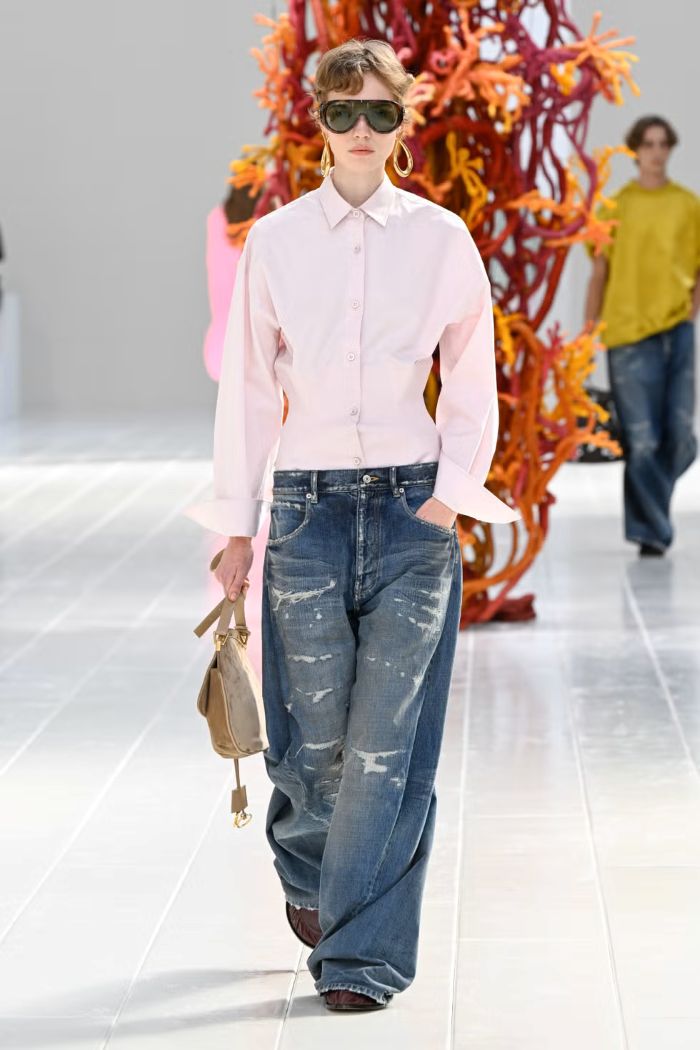
Some looks hinted at the Demna era: oversized sunglasses, voluminous boots, distressed denim and occasional oversized bomber jackets.
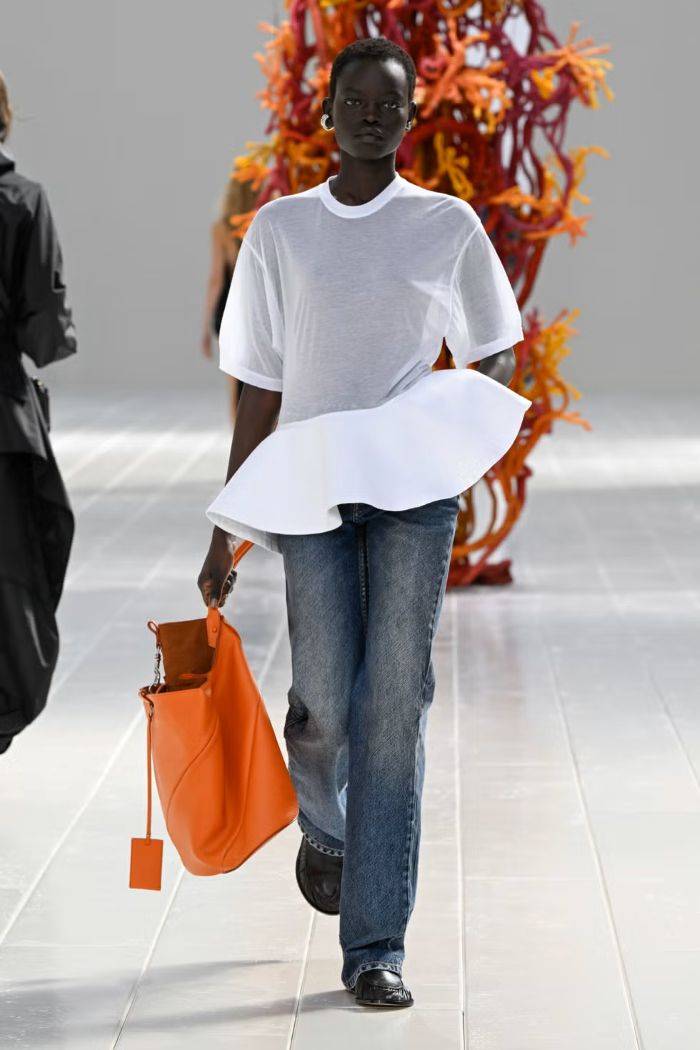
Yet the true focus of the collection was Piccioli’s craftsmanship and his mastery of color. Draped jersey “bubbles” were given precisely calibrated volume, while vivid hues recalled photographs of Indian flower markets that had found their way onto the designer’s mood board.
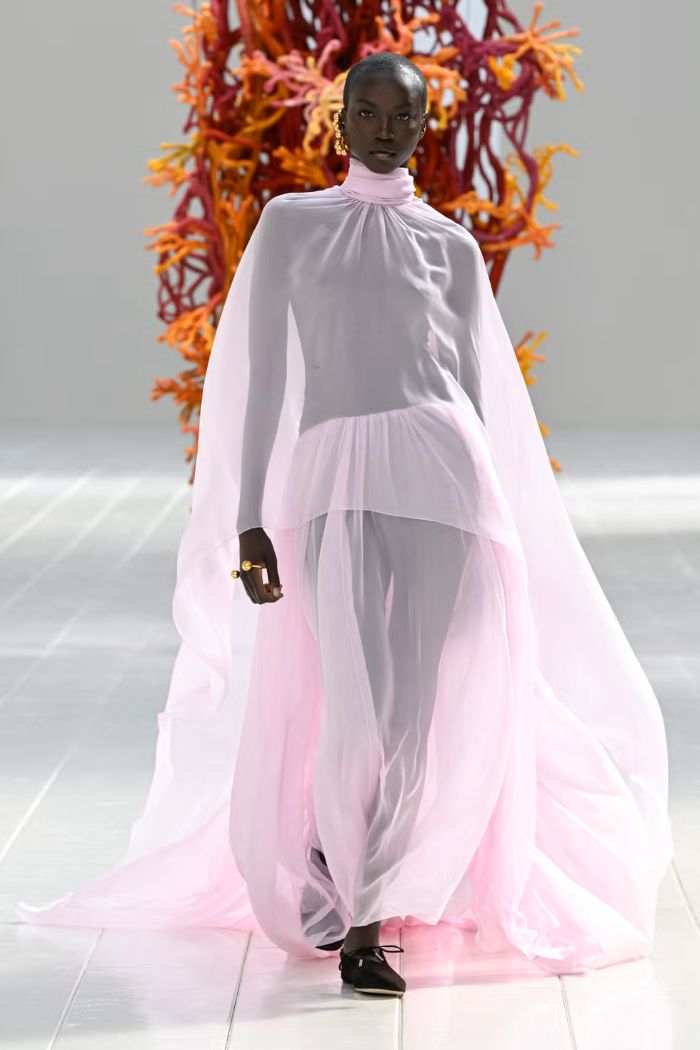
Ultimately, the collection felt younger and freer, as though Piccioli had managed to release Balenciaga, at least slightly, from the weight of its history and the expectations that come with it.