The First Woman to Paint Erotic Art: The Story of Renaissance Artist Lavinia Fontana
 23:06 16 October, 2026
During her lifetime, she was celebrated as a talented portraitist, received commissions from powerful cardinals, and saw her paintings adorn the homes of Italian nobility. But Lavinia Fontana had another side to her work: erotic paintings featuring nude goddesses and explicit scenes that might surprise even modern viewers. At a time when women were expected to be modest and maintain impeccable reputations, the artist dared to explore subjects that many of her male contemporaries shied away from. The BBC tells the remarkable story of Fontana.
The Perfect Lady with an Easel
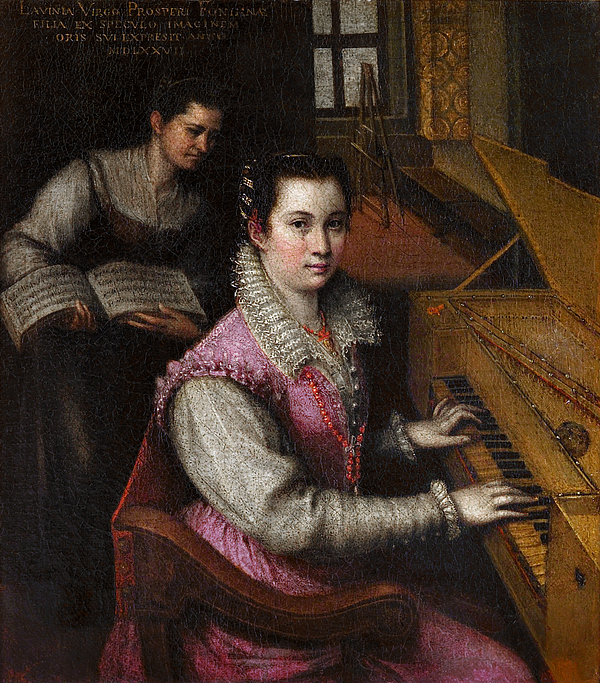
At first glance, Lavinia seemed to embody the ideal Renaissance woman. In her 1577 self-portrait, she appears in an elegant dress and jewellery, seated beside a musical instrument. An easel stands in the background, a subtle but unmistakable statement that she is not merely a society lady, but a professional artist. And a highly successful one at that. Fontana received prestigious commissions, painted portraits of noble families, and created altarpieces, proving that major artistic projects were well within a woman’s capabilities.
Nude Goddesses and Noble Beauties
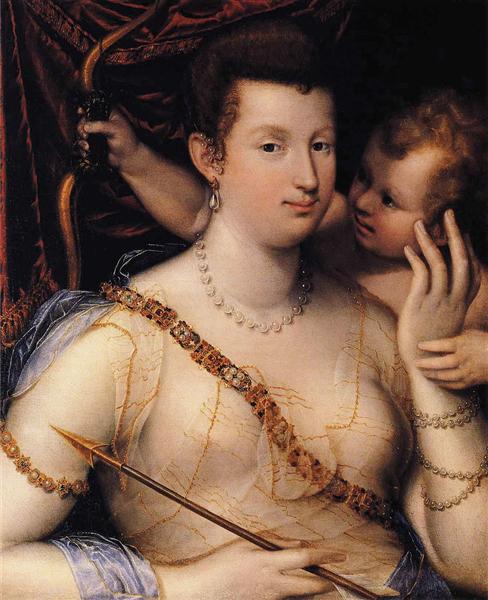
But when she turned to mythological subjects, much of that image of modest respectability fell away. In Venus and Cupid, painted around 1585–1590, the goddess appears nude, while pearls, jewellery and sheer fabrics only heighten the sensuality of the scene. Later, Fontana portrayed an Italian noblewoman, Isabella Ruini, as Venus. The delicate veil draped over her body seems to emphasise her nudity rather than conceal it. Such paintings were apparently intended for private collections, hardly the sort of works one would hang in a formal reception room near the entrance.
A Beauty Contest Straight Out of Antiquity
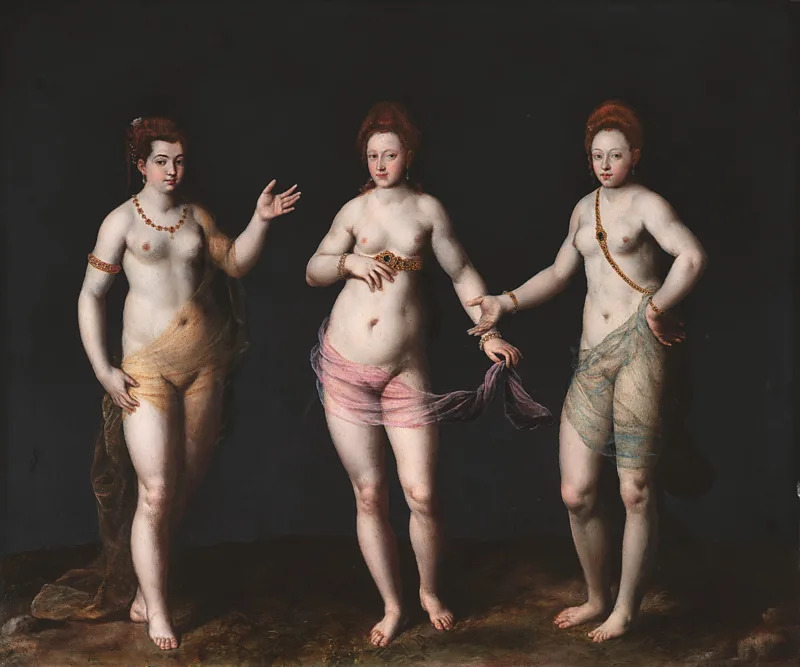
Even bolder is Three Nude Women, recently attributed to Fontana. Three noblewomen pose in delicate veils and jewellery, as though taking part in an ancient beauty contest. Art historian Enrico Maria Dal Pozzolo suggests that the painting may be connected to the myth of the Judgement of Paris, in which the prince had to choose the most beautiful of three goddesses. According to one theory, the central figure represents Marie de’ Medici. The painting’s slate surface also created an intriguing effect: it reflected light, allowing the patron, while looking at the work, to quite literally see himself within the scene.
What Male Artists Dared Not Attempt
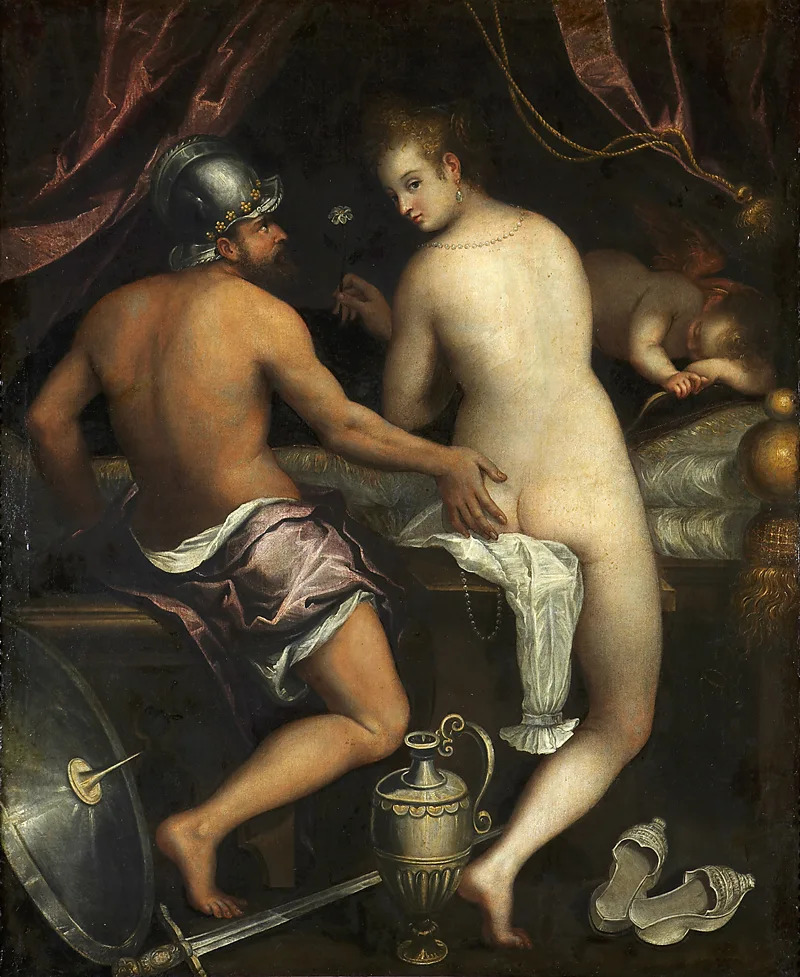
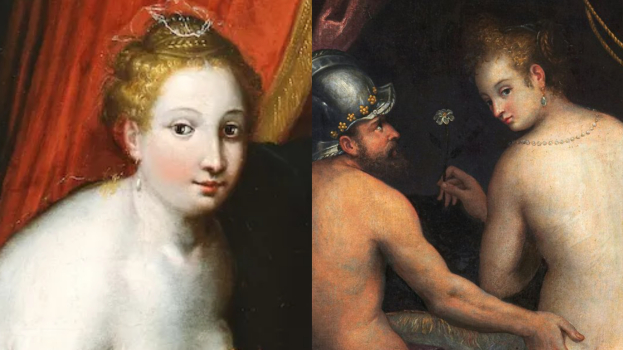
Fontana’s boldness is perhaps most striking in Mars and Venus, painted around 1594–1595. Here, the god of war does more than admire the goddess. The scene is charged with sensuality, and the artist places particular emphasis on the figures’ physicality. According to Dal Pozzolo, Fontana pushed Venus’s portrayal beyond a boundary that many male artists preferred not to cross. And she did so in late 16th-century Bologna, at a time when the Catholic Church sought to exercise strict control over morality, both in everyday life and in art.
A Father, Money and a Possible Act of Rebellion
Curiously, Lavinia’s father, the painter Prospero Fontana, had himself reflected on whether it was acceptable to depict scandalous subjects. He acknowledged that Christian artists should avoid them, but added that financial considerations sometimes made such commissions impossible to refuse. He may also have had a personal interest in the matter. Prospero trained his daughter in painting and helped launch her career, but then required her, under a contract, to hand over all her earnings until his death.
Could her interest in erotic subjects have been a form of rebellion against her father? The theory exists, particularly since some of Fontana’s boldest works appeared shortly before his death in 1597 and in the years that followed. However, there is no evidence that the artist deliberately rebelled against her family’s restrictions. Perhaps the explanation was simpler, and in its own way more intriguing: she understood that unconventional paintings could set her apart from her competitors and attract the attention of wealthy patrons.
One Final Bold Gesture for a Cardinal
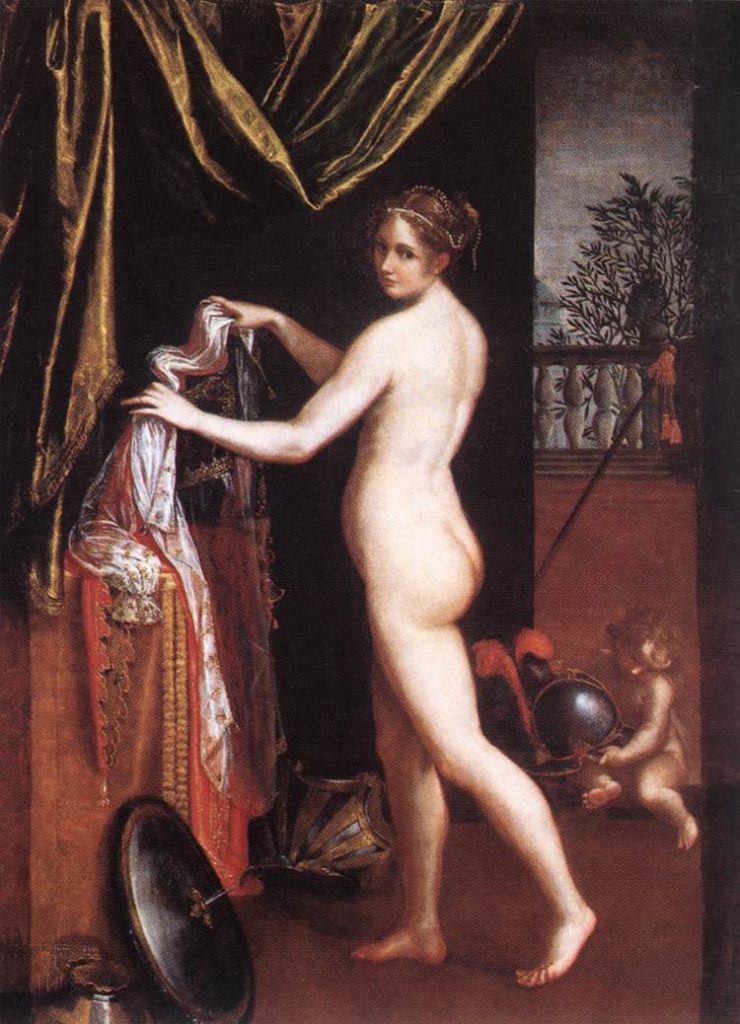
In 1613, a year before her death, Fontana received a commission from Cardinal Scipione Borghese, one of the most influential collectors of his time. The result was Minerva Dressing, depicting the nude goddess as she prepares to put on an elaborately embroidered gown, turning towards the viewer for a brief moment. Her expression conveys both shyness and a hint of flirtation. The painting was so large that hiding it away in private chambers would have been difficult. Instead, it occupied a prominent place at the Villa Borghese in Rome, where the cardinal’s guests could see it.
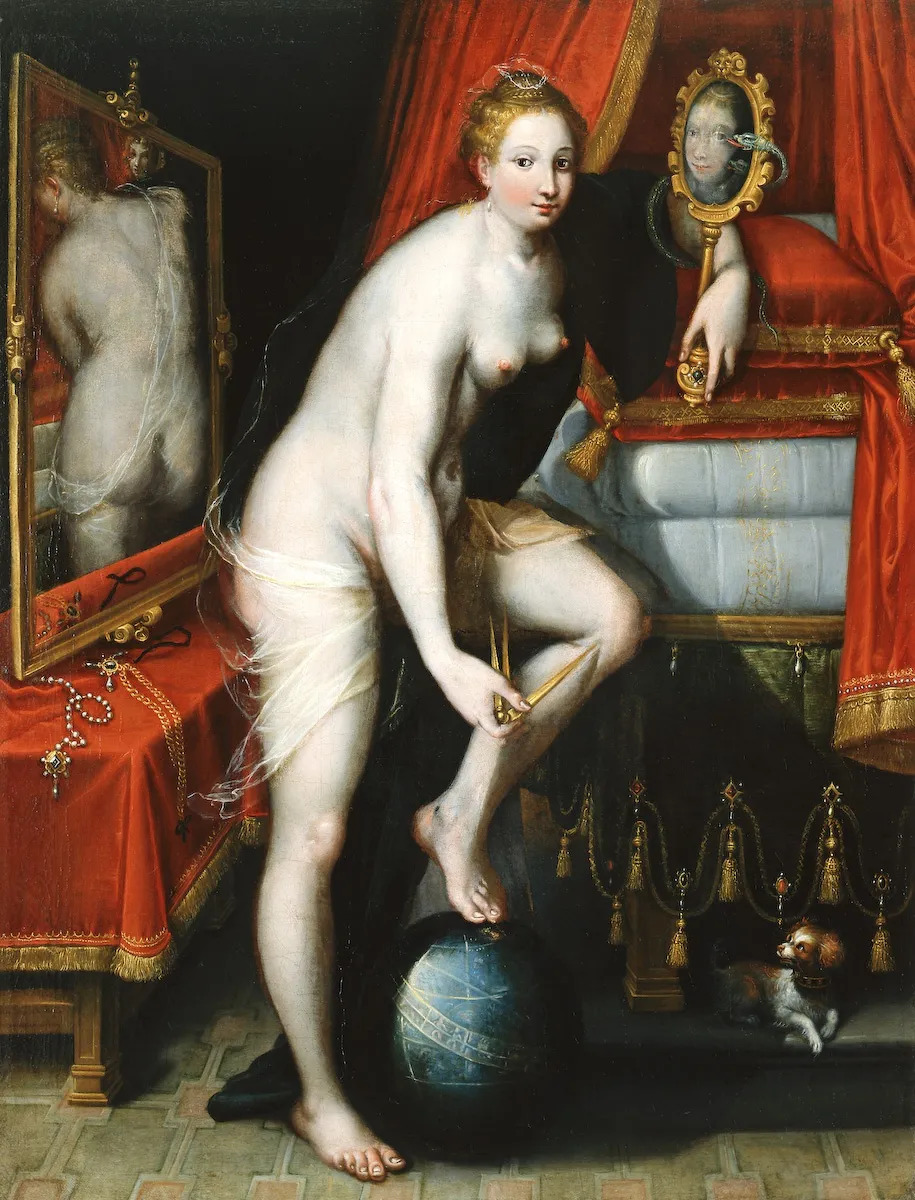
Perhaps it is precisely this contradiction that makes Lavinia Fontana so fascinating. She could be an impeccably respectable artist, trusted with serious religious commissions, while also creating paintings that challenged prevailing ideas about feminine modesty. Whether this was a commercial strategy, an act of artistic audacity or a reflection of her personal interests remains a matter of debate among researchers.