Affair With a 19-Year-Old White House Intern and Infidelity Before His Wedding: New Book Reveals John F. Kennedy’s Secret Love Life
 16:23 19 October, 2026
A new book by American author Lawrence Leamer sheds light on the numerous affairs of John F. Kennedy, the 35th president of the United States, from his early romances to relationships with young women during his time in the White House. Among the most controversial episodes was an alleged affair with a 19-year-old intern whom he reportedly met under the pretext of giving her a tour of the presidential residence.
In Ladies’ Man: The Careless Heart of John F. Kennedy, Leamer chronicles the politician’s romantic exploits, which allegedly began when he was just 17 and attending Choate, a preparatory school in Connecticut. The author, who has previously written books about the women in the lives of Truman Capote and Alfred Hitchcock, has assembled numerous accounts illustrating the extent of Kennedy’s private life.
Yet, Leamer notes, Kennedy managed to keep his affairs hidden from the wider public for years. Some of his close associates knew about his numerous relationships, but during his lifetime, they had little impact on his public reputation.
One of Kennedy’s earliest serious attachments was to Danish journalist Inga Arvad, whom he met through his sister Kathleen in November 1941. Kennedy was 24 at the time, while Arvad was 28. Although she was married but living separately from her husband, the two became romantically involved. According to Leamer, their letters reveal a strong emotional connection and a deep sense of trust.
However, their relationship was complicated by Arvad’s connections to Nazi Germany. She had met and interviewed Adolf Hitler, attended events involving senior Nazi officials and was photographed alongside him during the 1936 Olympic Games. After Japan’s attack on Pearl Harbor, the FBI launched an investigation into Arvad, suspecting her of espionage. Kennedy was soon transferred to South Carolina, and the couple split in March 1942.
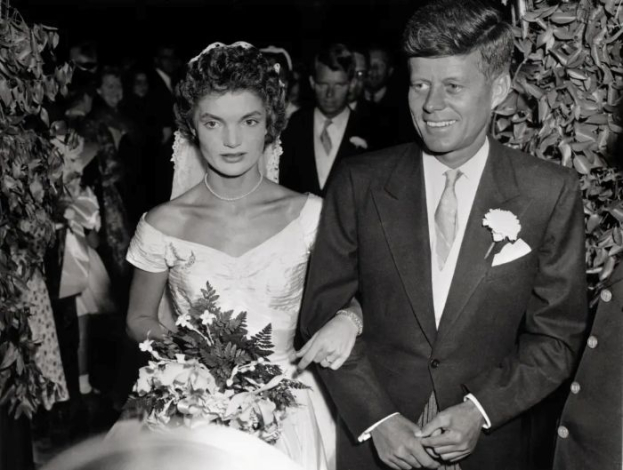
Another affair began in the summer of 1953, just two months before Kennedy’s wedding to Jacqueline Bouvier. While on the French Riviera, the future president met Swedish aristocrat Gunilla von Post, who was hitchhiking with a friend. During dinner and dancing, Kennedy professed his love for her, only to later explain that he was returning to the United States to get married.
Their story did not end there. Kennedy continued writing to von Post and, in 1955, traveled to Sweden to spend a week with her while his wife remained at home recovering from back surgery. Von Post’s mother thwarted Kennedy’s plan to arrange for her daughter to stay at New York’s Carlyle Hotel, where he could visit her regularly. In the 1990s, von Post published a memoir about their relationship titled Love, Jack.
Other women, Leamer claims, encountered a much colder side of Kennedy. In 1958, he met Diana de Vegh, a Radcliffe College student, at a campaign fundraising dinner in Boston. Several weeks later, he invited her to his apartment, where they became intimate. Their relationship continued for several years, and after Kennedy was elected president, he helped secure her a job at the White House.
“At the time, I thought my job was to be a pleasant, devoted assistant to a man who believed he was the master of the universe,” she recalled in an interview with the author.
One of the most scandalous episodes involved Kennedy’s relationship with Marion “Mimi” Beardsley. In 1962, when she was 19 and working as a White House intern, Kennedy allegedly took her virginity in his wife’s bedroom after presenting their meeting as a private tour of the residence, according to Leamer. Beardsley later reportedly swam with Kennedy in the White House pool, stayed overnight when Jacqueline was away and accompanied the president on overseas trips.
According to the book, White House staff understood the nature of her relationship with the president, while journalists noticed the young woman getting off Air Force One. Nevertheless, the story remained secret for nearly 40 years.
In the late 1950s, Leonard and Florence Cater, a deeply religious Catholic couple who rented a room in their Georgetown home to Pamela Turnure, a 21-year-old receptionist working in a senator’s office, tried to expose Kennedy’s affairs. After discovering that the president was secretly visiting Turnure at night, the couple attempted to bring the relationship to light. They photographed Kennedy leaving their home, contacted the FBI and mailed letters containing the photograph to newspaper editors. Florence even staged a protest outside the White House.
But Kennedy’s aides, who admired him, sought to discredit the couple and prevent the story from spreading, Leamer told the New York Post. In the author’s view, the public of that era held the president in much greater reverence and was less willing to believe scandalous allegations about him.
Leamer also links Kennedy’s sexual activity to his serious chronic health problems. According to the author, the president did not want to appear weak or ill, and his intimate relationships helped him maintain a sense of vitality. Kennedy was also drawn to the risks associated with secret encounters, Leamer argues.
The author believes that if Kennedy had lived to face the 1964 presidential campaign, his affairs and serious health problems might have become public knowledge.