An Armenian Balm With an 800-Year History: How Matenadaran Brought an Ancient Recipe Back to Life
 19:17 19 October, 2026
Its recipe is preserved in medieval Armenian manuscripts, its ingredients include a distillate of Armenian hawthorn berries, 54 medicinal and aromatic plants, mountain honey and cochineal, and its history stretches back nearly 800 years. Matenadaran, Armenia’s repository of ancient manuscripts, has revived Matenits, a royal balm that, according to medieval medical texts, “gives strength and gladdens the heart.”
Today, this unique drink is one of the most unusual products developed from the scientific heritage of Armenia’s foremost manuscript repository. How are medieval recipes transformed into contemporary products? Why does Matenadaran need its own production facilities? And how is the institution making specialized paper for manuscript restoration? NEWS.am STYLE spoke with Matenadaran Director Ara Khzmalyan about these questions and more.
“To Sit on a Treasure Trove and Fail to Generate Revenue Is Simply Incompetent Management”
We live in an era of intensifying competition and overwhelming flows of information. One of our most important challenges is to avoid being buried under this avalanche while preserving our own identity. At the same time, we must operate with limited financial resources. Today, virtually all institutions rely on state support and face budget shortfalls that prevent them from addressing their own needs. Despite the government’s comprehensive support, we cannot expect the state to solve every problem for us.
We have a thousand and one issues to address. To sit on a treasure trove yet fail to generate our own revenue is simply incompetent management.
We often take pride in having some of the world’s finest manuscript conservators and in the institution’s nearly eight decades of experience. Yet when I became director, I discovered that we lacked even the most basic materials and supplies. Although I had already worked at Matenadaran from 2010 to 2017 and was familiar with its internal challenges, I had not realized their true scale.
In a short time, we have not only modernized the conservation department by equipping it with new machinery and introducing modern technologies, but also established a biochemical research laboratory for manuscripts with the support of a sponsor. The laboratory enables us to conduct substantial scientific research aimed at preventing and treating fungal damage, developing specialized ointments and pursuing new research and innovations.
Most importantly, this initiative has created a platform for cooperation with major international laboratory facilities. Our active collaboration with partners at the Institute of Biology of Yerevan State University is particularly valuable in this regard.
“Almost All the Souvenirs in Our Gallery Are Created Specifically for Matenadaran”
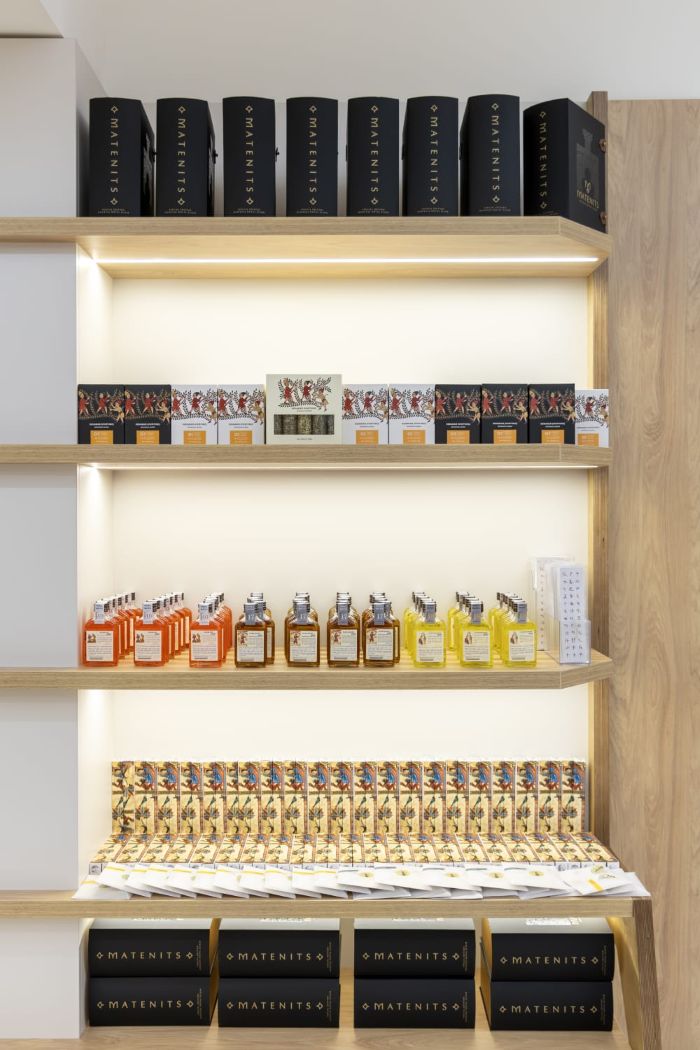
About two months ago, Matenadaran opened a souvenir gallery, creating another opportunity to generate its own revenue. However, this is not simply a source of income or a retail space; it is a way to create additional value. The proceeds go toward acquiring and restoring manuscripts, funding research staff travel and supporting publishing activities — in short, advancing scholarship, preserving cultural treasures and promoting our heritage.
The gallery offers books published by Matenadaran, albums featuring manuscript miniatures and works by our researchers. Almost all the souvenirs on display are created specifically for Matenadaran. We collaborate with reputable, well-established organizations. It is important to us that every partner be among the best in its field, share Matenadaran’s values and understand the ideas we want to communicate to our audience.
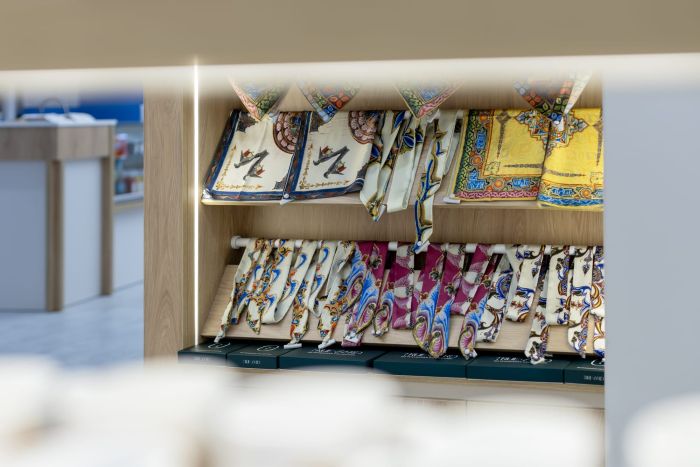
Any commercial activity at Matenadaran must reflect the significance of the treasures we preserve. We cannot simply open a shop: this is not an ordinary retail outlet, but a natural extension of the values represented in our exhibition halls. Visitors can purchase contemporary interpretations of, and reflections on, the culture they encounter in the museum. This is fundamental to our approach.
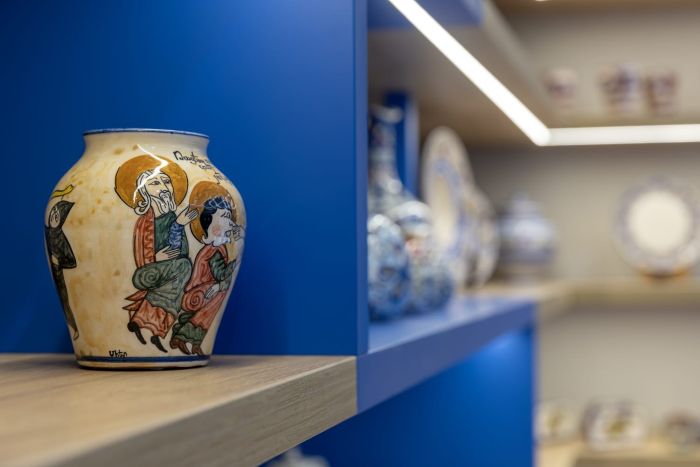
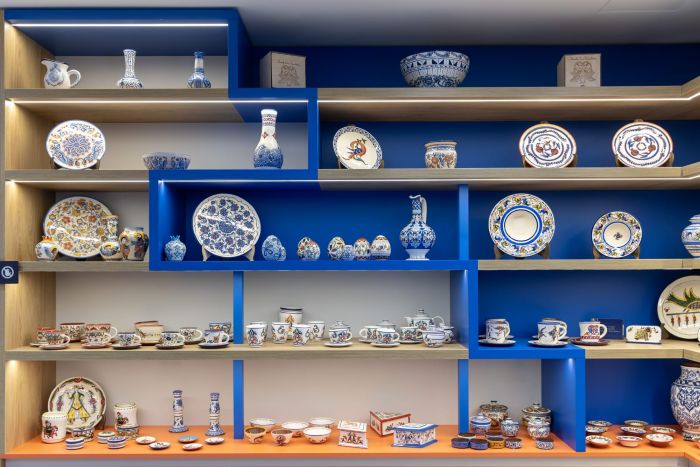
I believe our manuscripts compel us, as the institution’s leadership, to bring every area of our work up to the same high standard as the treasures in our care. We cannot establish our own production facilities for every category, so we work with specialized organizations to create exclusive collections of jewelry, ceramics and textiles.
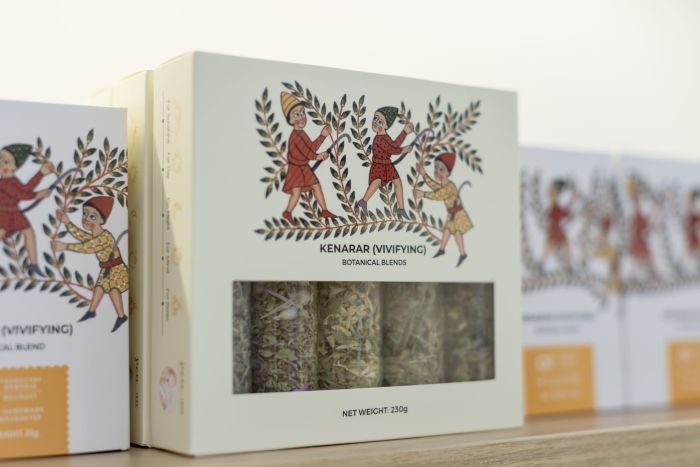
The gallery also features aromatic oils, teas and candles whose recipes have been deciphered from medieval medical manuscripts.
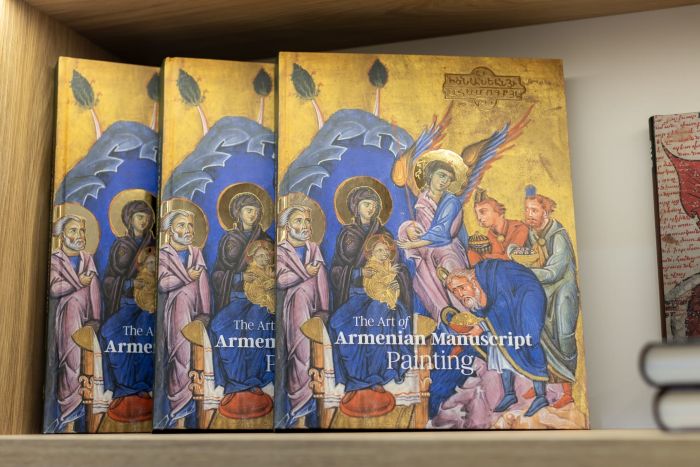
Only about two months have passed since the gallery opened, yet its product range has already tripled compared with what was previously available. I can say with full confidence that neither in our region nor in many renowned European museums will you find souvenir shops of this caliber, offering such refined products of such high quality. Anyone who has visited different museums can come and see for themselves. Quality generates revenue and helps attract new partners.
“‘Matenits’ Is an Ancient Armenian Balm That Promotes Well-Being and Preserves Mental Clarity — Once Drunk Only by Kings”
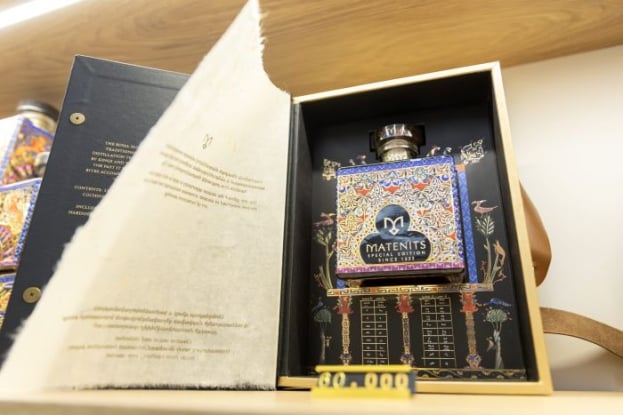
One of Matenadaran’s particular sources of pride is Matenits: The Royal Balm, a unique product whose development is the culmination of nearly 30 years of work. Its recipe was reconstructed by Matenadaran researchers, particularly Deacon Armen Sahakyan, using deciphered formulas found in medieval Armenian medical manuscripts.
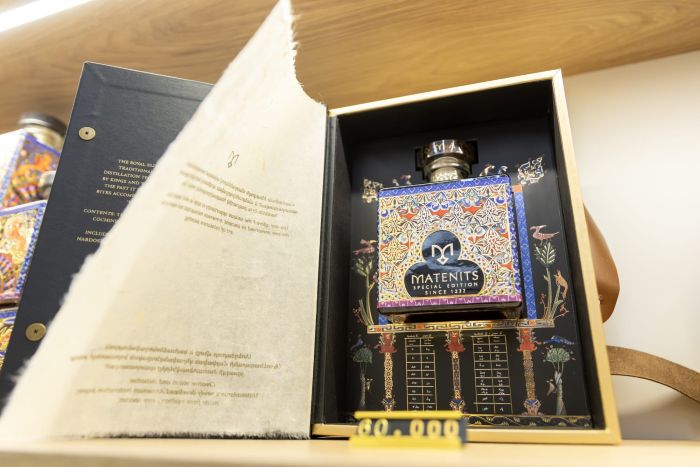
The drink has an alcohol content of 38% and is made from a distillate of Armenian hawthorn berries and 54 medicinal and aromatic plants. These include sage, hyssop, globe thistle, everlasting flower, sweet flag, Indian lavender, nutmeg, allspice, Armenian frankincense, saffron, German iris and myrtle. The balm also contains cochineal and natural mountain honey.
The earliest reference to the recipe in the manuscripts dates to 1232. That is why we present it as one of the oldest Armenian brands. Rare mountain plants were gathered and processed according to a special ritual, on specific days of the lunar calendar. Medieval physicians described the balm as something that “gives strength and gladdens the heart.”
The presentation of Matenits, designed by the branding agency Backbone, also deserves special attention. Each package contains an information card telling the story of the balm. The card is made from paper produced in Matenadaran’s own workshop — the same type of paper used to restore manuscripts.
Until recently, we relied primarily on Japanese paper for manuscript conservation. With the support of our partner, the Armenia Tree Project, however, we established our own papermaking workshop. Here, we use the bark and raw materials of Armenian mulberry species to produce specialized conservation paper, which we have named “Armenian Paper.”
This initiative has not only reduced our dependence on international suppliers but has also enabled us to begin supplying Armenian Paper to religious centers working with manuscript heritage and to other cultural institutions.
“When Some of Our Neighbors Accuse Us of Destroying Islamic Cultural Heritage, We Prove Otherwise Through Our Actions”
With financial support from the International Alliance for the Protection of Heritage (ALIPH), we have opened a laboratory dedicated to the conservation and study of Arabic-script manuscripts.
While some of our neighbors accuse us of destroying Islamic cultural heritage, our actions demonstrate the opposite. For centuries, we have safeguarded the monuments of other cultures and civilizations with the same sense of responsibility with which we have preserved our own sacred books.
These are not merely words. The values we uphold are reflected in our exhibition halls and publications, and it is precisely to protect this heritage that we are now establishing specialized laboratories.
Matenadaran cannot limit its responsibility to its own collections. We are working toward making the institution a global participant in the preservation of written heritage.
This year, we issued a declaration on cooperation in the preservation of written heritage. Major organizations, including UNESCO, ICCROM and the national libraries of France and Spain, have already joined it. The National Library of Switzerland and other institutions are expected to join soon.
Their participation affirms that Matenadaran, with its treasures and professional expertise, can play a significant role internationally — particularly by undertaking large-scale preservation work in countries across the Middle East affected by conflict or recovering from it.
And if not Matenadaran, then who should carry out this mission?