Three Hours for Makeup and Household Chores: Japanese Prime Minister’s Admission Sparks Public Debate
 23:01 23 October, 2026
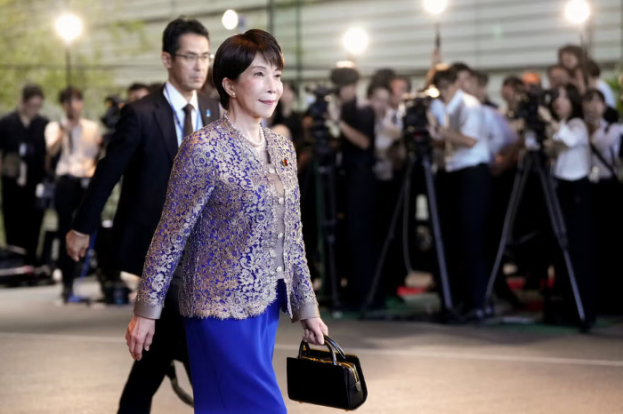
Japanese Prime Minister Sanae Takaichi has said her daily schedule is significantly more demanding than those of her male predecessors. In addition to her official duties, she spends several hours a day on makeup, bathing, cooking and other household tasks. Her remarks have sparked a heated debate about gender stereotypes and the expectations placed on Japanese women, The New York Times reports.
Speaking during parliamentary budget hearings, Takaichi explained that she struggles to find time to think carefully about strategic issues and the country’s future. According to the prime minister, everyday routines and household responsibilities take at least three hours a day, and she may spend an additional three to four hours on them compared with men who have held the same position.
Her comments came amid discussion of a report highlighting the excessive parliamentary workload of Japanese prime ministers. According to research by NXJI Research, heads of government can spend up to seven hours a day answering lawmakers’ questions. Japanese prime ministers attend parliamentary sessions for an average of around 72 days a year, compared with 50 days in the UK and 13 in Germany.
Takaichi’s supporters say she has drawn attention to the extra effort women often have to make to meet society’s expectations and succeed professionally. Conservative writer Kotoe Hashimoto even questioned whether the prime minister’s critics expected her to appear in parliament without makeup.
Other politicians, however, saw her remarks as reinforcing gender stereotypes. Opposition lawmaker Yoshiko Kira argued that such comments portray expectations surrounding women’s appearance and behavior as natural and immutable, when they should instead be reconsidered.
Japan has an unwritten standard of appearance known as midashinami, which dictates that people should look presentable in public. Women are often expected to wear makeup and high heels while avoiding skirts that are too short or necklines that are too revealing. Similar requirements exist in schools and workplaces, with women frequently facing closer scrutiny.
According to some estimates, Japanese women perform more than three-quarters of all household work. At the same time, many employees are expected to work regular overtime, averaging up to 22 additional hours a month, according to recent surveys.
Takaichi, known for her workaholic tendencies, has previously said she sleeps as little as zero to three hours a night. She has also described spending holiday weekends ironing clothes, hemming skirts and sewing loose buttons back onto jackets. After becoming prime minister, she pledged to “work, work, work, work and work,” emphasizing her readiness for an exhausting schedule.
Yet the head of government does not have an entire team of chefs, butlers and gardeners at her disposal. According to her husband, former lawmaker Taku Yamamoto, a cleaner comes to their official residence once a week, but they do not have a cook. The couple sometimes orders pizza, and Yamamoto makes sure to obtain the delivery driver’s name in advance so the person can pass the strict security checks.
Reaction to the prime minister’s comments on the streets of Tokyo has been mixed. Rina Sumi, a 22-year-old café worker, described the remarks as inappropriate for modern society, arguing that Takaichi should not have attributed her workload to her gender. Meanwhile, Mika Okado, a 27-year-old nurse who spends about an hour a day getting ready and preparing lunch, said she was surprised by how much time the prime minister devoted to daily routines but appreciated her candor.
Takaichi rose to power in a political system traditionally dominated by men, yet some of her own policies have drawn criticism from women’s rights advocates. She supports maintaining the exclusively male line of succession to Japan’s imperial throne and opposes changing the law requiring married couples to share the same surname.
Her admission has reignited a broader debate over how much time and effort women are expected to devote to meeting society’s expectations — even when they hold the highest offices in government.