A $89,000 Robot Learns to Interact with People in New York, with Hopes of Becoming a Nanny
 20:30 26 October, 2026
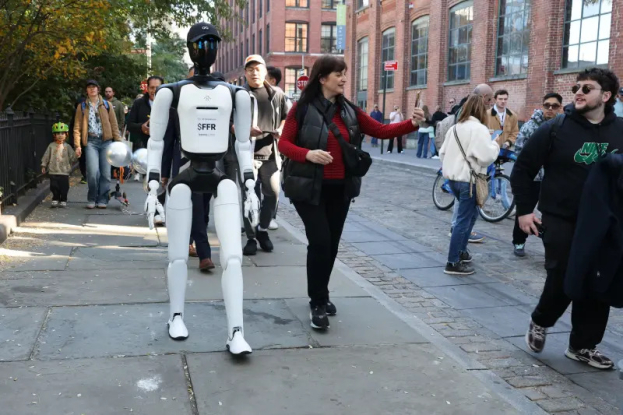
Parkgoers in New York were in for an unexpected encounter when they came across an unusual participant in their stroll: a humanoid robot worth $89,000 that sang to children, danced with visitors and learned how to interact with people. But behind the spectacle lies a far more ambitious idea: its developers hope that one day the machine could become a nanny, teacher or companion, the New York Post reports.
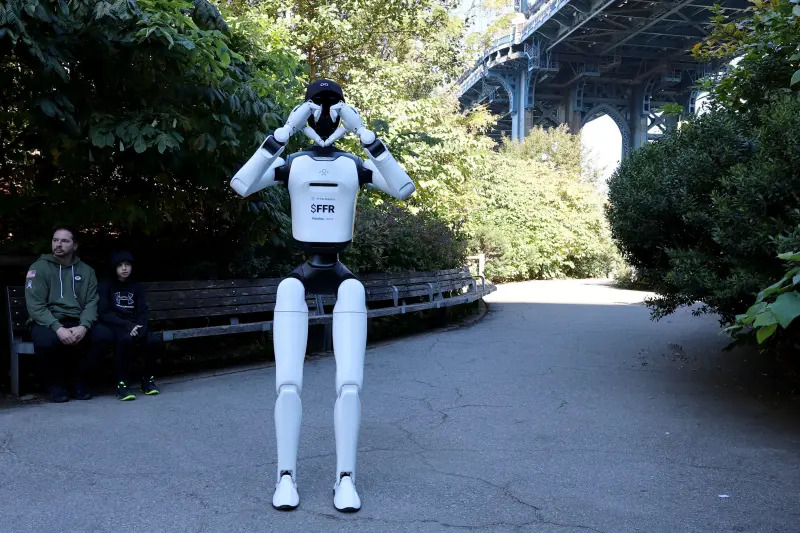
The robot was introduced by California-based company Faraday Future. On October 25, it appeared at Brooklyn Bridge Park, attracting the attention of visitors against the backdrop of Manhattan and New York’s iconic bridges. The experiment was overseen by the company’s chief technology officer, Hun Rao, who controlled the machine using a small remote.

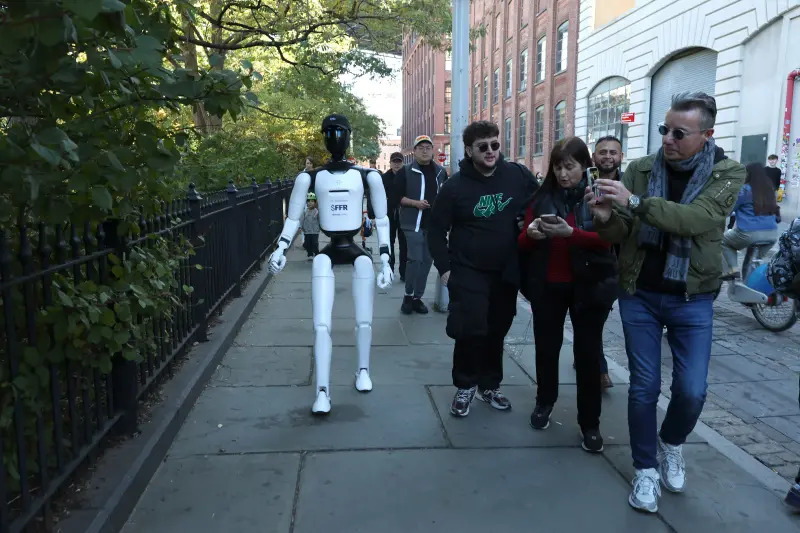
According to the New York Post, the robot moved freely among visitors, singing to children and dancing with adults. Some passersby were happy to join in: a group of around 12 women even gathered to take photos with the unusual guest.
The main goal of the experiment is to teach the robot to interact with people in real-world settings. Its developers want it to do more than simply follow commands. They hope it will learn communication and caregiving skills that could eventually be useful when working with both children and adults.
According to Hun Rao, such machines could one day be used as nannies, teachers or companions. For now, however, these remain plans. The demonstration does not mean the robot is already capable of looking after a child independently. In fact, during its outing in New York, it was controlled by a human operator.
Still, the idea reflects a broader direction in robotics: a shift from machines designed to perform specific technical tasks to devices expected to interact with people in everyday life.
If humanoid robots do learn to communicate safely with children, help them with daily activities and respond to different situations, they could eventually become useful assistants for families. However, there is still a considerable gap between dancing in a park and independently caring for a child.
Walking, talking and entertaining a toddler would not be enough. A robot would need to recognize potentially dangerous situations, respond appropriately to a child’s unpredictable behavior and act safely even in circumstances its developers had not anticipated.
There is also another question: are parents ready to entrust a machine with responsibilities that have traditionally required human attention, empathy and accountability?
For now, Faraday Future’s robot is better understood as a demonstration of the direction future development may take than as a ready-made household solution. But the fact that a machine worth $89,000 has been brought into a public space to learn how to interact with people shows just how quickly artificial intelligence is moving beyond screens and digital services.
Photos: Luiz C. Ribeiro for NY Post