Another Mystery of the Mona Lisa’s Face: Scientists Suggest Why She Has No Eyebrows or Eyelashes
 23:19 28 October, 2026
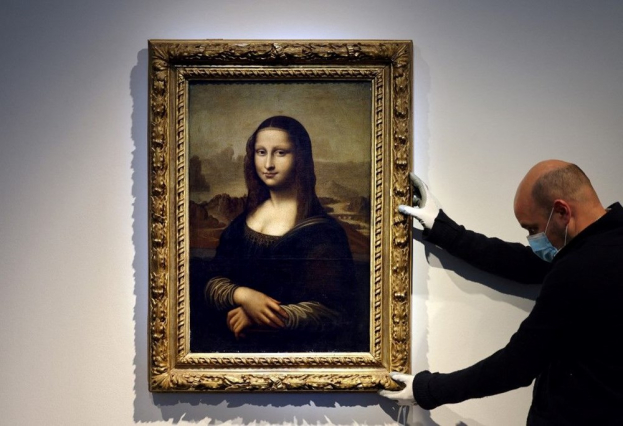
The Mona Lisa’s enigmatic smile has fascinated viewers for centuries, but researchers have now turned their attention to another feature of Leonardo da Vinci’s famous portrait. Italian dermatologist Luigi Laino has suggested that the woman depicted in the painting may have suffered from alopecia, an autoimmune condition that causes hair loss. The New York Post reported on the hypothesis, citing a scientific paper published in the journal Clinics in Dermatology.
The hypothesis is based on four features of the portrait: the absence of eyebrows and eyelashes, a sharp boundary between the forehead and the hairline, and smooth skin with no visible scarring. According to Laino, this combination of characteristics may be consistent with alopecia universalis, a form of the condition in which a person loses hair across the entire body.
However, the researcher points to one detail that complicates the picture: multispectral analysis of the painting revealed a single hair in the eyebrow area. In his view, this does not rule out the hypothesis, as hair loss associated with alopecia can occur unevenly.
Still, this is a scientific interpretation of a portrait, not a diagnosis that can be reliably established five centuries later. Laino examined the image rather than the woman’s medical records, so his conclusions remain speculative.
Who was the woman depicted in the portrait?
The model for the famous painting is widely believed to have been Lisa Gherardini, a Florentine woman married to a wealthy cloth merchant. According to information cited in the study, she married at a young age and had six children, four of whom died. Her lifetime coincided with political upheaval, religious conflicts and epidemics.
Laino suggests that severe stress may have triggered or aggravated her hair loss. However, this theory, too, cannot be confirmed by historical evidence about Gherardini’s health.
Alopecia is an autoimmune condition in which the immune system attacks hair follicles. It can cause anything from isolated patches of hair loss to more extensive loss across the body. Modern celebrities, including Jada Pinkett Smith and Viola Davis, have also spoken publicly about their experiences with the condition.
The Mona Lisa remains one of the most extensively studied works of art in the world. Yet even modern analytical techniques cannot reliably reconstruct the medical history of the woman whose likeness Leonardo da Vinci painted in the early 16th century. The new hypothesis adds another possible explanation to the portrait’s many mysteries, but the question of what the woman actually looked like remains unanswered.