How Bernard Arnault’s 28-Year-Old Son Turned Louis Vuitton Watches into Coveted Collectors’ Items
 21:16 4 November, 2026
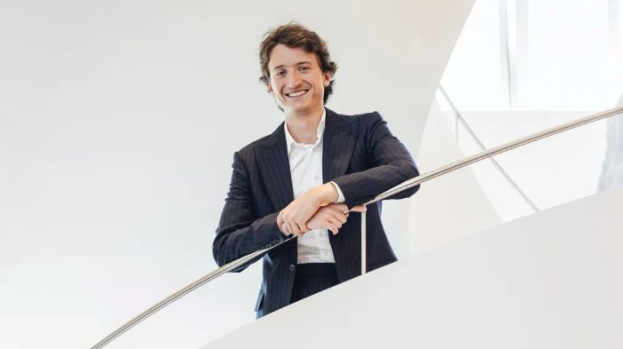
At just 22, Jean Arnault was put in charge of Louis Vuitton’s watch division with an ambitious mission: to turn the fashion house’s watchmaking business into a serious force in the world of haute horlogerie. Now 28, the youngest son of billionaire Bernard Arnault has already made skeptics rethink their views on the brand’s timepieces. And it seems he is only getting started, Robb Report writes.
In 2021, Jean took over Louis Vuitton’s watch division, bringing with him a master’s degree in financial mathematics from the Massachusetts Institute of Technology and an engineering degree from Imperial College London. His appointment was part of a broader strategy to prepare the next generation of leaders for the LVMH empire: all five of Bernard Arnault’s children now hold key positions within the family business.
But the youngest heir was handed a particularly challenging assignment. Despite having highly skilled technical specialists, Louis Vuitton watches had long struggled to earn the respect of serious collectors. Arnault set out to change that reputation, effectively rebuilding the division from the ground up.
“They were undervalued. Their potential was far from being fully exploited,” he explains.
One of the young executive’s greatest assets was the team at La Fabrique du Temps, the watchmaking manufacture acquired by Louis Vuitton in 2011. Its master watchmakers, Michel Navas and Enrico Barbasini, had previously worked with legendary maisons including Patek Philippe, Audemars Piguet and Franck Muller.
Arnault is not the kind of executive who manages everything from behind a desk. He regularly visits the workshops, talks to watchmakers and gets involved in the smallest technical details. During an internship at the manufacture, he even took watches apart and reassembled them himself, demonstrating an impressive knowledge of the industry.
“He knows every brand, every model. Even the reference numbers of specific watches. It’s truly impressive,” Navas recalls.
Arnault’s guiding principle is that the priority must be to create an exceptional product, with sales coming second. This philosophy was instilled in him by both former Louis Vuitton CEO Michael Burke and his father.
“If the product is good, the sales will come,” Jean recalls Bernard Arnault telling him.
In pursuit of quality, the young executive took radical steps: he cut the existing collection by around 80%, reduced production volumes and expanded the workforce. The company shifted its focus to highly complex techniques, including enameling, engraving, hand-finishing and the development of proprietary watch movements.
Even the production of individual components was entrusted to highly specialized craftsmen. One watchmaker, for example, has spent 27 years doing nothing but making screws. “He is probably one of the best screwmakers in Switzerland,” Arnault says proudly.
In 2023, Louis Vuitton unveiled a redesigned Tambour featuring an integrated bracelet and an in-house automatic movement. That same year, Arnault revived the legendary watchmaking names Daniel Roth and Gérald Genta, before announcing a collaboration with independent manufacture Akrivia, founded by watchmaker Rexhep Rexhepi.
The latter move caused a sensation in the watch community. It demonstrated that Louis Vuitton wanted to do more than produce expensive accessories: it was also prepared to support independent watchmaking. Through the LVMH Watch Prize initiative, emerging independent watchmakers receive €150,000 in funding and a year of mentorship from specialists at La Fabrique du Temps.
“I don’t want to do business just for the sake of doing business. Today, it’s important to create something that truly matters,” Arnault says.
Winning over collectors, however, has not been easy. Many initially dismissed his appointment as yet another case of a privileged heir being handed an expensive plaything.
“People thought: here come another bunch of rich kids who have been given a toy,” recalls collector William Massena. But, he says, Arnault is genuinely passionate about watchmaking, understands the industry and, perhaps most importantly, is constantly learning.
Even the first new Tambour models failed to convince buyers immediately. Some collectors praised the watches, tried them on and posed for photographs, but were reluctant to part with their money. The reason was a persistent perception of Louis Vuitton as a fashion label rather than a serious watchmaker.
“You can make incredible watches and still have to deal with the stigma of being a fashion brand. It’s very difficult for collectors to accept brands like that,” Massena notes.
Gradually, however, attitudes began to change. Entrepreneur and collector Lex Borrero admits that he had never previously considered buying a Louis Vuitton watch. That changed when he discovered the new Tambour Convergence. He decided to take a chance and became the first customer in the world to purchase the model.
“I love what Arnault is doing. It takes a certain amount of courage to take this division, scale it back and turn it into a respected watchmaking company,” he says.
Jean also places great emphasis on building relationships with clients. He meets collectors in person, explains the brand’s long-term strategy in detail and sometimes even delivers unique timepieces to buyers himself.
One particular delivery has stayed with him. A female client burst into tears when she received a pocket watch that had become the most expensive purchase of her life. Around 30 people had worked on the one-of-a-kind piece. For Arnault, the moment was a reminder of the craftsmanship and personal dedication behind every exceptional timepiece.
He also understands that collectors’ trust must be earned over many years.
“If you invest $20,000, $30,000 or $50,000 in our watches, we are not going to completely change direction three years from now,” he promises.
The strategy appears to be paying off. Over the past year and a half, some collectors who had previously praised the new models without buying them have finally started making purchases.
“The biggest compliment is when people actually buy the watches,” Arnault admits.
Meanwhile, his responsibilities continue to grow. In addition to Louis Vuitton, he now oversees the watch brands Hublot and Zenith. There is also speculation that his attention could eventually turn to another of Louis Vuitton’s celebrated specialties: the manufacture of travel trunks.
At 28, Jean Arnault is no longer simply the heir to one of the world’s largest luxury empires. He is trying to prove that his family name can be more than a head start — it can also be the foundation for a legacy of his own.