Disappear to Become More Desirable: How Bottega Veneta Turned Five Years of Instagram Silence Into a Fashion Strategy
 22:19 5 November, 2026
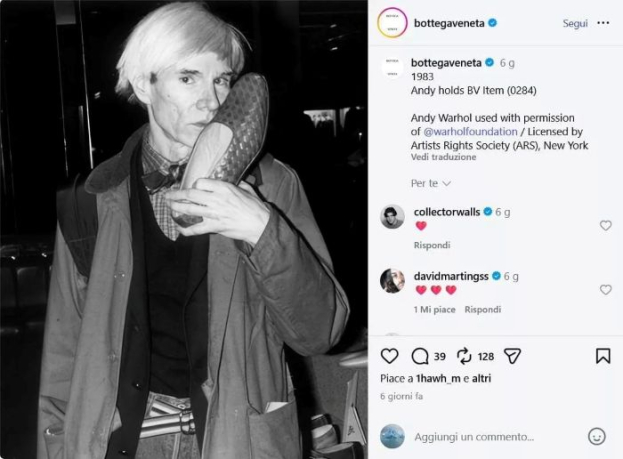
Bottega Veneta has reactivated its Instagram account after more than five years of silence. The brand marked its return with a single understated word: S’ciao — an old Venetian greeting derived from the expression schiavo vostro, meaning “at your service”. Set in an elegant typeface inspired by vintage Italian signage and the editorial design of the 1960s, the message served as a symbolic invitation to reconnect, La Repubblica reports.
Founded in Vicenza in 1966, the fashion house returned to an account with 2.4 million followers — just 100,000 fewer than it had on January 5, 2021, when then-creative director Daniel Lee deleted every post. Five years later, the page appeared to reopen after a long closure: its old content remained untouched, while its audience had continued to wait for the brand's return.
The comeback comes a year after Louise Trotter made her debut as creative director, succeeding Matthieu Blazy, and less than two months after Romain Spitzer was appointed the house's new CEO. Against the backdrop of a challenging period for Kering, Bottega Veneta appears to be looking for fresh momentum.
Five Years of Silence as a Strategy
The decision to leave social media in 2021 was more than a publicity stunt. Daniel Lee said he wanted to distance the brand from the monotonous digital stream in which users were constantly exposed to much the same content. Instead of Instagram, Bottega Veneta launched its own quarterly digital publication, Issued by Bottega. Kering chairman and CEO François-Henri Pinault also said the group would rely more heavily on its brand ambassadors and fans.
The strategy proved unexpectedly successful. Even before the official account was shut down, the fan-run page @newbottega had attracted around 350,000 followers. By 2023, the hashtag #NewBottega had generated more than 120,000 Instagram posts and 22 million views on TikTok.
The brand's absence from social media became part of its identity — a kind of emblem of restraint. And it did not stand in the way of financial growth. In 2021, the first full year without Instagram, Bottega Veneta's revenue rose by 25%. Under Matthieu Blazy, it surpassed €1.5 billion, reaching €1.7 billion in 2024. Blazy maintained the policy of digital silence, making only a brief appearance on Chinese platform Weibo before moving on to Chanel.
Why Fashion Houses Erase Their Past
Bottega Veneta's return has once again drawn attention to a familiar practice among luxury brands: wiping their social media feeds clean whenever a new creative director takes over. Along with the posts disappear archives of runway shows, advertising campaigns and visual stories that have helped shape a fashion house's identity over the years.
In 2016, Saint Laurent deleted its entire archive from the Hedi Slimane era, during which the brand's sales had nearly tripled, leaving only a portrait of incoming creative director Anthony Vaccarello on its page. In 2018, Slimane repeated the move after taking the helm at Celine, removing the accent from the brand's name and clearing its Instagram feed — effectively closing the Phoebe Philo chapter.
Daniel Lee adopted the same strategy at Burberry in February 2023, just two weeks before his debut collection. Gucci deleted thousands of posts in September that year ahead of Sabato De Sarno's first show. Two years later, the brand wiped its page again, introducing Demna's new collection through portraits by photographer Catherine Opie.
Balenciaga also deleted its archive in 2021, only to restore its previous photographs in March 2023.
Digital Memory Versus the Endless Reboot
The article compares this practice to the ancient Roman tradition of damnatio memoriae — the erasure of the memory of those who had fallen into disgrace. The paradox is that luxury houses invest enormous sums in historical archives and foundations, celebrating their distant past, while seemingly having no qualms about erasing their much more recent digital history.
Yet brand social media accounts have long since become publicly accessible fashion archives. They offer a record of how collections, advertising campaigns and individual design signatures have evolved. By deleting their posts, fashion houses sacrifice this archival role in favour of a dramatic symbolic reboot, as though every new creative director must start the story from scratch.
Ultimately, it is left to fans to preserve the memory of previous eras. The @oldceline account, for example, was launched in September 2018 after Hedi Slimane deleted the brand's archive and quickly became a refuge for admirers of Phoebe Philo's aesthetic.
Meanwhile, creative directors' tenures are getting shorter: Sabato De Sarno spent less than two years at Gucci. Under such circumstances, a brand's digital history risks disappearing faster than a new chapter can take shape.
Bottega Veneta's return can be seen both as an acknowledgement of the value of its past and as an opportunity for Louise Trotter to begin telling her own story. For a house that once championed independence from algorithms, returning to Instagram looks like an elegant compromise: even silence, like any fashion trend, has its expiration date.
There is also a subtle play on words in the brand's choice of greeting. The Italian ciao is used both when meeting someone and when saying goodbye. Bottega Veneta has yet to clarify which meaning it intends to convey with its return. For now, fans will have to wait for the next post to find out whether this was a greeting — or another farewell.