Birkin No Longer Guarantees Status: Why Collectors Are Falling Out of Love With Hermès' Iconic Bag
 21:19 10 November, 2026
For decades, Hermès Birkin bags have been regarded not only as symbols of luxury but also as lucrative investments. But the market for collectible accessories is changing. Social media has made iconic designs too familiar, the resale market has become saturated, and wealthy buyers are increasingly questioning whether an ordinary Birkin can really retain or increase its value.
The Times explores how the world of luxury handbag collecting is evolving and why even the most devoted Hermès enthusiasts are rethinking their habits.
From fashion accessory to collector's item
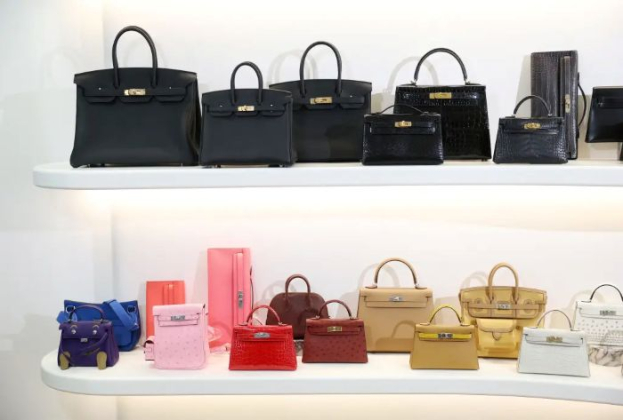
Today, simply owning a Birkin is no longer enough. Serious collectors are hunting for rare colours, unusual materials and discontinued designs. They may spend years searching for a particular combination of size, leather, hardware and shade, cultivating relationships with Hermès sales associates in different countries and keeping a close eye on auctions and private dealers.
Dubai-based entrepreneur Kiran Chhabria, for example, began buying Hermès bags in 2002. It took her two years to find a Birkin in the rare, vivid pink shade Rose Tyrien. Her collection also includes a Himalaya, a fringed bag, a vintage Teddy Kelly, a Shadow Birkin and a Kelly Doll.
Record-breaking auction results illustrate the scale of the market. In 2025, Jane Birkin's original handbag — the prototype, showing visible signs of years of use — sold at Sotheby's in Paris for €8.6 million. Nine bidders competed for it over the course of ten minutes.
This year, a rare Hermès Faubourg Birkin 20 in Rouge Sellier, believed to exist in fewer than ten examples, sold at Christie's for €635,000 — more than twice the lower end of its pre-sale estimate. A white version of the model later fetched HK$4.3 million at an auction in Hong Kong, equivalent to more than £400,000.
Have Instagram and TikTok destroyed exclusivity?
Despite these extraordinary auction results, the iconic Birkin is experiencing something of an identity crisis. Some wealthy owners admit that they have become reluctant to carry their bags because their ubiquity on Instagram and TikTok has made them feel less exclusive.
One collector, identified as Tanya by New York Magazine, owns four Birkins and another 25 Hermès bags. She says the constant appearance of the iconic design on social media has changed the way she feels about her collection.
Opinions are divided on online forums devoted to the brand. Some enthusiasts believe that the relentless exposure has genuinely stripped the Birkin of its former exclusivity. Others argue that anyone bothered by seeing the same bag on someone else's arm was attracted not to Hermès itself, but to the brand's inaccessibility and the status it conferred.
Resale and counterfeits are adding further pressure. The more bags enter circulation, the harder it becomes to sustain the illusion of extreme scarcity.
Not every Birkin is a good investment
Christie's specialists say that luxury handbags have developed into a fully fledged collecting category in recent years. However, a high price today is determined by far more than the brand name alone.
Particularly sought-after pieces include rare Birkin and Kelly bags in unusual sizes, colours and materials, as well as the Quelle Idole, Kelly Doll Picto and Kelly Pochette. Collectors are also showing interest in archival designs from the early 2000s.
Provenance, condition and rarity all play an important role. A Chanel handbag shaped like a grocery basket, created for the fashion house's Spring/Summer 2014 show, for instance, sold at Christie's for $152,400 in December 2025. Its value stems not simply from the fashion house's name but from its status as a rare runway piece.
After more than two decades of collecting Hermès, Chhabria is now sceptical of the idea that every purchase is an investment. In her view, the market could be a bubble that eventually bursts. Record auction prices tend to apply to rare examples in exceptional condition, particularly in sought-after sizes and colours — not to every bag sitting in someone's wardrobe.
How to protect a handbag worth hundreds of thousands
For collectors, proper storage is just as important as the purchase itself. Bags should be lightly stuffed to help them retain their shape, kept in breathable fabric dust bags and stored separately to prevent damage to the leather and metal hardware.
Direct sunlight can fade leather, excessive heat can dry it out, and overstuffing can distort a bag's shape. Even the lock can leave scratches, so specialists recommend storing it separately.
The risk of theft is another serious concern. Insurance expert Matthew Ashton describes a collection of handbags worth more than £700,000 that was stolen in what was believed to be a carefully planned burglary. A dispute with the insurer followed: the owner had not listed the bags individually among her valuables, prompting the insurance company to question the basis for compensation.
Experts advise owners of valuable collections to arrange separate insurance cover for each significant item and keep receipts, authenticity certificates, photographs and valuation documents. They should also check whether their policies cover theft outside the home.
A handbag as an heirloom, not just a status symbol
For some collectors, Birkin and Kelly bags are more than luxury accessories: they are family heirlooms. American actress Kyle Richards, who lost her handbag collection and inherited jewellery in a 2017 burglary, began rebuilding it afterwards. She has said that she tries to buy four examples of each model — one for each of her daughters.
Chhabria also points to a double standard. Men who collect watches, cars, wine or works of art are often regarded as discerning connoisseurs, while women's handbag collections are frequently dismissed as superficial consumerism.
The entrepreneur herself has gradually become more selective about her purchases. Hermès and Louis Vuitton regularly revisit their archives and revive designs that collectors may have spent years pursuing as rare finds. This has made her realise that scarcity can be temporary, while the desire to own a particular piece can be much more enduring.
Perhaps the most important lesson is that a handbag should be bought because its owner genuinely loves it, not because a sales associate presents it as a rare opportunity. After all, Jane Birkin's original bag fetched €8.6 million not because it was in pristine condition, but because of its history: she carried it for years, decorating it with stickers and charms until it became a truly one-of-a-kind piece.