A World Without the Internet: Experts Explain How to Survive Without Smartphones and Bank Cards
 22:22 10 November, 2026
Modern life depends almost entirely on the internet. We use it to pay for shopping, access banking services, book tickets and get our news. But what would happen if the network suddenly went down for several hours — or even days? Emergency preparedness experts advise people to stock up not only on food and water, but also on communication devices that do not rely on the internet or mobile networks, The Independent reports.
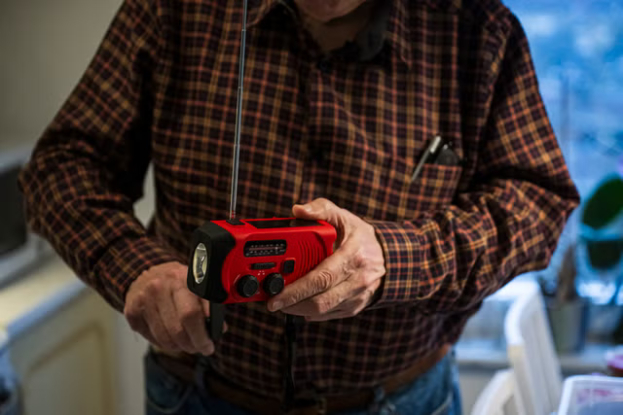
Until recently, preparing for potential disasters was seen as a hobby for overly cautious people. Today, however, it is becoming part of official guidance. The UK government has urged citizens to keep supplies of tinned food, drinking water, torches and hand-crank radios.
Dan, founder of the website Start Prepping UK, says the internet itself remains vulnerable: its operation depends on electricity, cables and numerous elements of infrastructure. A failure in any one of them could leave people without access to the network.
Interest in independent communication devices has already grown significantly. Jack Brown, co-owner of Sgt Prepper's Shop, says that in the week after the government guidance was published, radios featured in more than 80% of the shop's orders.
Your smart home could become helpless
Experts advise people to take a closer look at devices that operate exclusively through apps or voice assistants, including smart locks, lighting systems without conventional switches, video doorbells and heating controls. Those whose cars can only be unlocked using a smartphone are advised to carry a spare key card.
“The more connected devices you have in your home, the more potential entry points there are for hackers. But regardless of what gadgets you use, you need to prepare for the worst-case scenario,” Brown says.
Dan also recommends avoiding devices that rely unnecessarily on the internet. Even something as seemingly insignificant as a Wi-Fi-enabled electric toothbrush could become useless if both the network and electricity supply fail.
Darren Rhodes, founder of UK Prepper Hub, believes every modern device should have an analogue alternative. His home is equipped with a diesel heater, a solar-powered battery and a Jackery portable power station. However, such equipment can cost anywhere from several hundred to several thousand pounds.
Cash and paper maps instead of apps
One of the simplest ways to prepare for an outage is to keep a supply of cash, preferably in small notes and coins, sufficient to cover several days.
Online banking services are particularly vulnerable during disruptions. A recent ten-hour outage affected Revolut, leaving customers unable to make payments. Brown recommends having accounts with at least two or three different banks: if one is hit by a cyberattack or technical failure, the others may continue operating.
Experts also advise writing down bank details, important phone numbers and insurance policy information and keeping them somewhere secure. Drivers should keep a paper road map in their cars, while households should have a notebook, first-aid and repair guides, printed appliance manuals and copies of important documents.
Dan has gone a step further, saving an offline copy of Wikipedia on a hard drive. That way, even during a complete internet blackout, he will still have access to a vast reference library.
Walkie-talkies instead of smartphones
Some enthusiasts are exploring more advanced ways to communicate without relying on the internet or mobile networks. One option is LoRa (Long Range) technology, which allows text messages and images to be transmitted over long distances using radio signals. It requires no Wi-Fi, mobile network or SIM card.
Several such devices can be linked into a mesh network, with each radio relaying the signal to the next. This can help maintain communication even if one of the network's nodes fails.
Experts also recommend amateur radio and CB radios. Rhodes, who lives in a rural area prone to power cuts, has given walkie-talkies to several elderly neighbours so they can contact him in an emergency.
Surviving takes more than a stockpile of tinned food
Despite the stereotype of a prepper stockpiling food in an underground bunker and preparing to defend it from everyone else, experts stress that mutual support is particularly important in an emergency.
“A community that sticks together is much more resilient. Everyone has skills that others may not have, so people can help one another,” Rhodes says.
Dan also recommends getting to know your neighbours and building good relationships with them in advance. According to him, after major disasters, people often organise themselves into local mutual-aid groups.
If a large-scale cyberattack cuts off internet access and makes card payments impossible, local communities may have to find their own ways of meeting residents' basic needs.
Experts insist that there is no need to wait for a disaster to prepare for life without the digital tools we take for granted. All it takes is some advance planning: think about how you would manage without a smartphone, bank card or internet connection.