Trading Luxury for Survival: Why Billionaires and Tom Hanks Head to the Desert to Test Their Limits
 19:26 16 November, 2026
The world’s wealthiest people are increasingly turning to an unusual form of escape. Instead of five-star hotels, private villas and spa resorts, they are heading to the deserts of Utah, where they must forget about their usual comforts and learn to survive almost from scratch. There are no private chefs, soft beds or even mobile phones. Only the harsh wilderness, demanding challenges and the need to rely entirely on their own abilities.
One of the most unusual destinations for this kind of retreat is the Boulder Outdoor Survival School (BOSS), a survival school founded in 1968. Its programmes attract wealthy entrepreneurs, senior executives and celebrities. Among those who have sought help from its instructors is actor Tom Hanks, who prepared for his role in the film Cast Away. BOSS specialists even worked on the film set, helping to make the survival scenes more realistic.
BOSS is located near the tiny town of Boulder, Utah. Its base looks nothing like an exclusive country club: there are a few simple buildings, yurts, shelters made from branches and a source of drinking water. Participants sleep on the sand under a single blanket, while instructors stay in tents or their own camper vans. There are no special privileges for millionaires.
The school’s philosophy is summed up in a simple motto: “Know more, carry less.” Participants learn how to navigate the terrain, make fire, build shelters, purify water and use natural resources. But the main goal is not simply to acquire survival skills. It is to test their psychological resilience, learn to cope with uncertainty and discover strengths they never knew they had.
The Times journalist Diana McLean decided to experience the two-week Wilderness Navigator course for herself. Before the expedition began, her phone and watch were taken away, and the use of cosmetics, torches and modern navigation devices was prohibited. The school does not even allow GPS tracking equipment. In case of an emergency, participants leave impressions of their shoe soles so that rescuers can follow their tracks.
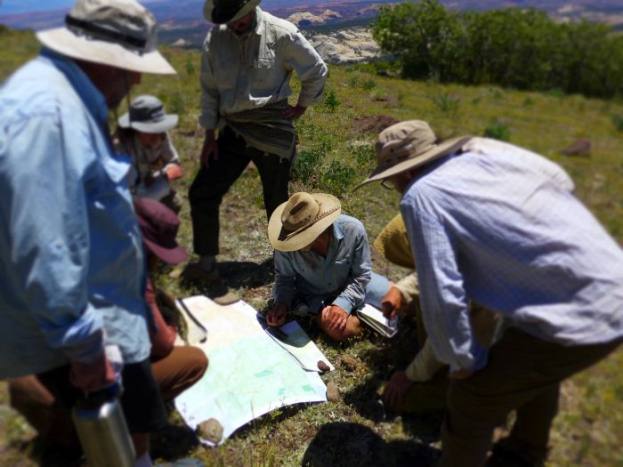
The first few days proved a real test. Participants had to learn how to read coordinates, identify directions, use a compass and navigate by the stars. They made beds from pine needles, purified water from streams, learned to handle knives and built temporary shelters using ponchos and paracord. There were no showers, and washing was subject to strict restrictions to avoid contaminating natural water sources.
The days were filled with exhausting hikes through forests, meadows and rocky slopes. One of the toughest challenges was navigating unfamiliar terrain: participants had to plan their own routes and then lead the rest of the group. McLean admitted that at times she doubted whether she would make it through the entire programme.
And this is not simply an impressive detail in a promotional story. Some participants really do leave early. Some cannot bear being separated from their families, while others struggle with the solitude of solo expeditions. According to deputy director Perry Tancredi, one participant quit because he missed having access to email. Even former military personnel have abandoned the course.
One instructor recalled another telling incident: a billionaire who found the challenges too demanding had secretly packed a satellite phone in his backpack and summoned his private helicopter to the desert. Such stories, however, do not change BOSS's principles: everyone is equal on the trail, regardless of the size of their bank account. As former school director Jay Carson explained, a thunderstorm will not spare someone simply because they have half a billion dollars.
Carson himself completed the course in 2021. He later became an instructor and credited the psychological resilience he developed at BOSS with helping him cope with a devastating personal loss: his Los Angeles home was destroyed in the 2025 wildfires.
Extreme expeditions, however, appeal to more than just billionaires and business executives. Before filming Charlie's Angels, Drew Barrymore, Lucy Liu and Cameron Diaz completed their own seven-day course at the school. BOSS offers programmes for different levels of experience, lasting anywhere from one week to 28 days. The longest expedition is considered the most physically demanding.
The Times journalist also described the climax of her journey: a four-day solo expedition. Participants were left on their own, without instructors, and had to find their way, locate drinking water and arrange their own overnight shelter. McLean was caught in heavy rain, tackled steep slopes, lost her bearings and repeatedly questioned whether she had correctly identified her location. At night, small rodents rustled around her shelter, trying to get at her food supplies.
Yet the solitude that initially seemed so frightening ultimately became one of the most valuable parts of the experience. Without a watch or phone, she gradually stopped worrying about time and learned to trust her own decisions. On the final day, McLean managed to find her way to the designated meeting point independently, becoming the first participant to reach the finish.
According to former participants and instructors, the greatest value of these expeditions lies not in learning how to build a shelter or start a fire. They help people discover their inner courage, stop panicking in the face of the unknown and understand what they are capable of beyond the boundaries of their familiar lives.
The school continues to expand its programmes, including special expeditions for women. A separate 14-day women's expedition is planned for 2027. The Wilderness Navigator course for that year is priced at €4,380, while the women's wilderness expedition costs €4,280.
For some members of the global elite, it seems, true luxury today is no longer about having even more comfort. It is about being able to give it all up temporarily — and finding out whether they can manage without everything they have grown accustomed to.