A Floating Home the Size of a Bed: Blogger Builds the World's Tiniest Houseboat, but Three Days Aboard Prove a Challenge
 15:14 18 November, 2026
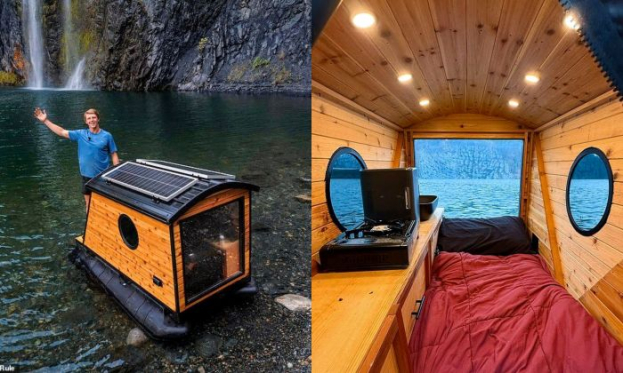
American blogger David Rule set out to find out whether a tiny floating structure could be turned into a fully functional home. He built a houseboat measuring just 2.6 square meters, complete with a bed, a mini-kitchen and solar panels, before setting off on a three-day river adventure. But the experiment revealed that living in such a confined space is far more difficult than it might look on video.
Rule, who is from Wyoming, named his creation Tinytanic. The boat is approximately 2.4 meters long and 1.1 meters wide. It is so compact that it can be transported in the bed of an ordinary pickup truck.
The build took just over a month and cost around $4,000. Its foundation consists of plastic pontoons supporting a lightweight wooden structure made from cedar, pine and plywood. The roof is constructed from plywood and aluminum sheets, while a large transparent polycarbonate window is fitted at the rear.
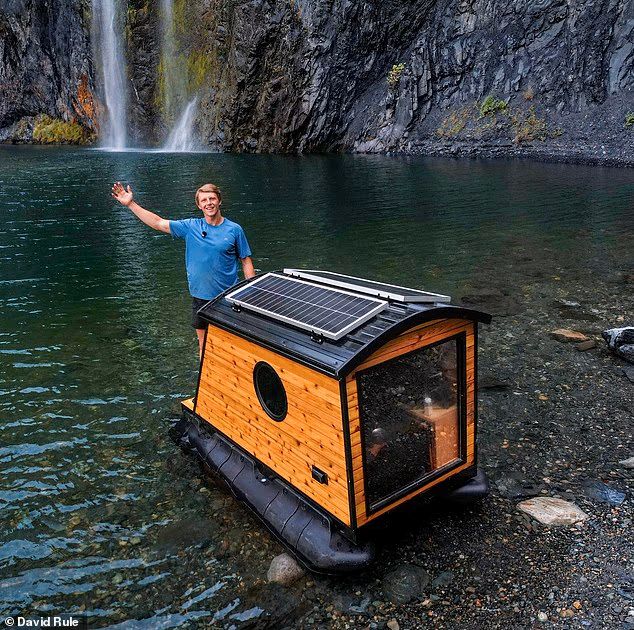
Despite its modest dimensions, the interior accommodates a bed, a small countertop with storage space, a mini-fridge, a butane stove and a sink. Water is supplied by a pump with a filtration system, while electricity comes from two 100-watt solar panels mounted on the roof. They charge a battery that powers the motor, lighting, fan and USB outlets.
However, the ceiling is only about 107 centimeters high, making it impossible to stand upright inside. Anyone staying aboard has to sit or lie down.
Three Days Without a Toilet or Room for Belongings
To put his creation to the test, Rule headed to the Pend Oreille River in Washington state. Over three days, he covered approximately 19 kilometers, went fishing, cooked his catch on the tiny stove and spent the nights sleeping on the water.
According to the blogger, the boat proved surprisingly stable, and spending the night on the river was remarkably peaceful. But the everyday inconveniences soon became apparent.
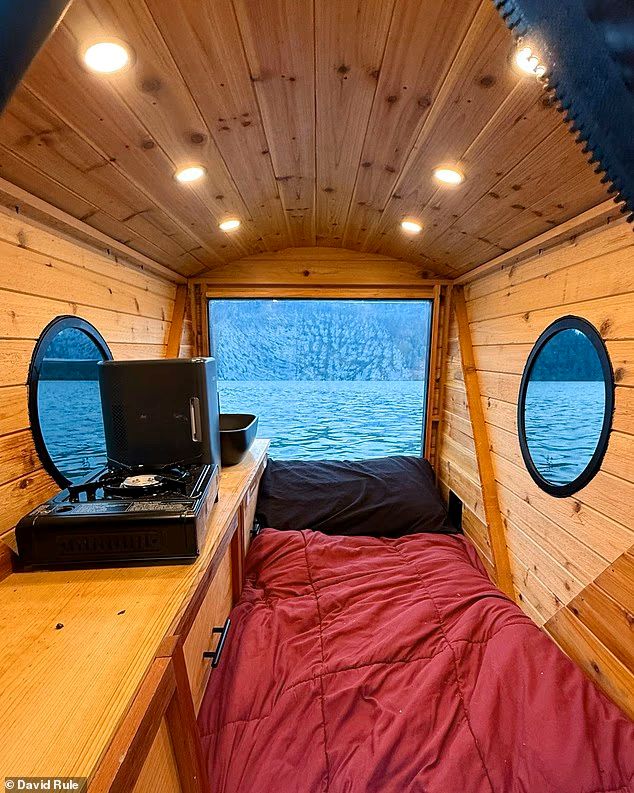
“I had a lot of gear for this trip, but nowhere near enough space to put it all,” Rule told the Daily Mail.
He had to leave most of his belongings on shore. He hung his food from trees to keep it away from bears. There was no toilet on board: for some needs, he had to stop on the riverbank, while for others he relied on facilities at campsites.
There were also problems with the power supply. During cloudy weather, the solar panels failed to generate enough electricity, forcing the blogger to conserve battery power and switch off the motor whenever the current and wind were strong enough to move the boat.
Despite the difficulties, Rule completed the journey. However, he has no plans to live aboard Tinytanic permanently. He admitted that he could hardly imagine spending even a full week on such a small boat.
“Honestly, the main reason I took on this project was to create an interesting challenge and an entertaining video for YouTube. I wanted to inspire and entertain viewers, and I think I achieved that,” the blogger said.