“In Armenia, We Love to Make a Grand Entrance. Subtlety Isn’t Really Our Thing”: Anna Satyan on Perfume, Armenian Fragrances and the Culture of Wearing Scent for Yourself
 19:27 28 November, 2026
Everyone has a favourite smell. Sometimes it is coffee, hot asphalt or blossoming trees. Sometimes it is a particular perfume that seems to be everywhere and gradually becomes part of our collective memory. In Yerevan, for example, familiar sweet, woody and oriental scents can be detected long before you spot the people wearing them. But why do some fragrances become citywide bestsellers while others remain the choice of only a few? Why are long-lasting perfumes with powerful sillage so popular in Armenia? And does an expensive bottle necessarily mean good taste?
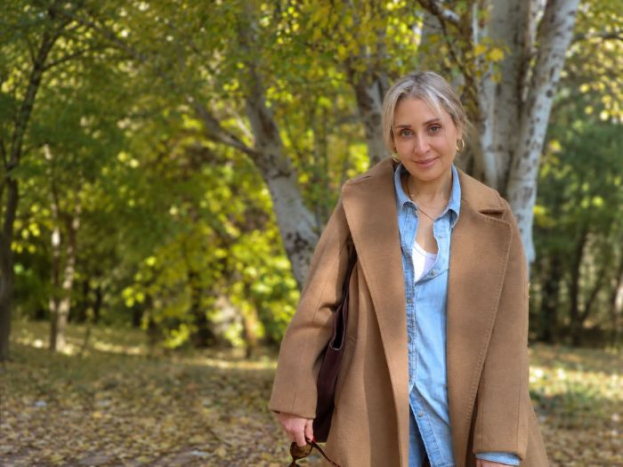
We discussed these questions with Anna Satyan, a journalist and author of the satyan_lifestyle blog, where perfume has gradually taken centre stage. Her introduction to fragrances once consisted of just a few bottles for different occasions. Today, she collects perfumes, studies their compositions and enjoys sharing her discoveries with her audience.

Anna, as I understand it, this started out as a personal hobby rather than an attempt to build your own blog?
Yes, I have never worked professionally in perfumery. I used to take a fairly straightforward approach to choosing perfume: smell it, try it, like it — buy it. I enjoyed having a few fragrances for different occasions, four bottles or so, if you like.
Then, in 2023, I happened to become much more interested in the subject. I came across a podcast hosted by two fragrance enthusiasts. I started listening and drawing parallels with food. At the time, they were discussing gourmand fragrances — compositions featuring notes of vanilla, cocoa, chocolate and desserts.
That made me curious. I began reading, listening to podcasts and ordering samples so I could get to know different fragrances without buying bottles I might never use. Gradually, I started to understand the subject better. But I do not consider myself an expert. I am an enthusiast, a fan and a collector. There are people who have received serious specialist training and graduated from perfumery schools. That is an entirely different level of expertise.
And now everyone comes to you for advice?
All the time (laughs). People ask what might suit them, which fragrance to choose for winter or summer, and whether a particular bottle is worth buying. But that is quite a responsibility — and a potentially dangerous one. Everyone has an individual sense of smell. Something I absolutely adore might not appeal to someone else at all.
There is a belief that a fragrance says a lot about the character of the person wearing it. Have you noticed anything like that?
I would not draw a direct connection between perfume and character. Someone can have a thoroughly unpleasant personality and still wear wonderful perfume. And vice versa. I would rather talk about temperament, individuality and a person's overall image. For example, powdery, delicate, clean-smelling compositions often suit a light, ethereal woman. Rich woody and oud fragrances can look wonderful on an extravagant woman or man. They become an extension of that person's appearance and style.
When people describe perfume, they often use visual associations. An evening dress, high heels and an elegant hairstyle immediately suggest a dressed-up fragrance. Or imagine a long dress, sandals and the seashore — and you can already picture something more relaxed.
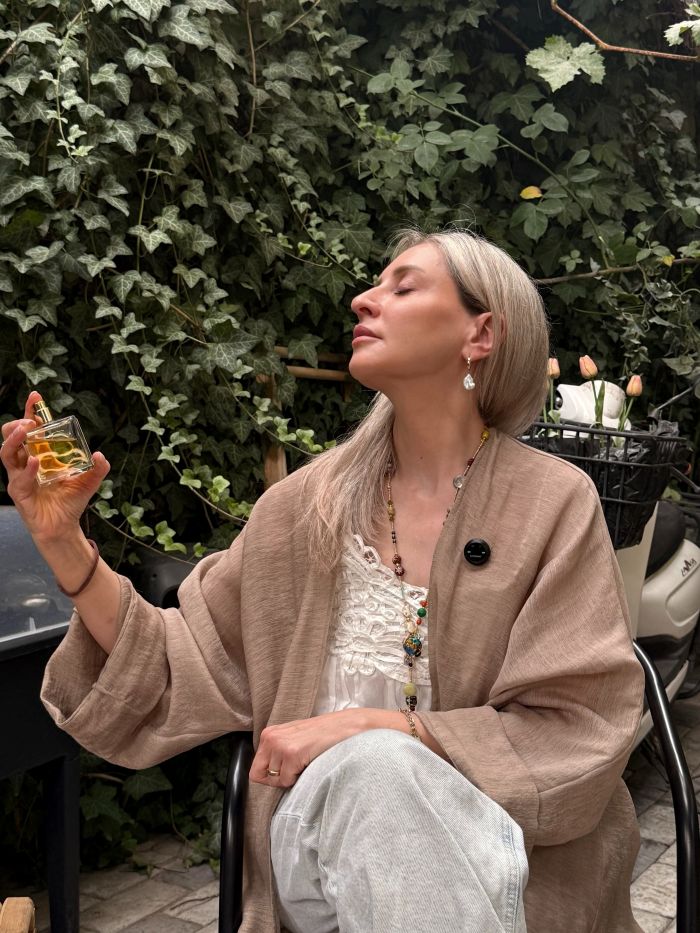
Let's talk about Yerevan. If you were to describe the city through perfume, what would it smell like? Which fragrances do you encounter most often on the streets?
I think a certain oriental character dominates here. And I do not necessarily mean Arabic perfumery. There is simply a stereotype that if you spend money on perfume, it has to be long-lasting, have strong sillage and project well. You should walk into a room and everyone should immediately know someone has arrived. We love to make a grand entrance. Subtlety — transparent, barely perceptible fragrances — is not really our thing.
Of course, there are people who prefer something soft and unobtrusive. But if I were to describe the overall picture, Yerevan smells like bestsellers to me.
There was a huge wave of Baccarat Rouge 540. A few years ago, you could smell it practically everywhere. I notice it less often now, probably because it has become so widespread. I like it myself — I have the red bottle — but at one point I simply put it away. I wanted to smell a little different from everyone else.
At the moment, I think Ganymede is in the lead. Lost Cherry by Tom Ford and its smokier interpretation, Cherry Smoke, are still popular. Armenian women love Montale. I also often notice gourmand compositions: vanilla, coffee and dessert-like notes.
And what do men prefer?
I often notice that men are drawn to woody, oud-based and generally heavier fragrances. Oud Wood by Tom Ford, Ambre Nomade by Louis Vuitton and fragrances by Clive Christian, for example. These are expensive, recognisable brands associated with a certain social standing.
So perfume sometimes becomes a way of displaying wealth here?
Yes, there is a certain attraction to luxury. Someone might be dressed very simply, but the mere fact that they have a bottle of Clive Christian at home is already seen as something that signals status.
That said, I see nothing wrong with expensive perfumery. I like many luxury and niche fragrances myself. You just should not confuse price with quality.
Does the price determine the quality of a fragrance? Do good perfumes have to be expensive?
Not at all. There are plenty of very expensive fragrances that are not particularly long-lasting. That does not mean they are bad. It simply means that the original intention was not to create a composition that would last 24 hours and fill an entire room.
The price is determined by many factors: the quality of the ingredients, where the perfume is made, the perfumer's reputation and fee, the bottle itself and the packaging. But a high price does not guarantee that a fragrance will be right for you.
There is also plenty of accessible niche perfumery. Mancera, for example, is a good illustration of a relatively affordable segment. That is why I always advise people to be guided first and foremost by their own senses.
Does it happen that someone buys an expensive perfume that does not suit them at all simply because it is expensive?
Of course! It happens much more often than people think. Sometimes someone tells you, “This is your fragrance, you absolutely have to buy it.” Or you receive an expensive bottle as a gift and start wearing it even though you do not particularly like the composition.
I have talked myself into believing that certain perfumes suited me, even though I had bought them rather foolishly. You think: I spent so much money on this — I have to wear it! But eventually you realise that the fragrance simply is not yours. No amount of money can change that.
How would you assess Armenia's own perfume industry? Local brands are emerging, but how established are they already?
I would not presume to judge what anyone is lacking. I think we should first give people the opportunity to do their work and only then start criticising them.
Among the brands I know, I would single out Voskanian. There are other interesting names too, created by people who are genuinely enthusiastic about and passionate about perfumery.
I would also mention the Spanish brand Avii Parfums, founded by Artur Grigoryan. It is well-crafted perfumery with an interesting concept. Another Spanish brand is Voce di Sensi, founded by our compatriot David Hovhannisyan. Voce di Sensi has very high-quality, interesting compositions. It is wonderful that people are creating their own brands, taking part in exhibitions and making themselves known!
Can we already talk about a distinctive Armenian style of perfumery?
I think it is gradually taking shape, and the brands I have just mentioned are helping to define it. I like the fact that some Armenian fragrances have a European feel. We should not assume that Armenian perfume must necessarily smell of pomegranate, chaman or something exclusively national. That is far too narrow a view.
We need to take a broader look at our own industry. An Armenian brand can create elegant European-style compositions and still remain Armenian in its origins, concept and the people behind it.
Could you show us a fragrance that, in your opinion, already captures that connection with Yerevan?
Here is one example: “Green Evening” by Voskanian. It is a fragrance dedicated to Yerevan in summer — to a summer evening.
(Anna hands me the bottle.)
It really reminds me of watermelon bubble gum!
Very close! It does have watermelon and melon, as well as rhubarb. That adds a touch of tartness and an unusual green note. The result is the feeling of a summer evening. I love wearing it in summer when I go out to sit somewhere in the evening. It really captures that mood. The brand also has a fragrance called Pêche Chyprée — a peach with a chypre character, a little like peach lemonade. It is a very interesting composition.
We have already talked about Yerevan's perfume bestsellers. But why do certain fragrances become so popular? How does one bottle suddenly end up in the hands of every other person?
First of all, we have to admit that many bestsellers really are good. Baccarat Rouge and Ganymede, for instance, are quality compositions. But then marketing, retailers, recommendations from friends and the internet all come into play. A shop brings in a fragrance and starts recommending it to customers. One person tries it and tells someone else. Then another review appears online — and that is it: a trend takes off.
Besides, not everyone wants to delve deeply into how a perfume composition is constructed. Most people find it easier to walk into a shop, try a popular fragrance and buy it. It is like fashion: a pair of loafers becomes trendy, and suddenly everyone is wearing loafers.
You made an interesting point about people in Armenia liking powerful fragrances. What is perfume culture like abroad? Have you noticed a difference?
A huge difference. In Europe, during the day, you are much less likely to encounter bold, heavy compositions. People try not to attract unnecessary attention. In the evening, for example, you might meet men and women wearing wonderful fragrances in a good restaurant, but even those perfumes do not necessarily have to be overpowering.
They may be very expensive, complex compositions that are barely perceptible to the people around them.
So it is not even about particular brands, but about the attitude towards perfume itself?
Exactly. Perfume is a personal thing. It should smell good to you, and you should feel comfortable wearing it. The only thing is that you need to know when to stop. Too much of even the most beautiful fragrance can ruin the impression.
What do you think about the social labels attached to popular fragrances? For example, one perfume is considered a sign of good taste, while another is looked down upon.
I really dislike that kind of thing. You often hear comments such as, “That's a tacky fragrance” or “Only a certain type of girl wears that.” But why? Someone likes the composition and can afford it — so what's the problem?
I think these stereotypes are particularly widespread in the CIS countries. I have encountered that attitude much less often abroad. If someone wears Baccarat or Ganymede, people are more likely to say that they smell good. No one tries to determine their social status from the bottle they carry.
So I would not judge a person by their perfume.
Winter is approaching. Should we put our summer fragrances away and switch to warmer compositions?
No! I always say that many summer fragrances smell absolutely luxurious in winter. Citrus compositions, in particular, can evaporate very quickly in hot weather. In the cold, they sometimes reveal themselves in a much more interesting way.
Of course, in winter we often crave something cosy: vanilla, cinnamon, coffee, tonka bean, cashmere and woody notes. Powdery compositions can smell beautiful, as can some pistachio fragrances.
But I do not believe perfume should be strictly divided into summer and winter categories. A heavy winter fragrance can literally suffocate the people around you in hot weather. A fresh summer perfume, on the other hand, can bring a wonderful feeling of nostalgia for a holiday when worn in winter.
The main thing is to test fragrances on your skin and wear what you genuinely like.
Let's move on to the practical side of things. When someone walks into a shop to choose a fragrance, what should they pay attention to? Are there any rules that many people do not know about?
First, do not try to smell ten or fifteen fragrances in one go. After a few compositions, your sense of smell starts to tire, and you can no longer distinguish scents properly.
I also do not consider coffee beans, which shops often offer as a way to reset your sense of smell, an essential solution. It is better to take a break, step outside for some fresh air and drink a little water.
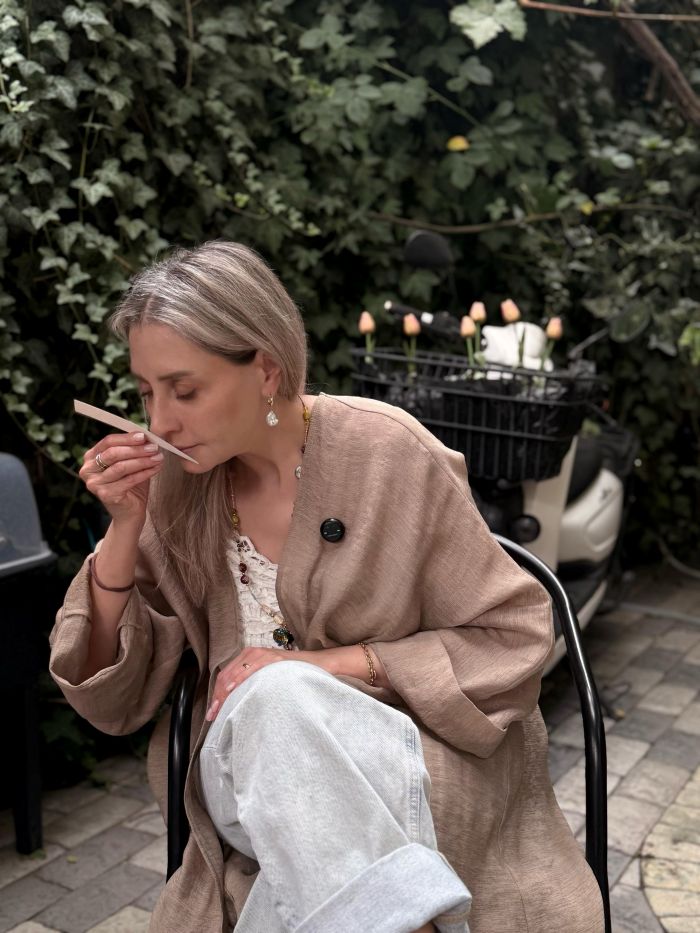
Second, never rely solely on a blotter — the paper strip used to test fragrances. A perfume smells one way on paper and quite another on skin. You can get a first impression from a blotter, but you should make your final decision only after applying it to your skin.
And one more thing: do not buy a perfume immediately after trying it for the first time. Leave the shop, walk around and give the composition time to develop. Think about it for a few hours. After all, you are not just buying a pretty bottle, but a fragrance you may end up wearing every day.
You mentioned that shops here sometimes push bestsellers a little too aggressively...
Yes, and that is one of the problems. Sometimes you have barely walked through the door before someone starts recommending whatever they need to sell. And occasionally the sales assistant does not know the composition particularly well themselves.
For me, that is a major red flag. If someone works with perfume, they should understand what they are selling: know the brand, the story behind its creation, the characteristics of the composition and at least its main notes.
I think sales assistants need to be trained in this. People do not come in simply to buy a pretty box. They want to understand what exactly they are purchasing.
So there is quite a noticeable difference between the way people approach perfumery in Europe and the way they do here — in Armenia, the Caucasus and the East?
Anna Satyan: Yes. In Europe, people are more likely to wear perfume for themselves. It is something personal — something they enjoy and feel comfortable wearing. They choose a fragrance primarily for their own pleasure.
Here, I think the story is a little different. People often apply perfume so that everyone around them can smell it. You walk into a room and everyone should know you have arrived. In other words, there, perfume is something personal — something you like and feel good wearing. Here, it is about making sure everyone else feels “good” too. (We laugh.)
Interview by Liana Aghajanyan
Photos by Mariana Hakobyan