



style.news.am

style.news.am

NEWS.am STYLE

NEWS.am STYLE

NEWS.am STYLE

How Nare was welcomed at Zvartnots Airport after winning the Junior Eurovision Song Contest: the singer's emotions

NEWS.am STYLE

NEWS.am STYLE

NEWS.am STYLE

NEWS.am STYLE

NEWS.am STYLE

NEWS.am STYLE

NEWS.am STYLE

NEWS.am STYLE

NEWS.am STYLE

NEWS.am STYLE

The 23rd "Golden Apricot" Yerevan International Film Festival has kicked off

NEWS.am STYLE




What the first billionaire can teach us about the first trillionaire
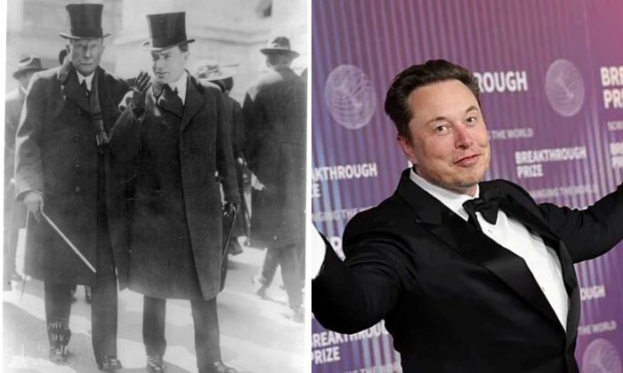
As Elon Musk’s net worth approaches $1 trillion, history offers lessons on how wealth at this scale can reshape markets, politics, and public opinion, writes Bloomberg.
We may be entering the era of the trillionaire. In 2017, no one on Earth had a net worth over $100 billion. Today, 18 people on the Bloomberg Billionaires Index exceed that mark. A successful SpaceX IPO could make Musk, currently valued at over $670 billion, the first trillionaire in history — and he may not be the last this decade.
While unprecedented, the phenomenon isn’t entirely new. At the turn of the 20th century, amid social upheaval, technological change, political polarization, and record-setting wealth, Americans also felt unease about enormous fortunes. Back then, the word “billion” seemed almost unimaginable: a 1903 newspaper described $1 billion as “as many dollars as minutes since the beginning of the Christian era.” Today, a trillion dollars is like minutes since the Ice Age.
For perspective: a billionaire could spend $1,000 a day for 2,700 years, while a trillionaire could spend $1 million a day for the same period. But what does wealth of that magnitude mean in the hands of one person? History points to John D. Rockefeller.
The First Billionaire
By 1890, when 50-year-old Rockefeller had just crossed $100 million, pundits predicted he would become the first billionaire. Through Standard Oil, he doubled his fortune quickly, even through economic downturns. By 1915, his wealth exceeded $1 billion — the largest private fortune in U.S. history, roughly equivalent to over $1 trillion today relative to GDP.
The Power of Enormous Wealth
Such wealth distinguishes someone from ordinary millionaires. It removes constraints and provides the ability to shape the world around them. Yet Rockefeller demonstrated that the power of wealth is not absolute — public opinion could provoke fierce backlash and force political action.
In the early 20th century, Americans didn’t know what to do with $1 billion. One dollar could buy the finest dishes in luxury restaurants. Rockefeller family letters meticulously tracked every expense, from $11.10 on asparagus — a delicacy most workers would never taste.
As wealth grew, so did societal response: taxes were introduced, Congress considered anti-wealth legislation, and President Theodore Roosevelt launched a campaign against monopolies. Rockefeller and his son understood that billionaire status could be dangerous to reputation and influence.
Philanthropy and Lasting Influence
The Rockefellers used their wealth not only for personal gain. John D. Rockefeller Sr. donated $540 million to charity, and his son continued the tradition, funding universities, national parks, museums, and medical research, leaving a decades-long legacy.
Today, billionaires and future trillionaires wield similar influence. Musk, Zuckerberg, and others can reshape digital and economic landscapes, control information flows, and influence technology and AI. Like Rockefeller, they can change the world not just with money but through priorities, vision, and strategy.
Ultimately, how the first trillionaire manages their wealth will determine how profoundly society and daily life are affected.
Follow NEWS.am STYLE on Facebook, Twitter and Instagram

- ‘You Should All Have Sex with Each Other’: Rob Lowe Reveals How Oscar-Winning Director Encouraged Cast Romances on Set Hollywood actor Rob Lowe has made a surprising revelation about the filming of The Hotel New Hampshire, released in 1984. According to the 62-year-old star, the film's director, Tony Richardson, did not simply tolerate romances between cast members but actively encouraged them, suggesting that the actors become intimate with one another to better get into character...
- Monica Bellucci Challenged Hollywood’s Ageism at 50: The Oldest Bond Woman Opens Up About Nude Scenes and Working with Mel Gibson Italian actress Monica Bellucci, 61, has spoken about how she challenged Hollywood's age stereotypes, why she has no reservations about appearing nude on screen and what she remembers most about working with Mel Gibson. The star shared her reflections during an intimate conversation at the Marrakech Film Festival, hosted by Variety magazine....
- A Bathtub Overlooking Europe, Champagne and a $105,000 Private Carriage: Katy Perry and Justin Trudeau Embark on a Lavish Romantic Journey Aboard the Orient Express Katy Perry, 42, and her boyfriend, former Canadian Prime Minister Justin Trudeau, 54, have embarked on an extraordinary romantic getaway across Europe. The couple chartered an entire carriage aboard the legendary Venice Simplon-Orient-Express for a luxurious journey from Paris to Venice. The experience is estimated to cost around $105,000...
- Nicole Scherzinger Calls Off Engagement After Seven Years Together — Who Initiated the Split? Nicole Scherzinger, 48, has split from her fiancé, former Scottish rugby player Thom Evans, after seven years together. The 41-year-old athlete announced the end of their relationship on social media, making it clear that the decision to bring their love story to an end was made by the singer...
- Simon Abkarian to Take the Helm of Paris’s Legendary Théâtre du Soleil French actor and director of Armenian descent Simon Abkarian is set to take charge of one of France’s most renowned theatre companies, the Théâtre du Soleil (Theatre of the Sun). He will succeed its founder, 87-year-old Ariane Mnouchkine, who has led the institution for more than six decades...




-
19:27, November 28
“In Armenia, We Love to Make a Grand Entrance. Subtlety Isn’t Really Our Thing”: Anna Satyan on Perfume, Armenian Fragrances and the Culture of Wearing Scent for Yourself -
18:30, November 28
Brunei’s Sultan at the Controls of a $600 Million Boeing: Did the 80-Year-Old Billionaire Personally Land His Flying Palace During a Moscow Snowstorm? -
17:33, November 28
‘You Should All Have Sex with Each Other’: Rob Lowe Reveals How Oscar-Winning Director Encouraged Cast Romances on Set -
16:28, November 28
‘Take Over the World After a Couple of Drinks’: MIT Professor Reveals Alleged Private Conversations Among Employees of Claude’s Creator -
15:14, November 28
Monica Bellucci Challenged Hollywood’s Ageism at 50: The Oldest Bond Woman Opens Up About Nude Scenes and Working with Mel Gibson -
14:22, November 28
‘I Wanted to Become a Father to Millions’: Dolce & Gabbana Model Caught in Sperm Donation Scandal -
13:07, November 28
A Bathtub Overlooking Europe, Champagne and a $105,000 Private Carriage: Katy Perry and Justin Trudeau Embark on a Lavish Romantic Journey Aboard the Orient Express -
12:12, November 28
Nicole Scherzinger Calls Off Engagement After Seven Years Together — Who Initiated the Split? -
11:20, November 28
‘What Is Wrong with You?’ Donald Trump Jr. Slams Netflix Over Lesbian Kissing Scene Posted on Thanksgiving -
10:30, November 28
Simon Abkarian to Take the Helm of Paris’s Legendary Théâtre du Soleil -
23:01, November 27
Neymar Swaps the Football Pitch for the Fragrance Business: Brazilian Star to Create a Perfume for Dubai-Based Brand -
22:19, November 27
What Billionaires Read Before Bed
All materials

@NEWSam_STYLE
@NEWSam_STYLE
- Archive