


NEWS.am STYLE

NEWS.am STYLE

NEWS.am STYLE
NEWS.am STYLE

The 23rd "Golden Apricot" Yerevan International Film Festival has kicked off

NEWS.am STYLE

NEWS.am STYLE

NEWS.am STYLE

NEWS.am STYLE

Nikos Vertis to perform in Armenia for the 3rd time at the invitation of “ACVA BUILDINGS”

NEWS.am STYLE

NEWS.am STYLE

NEWS.am STYLE

NEWS.am STYLE

NEWS.am STYLE

NEWS.am STYLE

NEWS.am STYLE

NEWS.am STYLE

India emerges as a new challenge for global luxury brands: Wealthy shoppers are ready, but stores are scarce
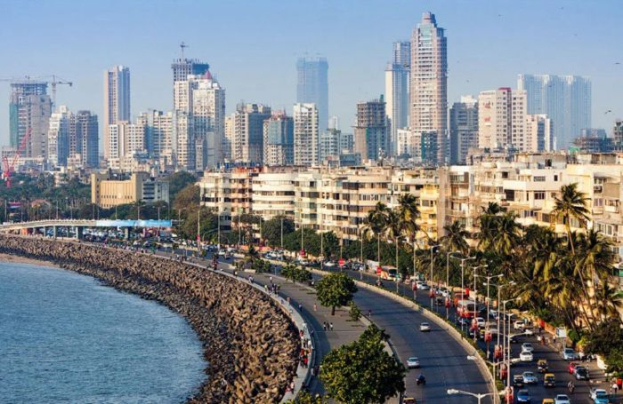
In India’s fast-growing economy, millions of newly wealthy consumers are driving demand for handbags and accessories from Louis Vuitton, Chanel, and Dior. Yet getting to a store is easier said than done — there simply aren’t many.
With a population approaching 1.5 billion and economic growth above 6%, India is expanding faster than China — the main driver of the luxury industry over the past decade, Reuters reports.
A Shortage of Prime Retail Space
Leading luxury brands face a significant hurdle: a severe shortage of high-quality retail locations. India currently has only three true luxury shopping centers: two in New Delhi — Emporio and Chanakya (both owned by developer DLF) — and Jio World Plaza in Mumbai, owned by the conglomerate Reliance.
“We constantly get requests from headquarters — LVMH, Kering, Richemont — asking for space for brands that want to enter the Indian market,” said Surabh Bharara, head of luxury malls at DLF. “We have fifteen top-tier brands ready to enter India tomorrow if we can provide the space, but right now, there simply isn’t any.”
Economic Momentum and Rising Wealth
India ranks fourth globally for individuals with net worth over $100 million, behind only the U.S., China, and Japan, according to the 2025 Knight Frank Wealth Report. The country’s middle class is also expanding rapidly.
Still, the Indian luxury market was valued at just $12.1 billion last year — less than 3% of China’s market, according to Euromonitor. While India has the potential to offset slower growth in other key markets, that potential may remain untapped until new shopping centers open.
“High-quality retail real estate is the main bottleneck,” noted R. Satyait, CEO of International Brands at Aditya Birla Fashion and Retail. In November, the company opened a franchise of French department store Galeries Lafayette in Mumbai, giving roughly 200 foreign brands access to the Indian market.
Four new luxury malls, including an expansion of Emporio, are under development, but openings are not expected for several years. The other three centers are planned for Mumbai, Hyderabad, and Gurgaon (New Delhi’s surrounding region). This gives hope to brands like Chanel, with a Mumbai store a near-term priority.
Premium Brands Adapt
Some luxury brands are entering less exclusive but still premium malls. Golden Goose, focused on luxury footwear, has opened three stores in New Delhi, Bangalore, and Mumbai over two years, targeting a young and confident Gen-Z audience.
Gaps in the Market
The scarcity of quality retail space has left India without stores for several key brands. For example, Patek Philippe and Loro Piana have no physical stores. Prada has only one cosmetics boutique and no fashion outlet, while Chanel operates one clothing store and seven beauty boutiques. By comparison, in China, Prada has 14 fashion stores, Chanel 18, and some brands operate 40–50 locations, including Louis Vuitton and Gucci.
Even if brands are willing to forgo “ultra-luxury” spaces with high ceilings, columns, and parking, options remain limited. Flagship stores on main streets are often unattractive due to cleanliness and air quality issues.
As a result, some brands are entering India via franchise partnerships with retail conglomerates like Reliance, Aditya Birla Group, and Tata Group, which provide store networks and capital. Balenciaga, Tod’s, and Stella McCartney entered through Reliance Brands, while Jio World Plaza allowed Louis Vuitton to open a Mumbai store outside hotel complexes.
Other Challenges
Developers face a “chicken-and-egg” problem: investing in projects is difficult without firm commitments from brands, but brands rarely invest until construction is complete. High customs duties — 35–40% — also push wealthy Indian consumers to shop in Paris, Dubai, or Singapore.
Follow NEWS.am STYLE on Facebook, Twitter and Instagram

- Beyond Time and Eras: The $500,000-Plus Watch Designed to Keep Time for 1,000 Years Independent Swiss watchmaker Urwerk has never played by the traditional rules of horology. Now, the brand has reimagined one of its most ambitious concepts, unveiling a one-of-a-kind UR-1001 Amadeus pocket watch, according to Forbes...
- Master Manipulators: Why Society Is So Vulnerable to Hidden Psychopaths For decades, the conventional understanding of psychopathy was based largely on studies of prison populations. Today, however, researchers are turning their attention to high-functioning psychopaths — people with persistent predatory traits who are well adapted to society and able to build careers in corporations, politics and other fields while often escaping consequences for their behavior, according to The Guardian...
- Escape From Civilization: Why the World’s Wealthiest Are Choosing the Wilderness Over Luxury Resorts As ultra-wealthy travelers increasingly seek truly authentic experiences, remote destinations are climbing to the top of their wish lists...
- Samsung Ordered to Pay Swatch $11.6 Million for Copying Luxury Watch Designs The High Court in London has ordered South Korean technology giant Samsung to pay Swiss watchmaking group Swatch $11.6 million for allowing pirated versions of luxury watch dials to be offered for its smartwatches...
- Archaeologists May Have Found Jesus Christ’s Tomb After 2,000 Years Italian archaeologists excavating beneath the Church of the Holy Sepulchre in Jerusalem have uncovered an ancient burial landscape and tomb that appear to closely match descriptions found in the Gospels.




-
23:01, August 28
Beyond Time and Eras: The $500,000-Plus Watch Designed to Keep Time for 1,000 Years -
22:20, August 28
Master Manipulators: Why Society Is So Vulnerable to Hidden Psychopaths -
21:31, August 28
Escape From Civilization: Why the World’s Wealthiest Are Choosing the Wilderness Over Luxury Resorts -
19:28, August 28
Samsung Ordered to Pay Swatch $11.6 Million for Copying Luxury Watch Designs -
16:16, August 28
Archaeologists May Have Found Jesus Christ’s Tomb After 2,000 Years -
15:49, August 28
Sydney Sweeney goes topless with her finger in her mouth in her most provocative lingerie ad yet -
15:21, August 28
Hermès Weaves Silk Threads Into the Dials of Its New Arceau Watches -
14:37, August 28
Kanye West has made more than $25 million this year from concerts that never happened -
14:19, August 28
‘Echoes of her 2002 breakdown’: Jennifer Lopez’s friends are sounding the alarm over her relentless work marathon -
13:17, August 28
‘That’s a dirty tactic’: Jane Fonda slams Paramount for trying to ‘silence’ Mark Ruffalo with antisemitism accusations -
12:50, August 28
Miss USA contestant reveals how she lost 170 pounds after a humiliating theme-park incident -
12:20, August 28
‘I felt like a robot’: Britney Spears reveals the devastating toll of her 14-year conservatorship
All materials

@NEWSam_STYLE
@NEWSam_STYLE
- Archive