


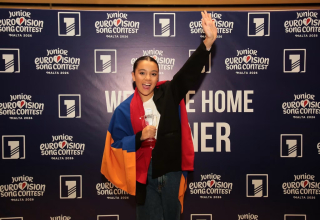
How Nare was welcomed at Zvartnots Airport after winning the Junior Eurovision Song Contest: the singer's emotions
NEWS.am STYLE
NEWS.am STYLE
NEWS.am STYLE

NEWS.am STYLE

NEWS.am STYLE

NEWS.am STYLE
NEWS.am STYLE

NEWS.am STYLE

NEWS.am STYLE
NEWS.am STYLE
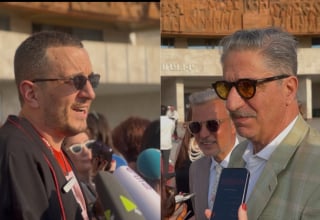
The 23rd "Golden Apricot" Yerevan International Film Festival has kicked off

NEWS.am STYLE
NEWS.am STYLE

NEWS.am STYLE
NEWS.am STYLE
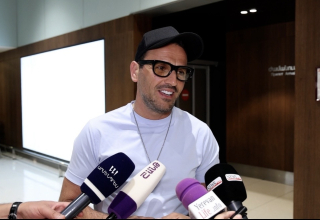
Nikos Vertis to perform in Armenia for the 3rd time at the invitation of “ACVA BUILDINGS”
NEWS.am STYLE


Eurovision Tightens Voting Rules After Controversy Over “Unusual” Support for Israel

The Eurovision Song Contest, already under pressure from boycotts related to Israel’s participation, is facing a new controversy after organizers moved to revise voting rules following allegations of coordinated voting campaigns during last year’s competition, according to Reuters.
The European Broadcasting Union (EBU), which runs the contest, has introduced new measures for 2026 aimed at limiting what it calls “disproportionate promotional campaigns” after several broadcasters questioned the integrity of the results.
Criticism focused on data suggesting that Israel received around 83% of its total points from public televoting for the song “New Day Will Rise,” ultimately finishing in second place. In contrast, the winner Austria reportedly received about 41% of its points from the public vote and secured victory largely thanks to jury scores.
Organizers said last year’s contest saw unusually aggressive online campaigning, including social media posts and promotional activity—some reportedly linked to official channels—that encouraged viewers to vote multiple times. EBU director Martin Green described this as “disproportionate marketing” that goes beyond the intended spirit of the competition.
Under the new rules, the maximum number of votes a single viewer can cast through one payment method has been reduced from 20 to 10. The EBU is also introducing additional safeguards to detect and prevent coordinated voting campaigns.
However, officials acknowledge that it is impossible to fully eliminate external influence, as all voting systems are vulnerable to some degree of manipulation.
Further tension arose after the EBU issued a warning to Israeli broadcaster KAN over a video by this year’s entrant Noam Betan, which reportedly included a direct call to “vote for Israel 10 times.” The EBU said such instructions violate contest rules. KAN responded that it complies with all regulations and that the video was created by the artist’s team without any prohibited coordination.
The broadcaster also argued that similar promotional tactics are used by other participating countries.
Experts note that Eurovision has long been shaped not only by music but also by diaspora voting patterns, national campaigns, and geopolitical dynamics. Voting systems specialist Juan Moreno-Ternero said no model is fully immune to strategic manipulation, emphasizing that every system has inherent weaknesses.
As a result, Eurovision once again finds itself at the intersection of music, politics, and digital campaigning, where cultural celebration increasingly overlaps with international influence and public opinion battles.
Follow NEWS.am STYLE on Facebook, Twitter and Instagram

- Primitive Passion and Hypnotic Grace: Hervé Koubi’s Barbarian Nights Presented in Armenia at the Theatron Festival The choice of the closing production was deliberate. Saté Khachatryan, founder and director of Theatron, explains that after opening the festival with Mourad Merzouki, it was only natural to conclude it with a performance by another internationally acclaimed choreographer, Hervé Koubi...
- Kapan Fest: Why Musicians Keep Coming Back to Kapan A few minutes before the concert, Gilles Apap was backstage talking to me about surfing. Then he picked up a rose and balanced it on the tip of his nose. A music stand came next. Students tried to imitate him. None succeeded....
- Four Armenian Filmmakers Selected for Cannes Critics’ Week Next Step Studio The filmmakers who will participate in the Cannes Film Festival‘s Critics’ Week’s Next Step Studio program, which will focus on Armenia, were named during the GAIFF Pro Industry Awards Ceremony on July 16, Armenian Film Society writes…
- Melonpan Group Became Special Partner of Yerevan Wine Days 2026 Melonpan presented a festival menu with signature gelato and specialty coffee...
- Simon Abkarian Brings His De Gaulle to Cannes as Epic French War Drama Emerges as One of the Festival’s Biggest Films One of the most talked-about out-of-competition premieres at the 79th Cannes Film Festival has been De Gaulle: Tilting Iron, a sweeping historical epic starring French-Armenian actor Simon Abkarian in the title role...




-
23:09, October 26
“Porn Isn’t the Problem”: Adult Film Star Identifies the Main Cause of Gen Z’s Sexual Recession -
22:31, October 26
Horns vs. the Cross, Young People vs. Adults: How Halloween in Armenia Became a Generational Battleground -
20:30, October 26
A $89,000 Robot Learns to Interact with People in New York, with Hopes of Becoming a Nanny -
19:06, October 26
“The White House’s Next Press Secretary”: Nicki Minaj Surprises with Appearance Alongside Trump -
16:36, October 26
Is Tom Brady’s Romance Dividing Victoria’s Secret Angels? Candice Swanepoel Caught in Drama with Irina Shayk and Joan Smalls -
15:29, October 26
Chanel and Hermès Bags for Guests, a Backstreet Boys Performance and a Chance to Win $1 Million: Drake Celebrates His 40th Birthday in Style -
14:30, October 26
How Katy Perry Ended Up Living a Teenage Dream Love With Justin Trudeau -
13:31, October 26
Eight Years of Legal Battles with Angelina Jolie Took Their Toll: Brad Pitt Opens Up About the Hardest Period of His Life -
12:06, October 26
Kanye West Photographs Wife Bianca Censori in Sheer Minidress Without Underwear: New Controversial Photos -
11:37, October 26
“I Love Spending Time with Them”: Lewis Hamilton Opens Up About His Relationship with Kim Kardashian’s Children -
11:05, October 26
Meghan Markle’s Father Admits Paying for Sex and Denies Allegations of Child Sexual Abuse -
08:29, October 26
How Nare was welcomed at Zvartnots Airport after winning the Junior Eurovision Song Contest (VIDEO)
All materials

@NEWSam_STYLE
@NEWSam_STYLE
- Archive