



NEWS.am STYLE

NEWS.am STYLE

NEWS.am STYLE

NEWS.am STYLE

NEWS.am STYLE

NEWS.am STYLE

NEWS.am STYLE

NEWS.am STYLE

NEWS.am STYLE

NEWS.am STYLE

The 23rd "Golden Apricot" Yerevan International Film Festival has kicked off

NEWS.am STYLE

NEWS.am STYLE

NEWS.am STYLE

NEWS.am STYLE

Nikos Vertis to perform in Armenia for the 3rd time at the invitation of “ACVA BUILDINGS”

NEWS.am STYLE

NEWS.am STYLE



Secret of Botticelli’s Venus Discovered: Tragic Reason Behind the 500-Year-Old "Cross-Eyed Look"
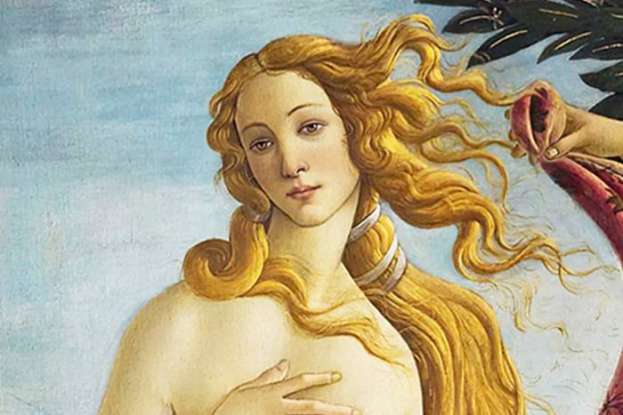
For over five centuries, the subtle misalignment of Venus’s eyes has been the subject of endless debate among art historians.
Today, scientists have concluded that Sandro Botticelli was not relying on artistic license when creating his iconic masterpiece The Birth of Venus. The great Renaissance master may have captured with absolute precision the subtle signs of a devastating illness that claimed his muse's life long before modern medicine could explain it, The Post reports.
Researchers believe that the unusual gaze reflected a real, life-threatening ailment afflicting the woman who inspired one of the most famous paintings in human history. The model for the canvas is widely believed to have been Simonetta Vespucci—the legendary Florentine beauty who captivated Italy and, by all accounts, Botticelli himself.
What Was Hidden in Venus’s Gaze?
Scientists from Queen Mary University of London state that Simonetta’s slight strabismus—or cross-eyed look—could have been caused by a pituitary adenoma, a typically benign tumor that develops in the brain's pituitary gland.
These findings support a theory first put forward by the research team seven years ago. After studying additional historical documents, scientists concluded that the expanding pituitary tumor caused a sudden health crisis that cut Simonetta's life short at the age of just 23. This challenges the centuries-old narrative that she died of tuberculosis.
"It is highly probable that the asymmetric position of the eyes in The Birth of Venus—a strabismus that was later interpreted as a sign of piety and distinct elegance—was actually triggered by a brain tumor," notes the study's lead author, Paolo Pozzilli.
According to experts, Venus wasn't merely looking to the side; for five centuries, she has been displaying to the world the oldest documented case of an undiagnosed fatal disease in history.
Artificial Intelligence at the Service of Art
For generations, art historians attributed Venus's wandering eye to symbolism, assuming Botticelli intentionally added the feature as a mark of divine beauty or religious awe. However, after analyzing five portraits believed to depict Simonetta using facial recognition software, researchers realized the answer had been hiding in plain sight all along.
The AI-driven analysis corroborated the scientists' earlier hypothesis: Botticelli’s muse suffered from a hormonally active pituitary adenoma. This very tumor also explains Simonetta's sudden, tragic demise.
"Correspondence between Piero Vespucci and Lorenzo de' Medici regarding Simonetta's final days mentions that she fainted during a ball, after which she was kept in a darkened room, suffering from severe headaches, hallucinations, vomiting, and high fever," explains study co-author Dr. Domiziana Nardelli. "These are all classic symptoms of a rapidly expanding pituitary tumor leading to apoplexy (bleeding into the tumor)."
Scientists also suggest that the fatal incident could have been triggered either by vigorous dancing at the ball or, more sinisterly, a hypothetical assault by Alfonso II of Aragon, the Duke of Calabria.
The computer-assisted facial analysis pointed to another critical detail.
"In Botticelli's Allegorical Portrait of a Young Woman, the model (who was also Simonetta Vespucci) shows signs of lactation, even though we know for certain she had no children," Nardelli adds. "This is extremely unusual for a portrait of that era. We believe this detail, alongside the altered facial features, indicates actual physical symptoms of a prolactinoma—a tumor that hypersecretes the hormone prolactin."
Forever at the Feet of His Venus
Contemporaries called Simonetta La Sans Pareille—"The Peerless One." Despite her short life, she remained fixed in the memory of Florence as the absolute gold standard of beauty, intellect, and grace.
Botticelli’s adoration of his muse did not fade after her death. The artist was so devoted to Simonetta's image that he requested to be buried at her feet. When the great master passed away in 1510, his wish was granted—a final homage to the woman whose face became one of the most recognizable in the history of world art.
Follow NEWS.am STYLE on Facebook, Twitter and Instagram

- Armenia wins Junior Eurovision 2026 The Junior Eurovision 2026 contest has ended in Malta, with Armenia's representative Nare being declared the winner with the song Boo…
- Armenia's Representative Nare's Performance at the Junior Eurovision Song Contest 2026 The Junior Eurovision Song Contest 2026 is underway in Malta…
- LIVE: Junior Eurovision 2026 has started in Malta. Armenia will perform under the number 8 The “Junior Eurovision” song contest is currently taking place in Malta, where Armenia is represented by Naré with the song Boo…
- AI-Generated Singer Announces Pregnancy and Quits Band — Fans Didn’t Realize She Wasn’t Real Social media users were left confused after news broke that Mity, a member of the Chinese pop group Baby Queen, had announced her pregnancy and decided to take a temporary break from the band. Many fans only then discovered that the group and its members were entirely AI-generated, the Daily Mail reports...
- Three Hours for Makeup and Household Chores: Japanese Prime Minister’s Admission Sparks Public Debate Japanese Prime Minister Sanae Takaichi has said her daily schedule is significantly more demanding than those of her male predecessors. In addition to her official duties, she spends several hours a day on makeup, bathing, cooking and other household tasks. Her remarks have sparked a heated debate about gender stereotypes and the expectations placed on Japanese women, The New York Times reports...




-
01:22, October 25
Armenia wins Junior Eurovision 2026
-
00:16, October 25
Armenia's Representative Nare's Performance at the Junior Eurovision Song Contest 2026 -
23:00, October 24
LIVE: Junior Eurovision 2026 has started in Malta. Armenia will perform under the number 8 -
19:30, October 24
“Kim Kardashian Could Become President”: Biographer Reveals Her Family Secrets, Scandalous Past and Obsession with Fame -
17:25, October 24
AI-Generated Singer Announces Pregnancy and Quits Band — Fans Didn’t Realize She Wasn’t Real -
16:34, October 24
Salma Hayek’s Daughter Tops Britain’s Most Eligible List: Billionaire Parents, Pubs and Vodka -
15:10, October 24
Timothée Chalamet Ignores Victoria’s Secret Models for Kylie Jenner — His Reaction Goes Viral -
14:20, October 24
Queen Elizabeth II Bragged About Helen Mirren to a Sheikh — But He Didn’t Recognize the Actress -
13:49, October 24
Why Did Tom Cruise Punch Jack Nicholson? -
13:15, October 24
“I Know Where You Are”: Hunter Biden Accused of Threatening Sex Worker -
12:12, October 24
Kim Kardashian Opens Up About Her Romance with Lewis Hamilton: “I’m Very, Very Happy” -
11:19, October 24
A $3 Million Rolex, a $200,000 Hermès Bag and a 7-Carat Diamond: Cardi B Spoils Herself with Lavish Birthday Gifts
All materials

@NEWSam_STYLE
@NEWSam_STYLE
- Archive