



NEWS.am STYLE
NEWS.am STYLE
NEWS.am STYLE

NEWS.am STYLE

NEWS.am STYLE

NEWS.am STYLE
NEWS.am STYLE

NEWS.am STYLE
NEWS.am STYLE
NEWS.am STYLE

The 23rd "Golden Apricot" Yerevan International Film Festival has kicked off
NEWS.am STYLE
NEWS.am STYLE

NEWS.am STYLE
NEWS.am STYLE
Nikos Vertis to perform in Armenia for the 3rd time at the invitation of “ACVA BUILDINGS”
NEWS.am STYLE

NEWS.am STYLE



From Refugee to Billionaire: How Alex Manoogian Achieved the American Dream With Just $50
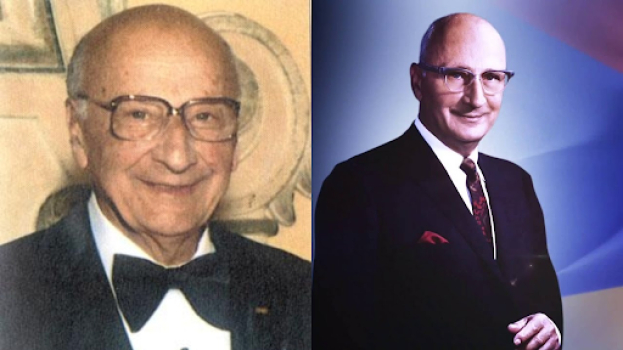
Alex Manoogian's story reads more like a Hollywood screenplay than a real-life biography. A refugee from the Ottoman Empire who arrived in the United States with just $50 in his pocket, he went on to build a billion-dollar business empire, revolutionize the plumbing industry, become one of the greatest Armenian philanthropists of the 20th century, and receive the title of National Hero of Armenia.
Yet decades later, the name of the man often hailed as the embodiment of the American Dream has also become intertwined with political scandals, engineering debates, and urban legends.
From Factory Worker to Billionaire
Alex Manoogian was born in 1901 in the Ottoman Empire. Following the Armenian Genocide, he was forced to leave his homeland and arrived in the United States in 1920.
America was far from the land of opportunity he had imagined. At just 19 years old, Manoogian spoke little English, had no connections or financial resources, and accepted whatever work he could find. In Detroit, he worked as a car washer, machine operator, mechanic, and laborer.
After several years of hard work, he managed to save about $5,000. That money became the initial investment for Masco Screw Products, which he co-founded with business partners in December 1929. The small manufacturing company would eventually grow into Masco Corporation, one of the world's largest manufacturers of home improvement products.
Launching a Business During the Great Depression
Starting a business at the end of 1929 seemed almost unthinkable.
Only weeks earlier, the Wall Street Crash had triggered the Great Depression. Thousands of businesses were closing, banks had stopped issuing loans, and unemployment was soaring.
Despite the economic collapse, Manoogian took the risk of opening his own manufacturing company. Many believed it would fail within months.
Instead, the gamble paid off. Masco secured contracts supplying parts to automotive giants including Ford and Chrysler, steadily expanding even during one of the most difficult economic periods in American history.
The Faucet That Changed Millions of Homes
The invention that ultimately made Manoogian world-famous is something billions of people still use every day.
He acquired the rights to a patent originally developed by American engineer Landis Perry, redesigned the mechanism, and created the first commercially successful single-handle ball faucet, launched under the Delta brand.
Before then, most faucets featured separate hot and cold water handles, requiring users to constantly adjust both to reach a comfortable temperature. Manoogian's redesigned faucet allowed water temperature and flow to be controlled with a single lever. Over time, the design became the global industry standard, transforming kitchens and bathrooms around the world.
Because of this achievement, the American press frequently referred to Alex Manoogian as the "King of Faucets." The nickname reflected not only his commercial success but also the enormous impact Delta and Masco had on the plumbing industry.
Was Manoogian the True Inventor?
Despite his global reputation, the question of who actually invented the single-handle faucet remains a topic of debate.
Critics point out that Landis Perry was the first to patent the original concept. However, Perry's design proved technically flawed, with persistent leakage problems that made it unsuitable for mass production.
Manoogian purchased the patent rights, completely redesigned the internal mechanism, introduced the ball-valve system, and turned the invention into a commercial success.
As a result, some regard him as the inventor, while others view him as an exceptional engineer and entrepreneur who transformed an impractical concept into an international standard.
Millions Given Back to Armenia
Although Manoogian built an immense business fortune, he is remembered within the Armenian diaspora above all as one of its greatest philanthropists.
For more than 30 years, he served as president of the Armenian General Benevolent Union (AGBU), funding the construction of schools, churches, museums, hospitals, and cultural centers across the world.
He remained deeply committed to his ancestral homeland. Despite being an American industrialist and a firm believer in free-market capitalism, Manoogian supported numerous educational and cultural projects in Soviet Armenia throughout the Cold War.
His involvement drew criticism from both American politicians and Soviet officials. Manoogian consistently maintained that his support was directed not at governments, but at the Armenian people.
His Mansion Became the Center of a Political Scandal
One of the most public controversies connected to Manoogian's name emerged years after he donated his lavish Detroit estate to the city.
In 1966, the businessman gifted the mansion to Detroit, where it became the official residence of the city's mayor.
In the early 2000s, however, then-Mayor Kwame Kilpatrick became embroiled in a major political scandal. Media reports alleged that a private party involving strippers had taken place inside the Manoogian Mansion.
The story quickly grew into a sensational controversy, spawning lawsuits and years of speculation. While many of the allegations were never conclusively proven, Manoogian's name repeatedly appeared in headlines because of the property's association with the scandal.
The controversy became so persistent that in 2010, Detroit officials even discussed renaming the residence in an effort to separate Manoogian's legacy from the political fallout.
Ultimately, the building retained its historic name: The Manoogian Mansion.
A Legacy Still Surrounded by Debate
Even decades after his death, Alex Manoogian's name continues to surface in the news.
In recent years, civic activists have called for the disclosure of the private donors who help fund the maintenance of the Manoogian Mansion.
The foundation responsible for managing the historic property has refused to reveal the identities of its contributors, citing donor confidentiality. That decision has fueled recurring public debate and fresh conspiracy theories surrounding one of Detroit's most famous residences.
Follow NEWS.am STYLE on Facebook, Twitter and Instagram

- Prince Harry Accused of Profiting from Princess Diana’s Death After Receiving $100,000 for Sharing Stories About His Mother Prince Harry has faced a fresh wave of criticism following the release of his online course about coping with grief...
- Elon Musk Cuts Monthly Payments to the Mother of His Son to $20,000 After She Speaks Publicly About Their Relationship Elon Musk has reduced monthly payments to Ashley St. Clair, the mother of one of his children, to $20,000 after she spoke publicly about their relationship...
- How to Preserve the Taste of Home on the Other Side of the World: French Publisher to Release Siblings Zarzavadjian’s Book on Armenian Diaspora Cuisine From Argentina and Lebanon to Australia and Japan, Armenian cuisine has long lived far beyond Armenia’s borders, evolving under the influence of new countries, ingredients and family stories...
- Mark Zuckerberg Buys 19th-Century Irish Castle for Tens of Millions of Dollars Meta founder Mark Zuckerberg and his wife, Priscilla Chan, have purchased a Gothic castle in Ireland...
- There’s No Place Like Home: The Human Stories Behind Artsakh’s Tragedy Told in New Documentary Premiered in Yerevan “There’s no place like home” is the message at the heart of Diana Madison’s documentary, a painful retrospective of Artsakh, lost after the 44-day war...




-
01:22, October 25
Armenia wins Junior Eurovision 2026
-
00:16, October 25
Armenia's Representative Nare's Performance at the Junior Eurovision Song Contest 2026 -
23:00, October 24
LIVE: Junior Eurovision 2026 has started in Malta. Armenia will perform under the number 8 -
19:30, October 24
“Kim Kardashian Could Become President”: Biographer Reveals Her Family Secrets, Scandalous Past and Obsession with Fame -
17:25, October 24
AI-Generated Singer Announces Pregnancy and Quits Band — Fans Didn’t Realize She Wasn’t Real -
16:34, October 24
Salma Hayek’s Daughter Tops Britain’s Most Eligible List: Billionaire Parents, Pubs and Vodka -
15:10, October 24
Timothée Chalamet Ignores Victoria’s Secret Models for Kylie Jenner — His Reaction Goes Viral -
14:20, October 24
Queen Elizabeth II Bragged About Helen Mirren to a Sheikh — But He Didn’t Recognize the Actress -
13:49, October 24
Why Did Tom Cruise Punch Jack Nicholson? -
13:15, October 24
“I Know Where You Are”: Hunter Biden Accused of Threatening Sex Worker -
12:12, October 24
Kim Kardashian Opens Up About Her Romance with Lewis Hamilton: “I’m Very, Very Happy” -
11:19, October 24
A $3 Million Rolex, a $200,000 Hermès Bag and a 7-Carat Diamond: Cardi B Spoils Herself with Lavish Birthday Gifts
All materials

@NEWSam_STYLE
@NEWSam_STYLE
- Archive