


NEWS.am STYLE

NEWS.am STYLE

NEWS.am STYLE
NEWS.am STYLE
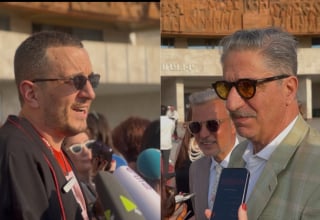
The 23rd "Golden Apricot" Yerevan International Film Festival has kicked off
NEWS.am STYLE
NEWS.am STYLE

NEWS.am STYLE
NEWS.am STYLE
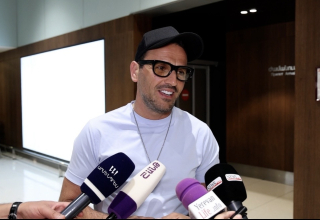
Nikos Vertis to perform in Armenia for the 3rd time at the invitation of “ACVA BUILDINGS”
NEWS.am STYLE

NEWS.am STYLE
NEWS.am STYLE
NEWS.am STYLE

NEWS.am STYLE

NEWS.am STYLE

NEWS.am STYLE

NEWS.am STYLE

Diamond Mirage: The Fall of One of India’s Most Influential Jewelry Tycoons
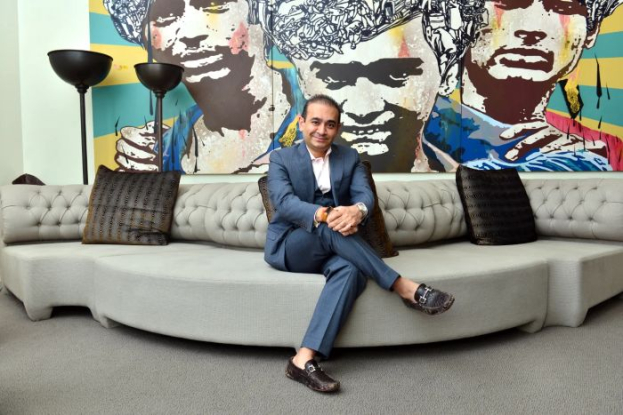
In 2016, Hollywood actress Kate Winslet appeared on the red carpet of the Academy Awards wearing an elegant black dress by Ralph Lauren. But on the other side of the world—in India—the public and press's attention was focused not on her outfit at all. All eyes were fixed on the luxurious diamonds cascading from her ears.
These were exquisite earrings created by Nirav Modi, an Indian jeweler whose name had by then become synonymous with rare jewels and Hollywood glamour far beyond his homeland. "Kate Winslet sparkled in the Indian designer's jewelry," The Times of India wrote at the time.
For Modi himself, this was the peak of a dizzying rise. He climbed from obscurity to the summit of the luxury world: his creations conquered red carpets from Los Angeles to Cannes, and boutiques opened on Madison Avenue in New York, Bond Street in London, and Canton Road in Hong Kong. Representing the third generation of a diamond-cutting dynasty, Modi seemed the embodiment of success and a symbol of a new, prosperous India, CNN reports.
Yet behind the camera flashes lay the underside of an empire built on a web of shady, shadowy schemes.
Dynastic Heir Rooted in Gujarat
Nirav Modi's story began in Palanpur—a city in the western state of Gujarat known as the cradle of the Indian diamond-merchant class. Born in 1971, Modi inherited a multi-generational family legacy. His grandfather, Keshavlal Modi, traded rough diamonds back in the 1930s.
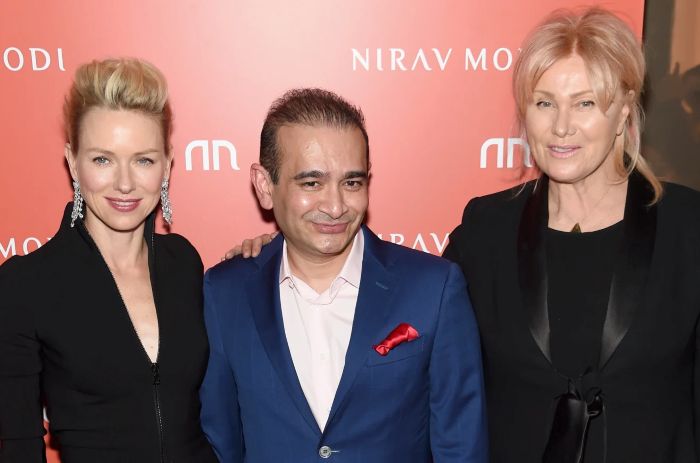
However, Modi's childhood was overshadowed by deep tragedy: at the age of eight, he witnessed his mother's suicide (lawyers later used this fact in a British court to argue his struggles with depression). His father, Deepak Modi, opened a diamond business in Antwerp, where the Indian Jain community turned the city into a global cutting center.
After studying at the prestigious Wharton School of Business at the University of Pennsylvania (which he entered to his parents' immense joy, but dropped out of after some time), a 19-year-old Modi returned to India.
His mentor was his maternal uncle, Mehul Chokshi, chairman of the giant retailer Gitanjali Group. While his uncle specialized in mass-market goods and gold, the young and ambitious Modi dreamed of an entirely different scale.
"He aimed to focus on the ultra-premium segment, to be like Harry Winston or Bulgari, and to work exclusively with diamonds," says biographer Pavan Lall. "His rise was driven by a desire to create India's first international-level super-luxury jewelry brand."
In 1999, he founded Firestar Diamond, supplying stones to global giants, and in 2010, he launched his eponymous brand, Nirav Modi.
A Symbol of National Pride and Soft Power
In a country where diamonds were mined four thousand years ago (and from where most treasures were carried off by the British during the colonial era), Modi's sudden triumph was perceived as a national victory. After decades of post-independence poverty, India had a brand that proved Indians could create items worth millions of dollars at the level of the world's best standards.
-
His defining moment came in 2010, when auction house Christie's sold his Golconda Lotus necklace (featuring a 12.29-carat center stone) for $3.5 million, placing it on the cover of its catalog—a first for an Indian brand.
-
In 2015, he opened a flagship boutique in New York on Madison Avenue, inviting Donald Trump Jr. and his wife, actresses Naomi Watts, and supermodel Coco Rocha.
-
His brand ambassadors at various times included Rosie Huntington-Whiteley and Bollywood star Priyanka Chopra. By 2017, Forbes estimated Modi's net worth at $1.8 billion.
The Collapse of an Empire: A $2 Billion Scheme
While storefronts shone around the world, a catastrophe was brewing within India's financial system.
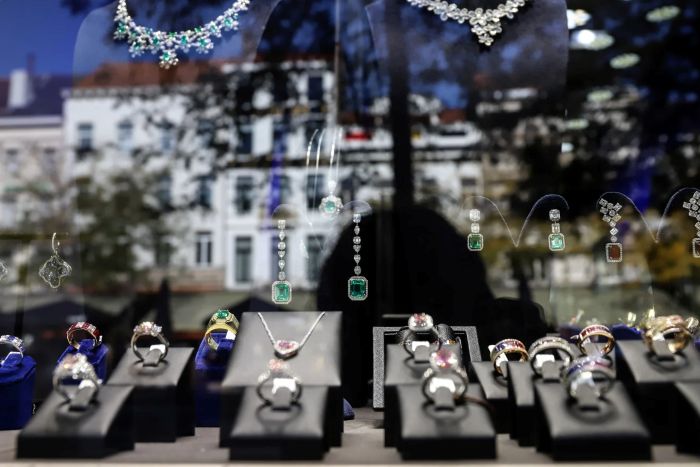
The primary bank for Modi's business was the state-owned Punjab National Bank (PNB), the second-largest public sector bank in the country. According to the investigation, bank officials issued special financial guarantees—letters of undertaking (LoUs)—to Modi's and his uncle's companies without requiring mandatory collateral or recording the transactions in internal systems.
These guarantees allowed Modi to take out massive loans from foreign banks to purchase diamonds. In January 2018, when employees requested routine renewals, a newly appointed bank head demanded cash collateral—and the entire fraudulent scheme collapsed.
The scale shocked the entire nation: Modi was accused of embezzling about $2 billion from the bank.
When the scandal broke, the jewelry tycoon and members of his family disappeared without a trace.
Arrest, Extradition, and the Finale of a Long Struggle
In March 2019, Nirav Modi was arrested in London at the request of Indian authorities. Since then, he has been held in a British prison, unsuccessfully trying to challenge his extradition to his homeland, where the notorious Arthur Road Jail in Mumbai awaits him—a grim institution holding the most dangerous criminals and corrupt figures.
His lawyers unsuccessfully tried to block his handover, citing the businessman's fragile mental health and the threat of ill-treatment in Indian prisons. However, UK courts and other authorities have rejected his appeals.
According to the Indian Ministry of External Affairs, Modi's legal options are exhausted, and his extradition is a matter of time. His uncle, Mehul Chokshi, also accused of fraud, was arrested in Belgium and is fighting a similar extradition battle.
For the government of Prime Minister Narendra Modi (no relation to the fugitive jeweler), this case became the ultimate test of its anti-corruption campaign. Nirav Modi's return home promises to be a high-profile legal spectacle and the final chapter in the downfall of a man who wanted to sell Indian luxury to the world, but went down in history as the mastermind behind one of the century's largest bank frauds.
Follow NEWS.am STYLE on Facebook, Twitter and Instagram

- Ambani Opulence on Full Display: Radhika Merchant Stuns in a $500,000 Patek Philippe The Ambani family’s extraordinary wealth is hardly a secret — and over the years, their flair for extravagance has only become more spectacular. The latest dazzling display appeared on the wrist of Radhika Merchant, wife of Reliance heir Anant Ambani...
- Where Has Lady Gaga Gone? Singer’s Disappearance Sparks Secret Wedding Rumors Grainy Polaroid photos have provided the first indication that Lady Gaga has not been seen in public for four months...
- Current “Miss Austria” Dies Suddenly at 22 Officials have announced the tragic death of reigning “Miss Austria” Lucia Sisic. She was just 22 years old...
- Cardi B Shows Off Her $15,000 Diamond Butt Piercing “A $15,000 piercing on my ass in case some bitch needs to kiss it,” the artist captioned the post...
- “No Kissing”: Billy Baldwin Vows Never to Work With Sharon Stone Again ’90s movie star Billy Baldwin has declared that he will never agree to work with Sharon Stone again. The 63-year-old actor appeared on the Lisa Guerrero Unleashed podcast, where he looked back on their work together on the 1993 erotic thriller Sliver...




-
23:01, September 9
British Woman Reclaims Guinness World Record by Devouring a Burrito in 30 Seconds -
22:31, September 9
Nevada’s Famous Brothels Hit the Market for $33.9 Million -
21:29, September 9
Ambani Opulence on Full Display: Radhika Merchant Stuns in a $500,000 Patek Philippe -
20:22, September 9
Hypocritical Millionaires vs. Billionaires: Hollywood’s New Trend -
19:38, September 9
iPhone from 1937: A Nearly 90-Year-Old Painting Sparks a Bizarre Conspiracy Theory -
16:29, September 9
The Boy Who Looks Like Boris Johnson: Why Steal Renoir at All? -
15:49, September 9
Labubu Meets LVMH: Pop Mart Opens Flagship Store in Paris -
15:22, September 9
Where Has Lady Gaga Gone? Singer’s Disappearance Sparks Secret Wedding Rumors -
14:37, September 9
Current “Miss Austria” Dies Suddenly at 22 -
14:10, September 9
Cardi B Shows Off Her $15,000 Diamond Butt Piercing -
13:22, September 9
“No Kissing”: Billy Baldwin Vows Never to Work With Sharon Stone Again -
12:38, September 9
A Joke That Went Too Far: Gwyneth Paltrow Reveals How Her Viral “Vagina-Scented” Candle Came to Be
All materials

@NEWSam_STYLE
@NEWSam_STYLE
- Archive