



style.news.am

style.news.am
NEWS.am STYLE

NEWS.am STYLE

NEWS.am STYLE

How Nare was welcomed at Zvartnots Airport after winning the Junior Eurovision Song Contest: the singer's emotions

NEWS.am STYLE
NEWS.am STYLE
NEWS.am STYLE

NEWS.am STYLE

NEWS.am STYLE

NEWS.am STYLE
NEWS.am STYLE

NEWS.am STYLE

NEWS.am STYLE
NEWS.am STYLE

The 23rd "Golden Apricot" Yerevan International Film Festival has kicked off

NEWS.am STYLE


She Left Her Husband, Seduced a Millionaire and Became the Muse of Parisian Bohemia: The Scandalous Life of Armen Ohanian
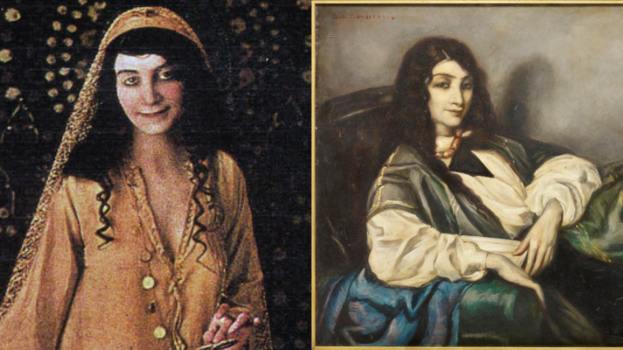
Sofia Pirboudaghian, known to the world as Armen Ohanian, danced in translucent veils, captivated Parisian salons, had romantic relationships with both men and women, and turned her own life into a literary masquerade. She was known as a Persian dancer, a muse to artists and a dangerous seductress. Behind the image of an exotic Eastern diva was an Armenian woman who had no intention of living by other people's rules.
From an Unhappy Marriage to a Life of Freedom
Armen Ohanian was born Sofia Pirboudaghian in 1887 in Shamakhi, into a prosperous Armenian family. Her childhood came to an abrupt end. In 1905, during the Armenian-Tatar massacres, Sofia's father was killed, leaving the family in dire circumstances. The young woman was hastily married off to Hayk Ter-Ohanian, an Armenian-Iranian doctor. The marriage was intended to provide her with security and financial stability.
But Sofia was clearly not cut out to be a dutiful wife.
She refused to put up with family conventions and the pressure exerted by her husband and mother-in-law. The marriage ended in less than a year. For a woman of that era, such a decision was almost social suicide: divorce meant a damaged reputation, public condemnation and highly uncertain prospects for the future.
Sofia, however, had no intention of returning to her former life. She kept her ex-husband's surname, dropping the prefix “Ter-”, and eventually turned it into her stage name — Ohanian.
Thus began the career of a woman who would soon present herself to European audiences as a mysterious beauty from the East.
A Harem, an Escape and an Attempted Suicide
The most cinematic chapter of Ohanian's biography is connected with Persia. In her autobiographical works, she wrote about living among Muslim women, secluded female spaces, Eastern customs and her attempt to escape a world in which a woman's fate was determined by men.
In European retellings of her story, a full-blown harem emerged, from which the heroine supposedly tried to flee after enduring terrible ordeals and even attempting suicide.
Researchers Artsvi Bakhchinyan and Vartan Matiossian, authors of the extensive 2022 biography A Woman of the World: Armen Ohanian, The Dancer of Shamakha, compared her autobiographical accounts with archival material. They found that Ohanian did not always distinguish between personal memories and literary storytelling.
Her adventures in the East did have a basis in reality: after her marriage ended, she lived among Muslim women, became acquainted with local culture and studied traditional dances. However, the image of a woman who miraculously escaped from a mysterious harem should not be taken literally in every detail.
Ohanian understood perfectly well what European audiences wanted. They needed more than a dancer — they wanted a woman with a legend. And she created one.
Erotic Dances, Sheer Veils and Salome: How Armen Ohanian Shocked Audiences
At the beginning of the 20th century, European audiences were fascinated by the Orient. Exotic costumes, mysterious rituals and sensual movements were far more marketable than conventional ballet.
Ohanian quickly understood the rules of the game, but she had no intention of limiting herself to the role of a beautiful stage ornament.
She combined Armenian and Iranian dance motifs with elements of free dance inspired by Isadora Duncan. Her repertoire included pieces such as “Salome”, “In the Temple of Anahit”, “Betrayal”, “Hashish” and “The Great Khan of Shamakhi”.
The titles spoke for themselves. They evoked seduction, religion, forbidden pleasures and an Eastern aesthetic that Western audiences both adored and feared.
Ohanian's performances provoked mixed reactions. Some critics admired her fluid movements and artistry, while others reduced her work to an eroticised Oriental spectacle. The dancer was accused of catering to the West's appetite for exoticism by turning her own culture into a theatrical fantasy.
But Ohanian was more than a performer. She created her own choreography, carefully crafted her stage persona and took control of her artistic identity. Her tours took her across Europe, North Africa and America. Her performances in London became one of the turning points in her international career.
A Lesbian Romance with Millionaire Natalie Barney: The Affair Paris Talked About
If the stage gave Ohanian the opportunity to provoke audiences, Parisian bohemia offered her a far more intriguing arena.
In Paris, she found herself among artists, writers and people for whom traditional morality had long ceased to be binding. One of the most prominent figures in this circle was Natalie Clifford Barney, an American heiress, writer and host of a celebrated literary salon.
Barney openly pursued relationships with women, made no secret of her romantic affairs and turned her home into a gathering place for some of the era's most unconventional intellectuals. Her salon attracted Colette, Gertrude Stein and other luminaries of literary Paris.
It was in this circle that the relationship between Barney and Ohanian began.
Their romance became one of the most intriguing episodes in the dancer's personal life. In conservative society, such intimacy between two women was provocative in itself. But in Paris, where sexual freedom had long been part of the bohemian ethos, it was another story about people who paid little attention to what others thought.
Ohanian and Barney made no attempt to hide their closeness from their social circle. Their relationship was part of the distinctive atmosphere of Parisian salons, where romantic relationships between women did not necessarily have to remain behind closed doors.
One of the most theatrical episodes associated with the pair concerns a visit to the writer Colette. According to some biographical accounts, Barney and Ohanian arrived at her home on a summer night in a carriage drawn by white horses, wearing sheer white saris embroidered with pearls. The scene was more like a theatrical entrance than an ordinary social call.
The romance, however, did not last forever. Their relationship eventually came to an end, but the story of the American millionaire and the Armenian dancer remained part of the legend of Parisian bohemia.
For Ohanian, it was yet another demonstration that her life did not have to conform to conventional ideas of a woman's reputation.
Sexual Freedom Without Apology: Men, Women and Bohemian Love Affairs
Her relationship with Natalie Barney was not the only expression of Ohanian's liberal views on her personal life.
Early 20th-century Paris was a place where people from different artistic movements, sexual identities and social circles crossed paths. It was home to women who openly loved women, men who made no secret of their numerous affairs, and people who preferred not to give their relationships any official labels.
Ohanian felt entirely at home in this environment.
Her own life included relationships with both men and women, and the conventional model of family life was clearly not the only option she considered. After her early divorce, she showed little inclination to return to the image of a respectable wife.
That said, not every romance attributed to her should be treated as an established fact. Ohanian had enough admirers, friends and famous acquaintances for later biographers to sometimes blur the line between genuine relationships and bohemian legend.
But one thing is clear: a woman who had once rejected a marriage imposed on her was not about to let society dictate how she lived her private life.
From Artists' Lover to Writers' Muse: Who Else Was Fascinated by Armen Ohanian?
Ohanian knew how to make an impression not only on audiences. Her friends and admirers included members of Europe's artistic and literary elite.
The artist Émile Bernard painted her portrait and dedicated a book, La Danseuse Persane, to her. Writer Anatole France wrote the preface to her book La Danseuse de Shamakha, published in 1918.
Her circle also included André Gide, Maurice Maeterlinck and other leading figures of the intellectual avant-garde.
What is particularly striking is that Ohanian was not content with being a muse. She was a writer, a conversationalist and an active participant in Parisian cultural life. She was known not only for her stage performances but also for her literary works, which were translated into several languages.
She attracted attention for more than her appearance and dancing. Behind the striking stage persona was an educated woman with her own views on art, society and politics.
From Erotic Diva to Communist: An Unexpected Turn in Her Life
In 1921, Ohanian published Dans les griffes de la civilisation (“In the Claws of Civilisation”). Her readers were in for a surprise.
The woman whom Europe's elite had come to regard as the embodiment of Eastern exoticism turned her attention to criticising Western society. In the book, she explored colonialism, social inequality and the contradictions of European civilisation.
Consider the contrast: not long before, the European press had been discussing her sensual dances, romances and exotic tales. Now Ohanian was engaging in Marxist literary criticism.
Her former life did not disappear without a trace, but the stage persona she had once cultivated gradually gave way to a politically committed writer.
In 1946, she published Armenia feliz (“Happy Armenia”), a book about Soviet Armenia. In 1958, Ohanian and her husband visited the Soviet Union and travelled to Yerevan. During the visit, she donated part of her personal archive to the Museum of Literature and Art.
Sofia Pirboudaghian Against the World: How an Armenian Woman Turned Her Life into an Act of Defiance
Armen Ohanian died in Mexico City in 1976, aged approximately 89.
She left behind a life that had taken her across dozens of countries and involved several languages, an international dance career, literary works, high-profile acquaintances and political activism.
She had been Sofia Pirboudaghian, an Armenian girl from Shamakhi. Then she became Armen Ohanian, the mysterious Persian dancer. Later, she was a celebrated figure of Parisian bohemia, a writer, translator and communist.
Each new identity seemed to cancel out the one that came before. And yet even these roles, which others might have spent a lifetime trying to attain, could not contain her.
Liana Aghajanyan
Follow NEWS.am STYLE on Facebook, Twitter and Instagram

- She Left Her Husband, Seduced a Millionaire and Became the Muse of Parisian Bohemia: The Scandalous Life of Armen Ohanian Sofia Pirboudaghian, known to the world as Armen Ohanian, danced in translucent veils, captivated Parisian salons, had romantic relationships with both men and women, and turned her own life into a literary masquerade. She was known as a Persian dancer, a muse to artists and a dangerous seductress. Behind the image of an exotic Eastern diva was an Armenian woman who had no intention of living by other people's rules....
- Brunei’s Sultan at the Controls of a $600 Million Boeing: Did the 80-Year-Old Billionaire Personally Land His Flying Palace During a Moscow Snowstorm? Brunei's 80-year-old Sultan Hassanal Bolkiah has once again attracted attention for his extraordinary passion for aviation. The monarch, renowned for his love of luxury aircraft and his habit of personally piloting planes, arrived in Moscow aboard his private Boeing 747-8, valued at approximately $600 million. The aircraft landed amid heavy snowfall, prompting speculation that the sultan himself may have been at the controls of the giant jet...
- ‘Take Over the World After a Couple of Drinks’: MIT Professor Reveals Alleged Private Conversations Among Employees of Claude’s Creator Employees of US artificial intelligence company Anthropic allegedly discuss overthrowing the US government and establishing global domination in informal settings. The conversations become particularly candid after a few alcoholic drinks, according to physicist and Massachusetts Institute of Technology (MIT) professor Max Tegmark, the New York Post reports....
- ‘I Wanted to Become a Father to Millions’: Dolce & Gabbana Model Caught in Sperm Donation Scandal Italian model Federico Massaro, 32, who has worked with fashion house Dolce & Gabbana and appeared on the Italian version of Big Brother, has become the defendant in an unusual lawsuit in Los Angeles. A 47-year-old woman is accusing him of breaching an exclusive sperm donation agreement and claims that his decision deprived her of her last chance to become a mother, the New York Post reports...
- ‘What Is Wrong with You?’ Donald Trump Jr. Slams Netflix Over Lesbian Kissing Scene Posted on Thanksgiving Netflix has found itself at the centre of a controversy after sharing a provocative clip from its series The Hunting Wives on Thanksgiving. The video, featuring an intimate kiss between two women, sparked a wave of outrage on social media. Among those voicing their disapproval was Donald Trump Jr., the eldest son of the US president...




-
12:22, November 29
She Left Her Husband, Seduced a Millionaire and Became the Muse of Parisian Bohemia: The Scandalous Life of Armen Ohanian -
19:27, November 28
“In Armenia, We Love to Make a Grand Entrance. Subtlety Isn’t Really Our Thing”: Anna Satyan on Perfume, Armenian Fragrances and the Culture of Wearing Scent for Yourself -
18:30, November 28
Brunei’s Sultan at the Controls of a $600 Million Boeing: Did the 80-Year-Old Billionaire Personally Land His Flying Palace During a Moscow Snowstorm? -
17:33, November 28
‘You Should All Have Sex with Each Other’: Rob Lowe Reveals How Oscar-Winning Director Encouraged Cast Romances on Set -
16:28, November 28
‘Take Over the World After a Couple of Drinks’: MIT Professor Reveals Alleged Private Conversations Among Employees of Claude’s Creator -
15:14, November 28
Monica Bellucci Challenged Hollywood’s Ageism at 50: The Oldest Bond Woman Opens Up About Nude Scenes and Working with Mel Gibson -
14:22, November 28
‘I Wanted to Become a Father to Millions’: Dolce & Gabbana Model Caught in Sperm Donation Scandal -
13:07, November 28
A Bathtub Overlooking Europe, Champagne and a $105,000 Private Carriage: Katy Perry and Justin Trudeau Embark on a Lavish Romantic Journey Aboard the Orient Express -
12:12, November 28
Nicole Scherzinger Calls Off Engagement After Seven Years Together — Who Initiated the Split? -
11:20, November 28
‘What Is Wrong with You?’ Donald Trump Jr. Slams Netflix Over Lesbian Kissing Scene Posted on Thanksgiving -
10:30, November 28
Simon Abkarian to Take the Helm of Paris’s Legendary Théâtre du Soleil -
23:01, November 27
Neymar Swaps the Football Pitch for the Fragrance Business: Brazilian Star to Create a Perfume for Dubai-Based Brand
All materials

@NEWSam_STYLE
@NEWSam_STYLE
- Archive