


NEWS.am STYLE
NEWS.am STYLE

NEWS.am STYLE

NEWS.am STYLE
NEWS.am STYLE

NEWS.am STYLE
NEWS.am STYLE
NEWS.am STYLE
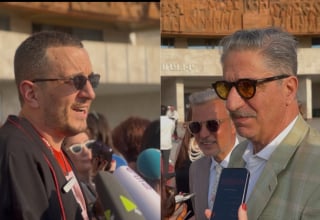
The 23rd "Golden Apricot" Yerevan International Film Festival has kicked off
NEWS.am STYLE
NEWS.am STYLE

NEWS.am STYLE
NEWS.am STYLE

Nikos Vertis to perform in Armenia for the 3rd time at the invitation of “ACVA BUILDINGS”
NEWS.am STYLE
NEWS.am STYLE
NEWS.am STYLE
NEWS.am STYLE


Arshile Gorky: Armenian immigrant and his American passion
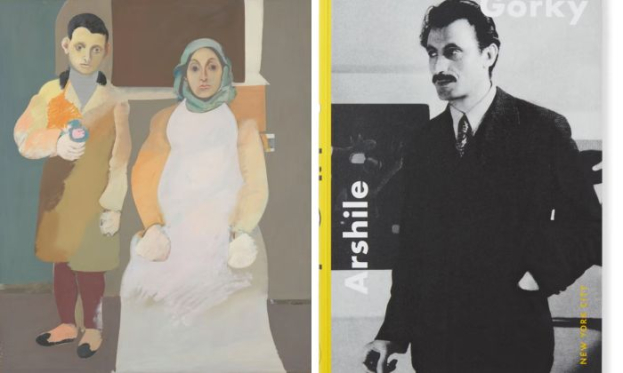
In 1920, a young Armenian artist named Vosdanig Manuk Adoian emigrated to the United States, fleeing the Armenian Genocide. After spending four years living with relatives in Massachusetts, he moved to New York City and adopted a new name — Arshile Gorky — in honor of the famous Russian writer Maxim Gorky.
A new book, Arshile Gorky: New York City, edited by Ben Eastham, explores Gorky’s artistic evolution against the backdrop of New York as a modernist art hub, balancing surrealism and abstract expressionism. The volume features essays by writers and art historians examining the artist’s Manhattan years.
In an essay titled “Gorky Again,” Adam Gopnik reflects on how Gorky’s paintings intertwine time and space, offering a fresh perspective on one of his most important double portraits and on Gorky’s experience as an Armenian immigrant in America.
Art Newspaper recently published an excerpt from Arshile Gorky: New York City, shedding light on this fascinating chapter of art history.
«What Arshile Gorky and the other great immigrant observers of America had in common is that each pursued a passion in the modern sense, making art against the grain of commerce, while each underwent a passion in the mythical Greek sense—had some moment of struggle or pain that resolved in art, and, often, in the closest thing artists get to immortality: a place in the collective memory. In the artist’s last interview [1948], he again describes himself as Russian, but also as an “early American”, who, according to his interviewer, “dislikes being called a foreigner and says he is more like one of the first settlers because he can appreciate the advantages of being in America to a far greater extent than those who were born here by ‘lucky accident’”.
With Gorky we sense a classic immigrant’s plight: a desire to restore and recuperate the recipes and precise tastes and qualities of a lost, more savoury and less homogenised past, while making it live within the scale and ambition of American reality. Scale alone becomes a vital form of assimilation: do it big and you do it American. To do “Poussin over entirely from nature” was Cézanne’s cry; to do the artisanal, puzzling, irregular Old-World particularism—a world wrought, as Gorky itemised, from the shape of apricots and baker’s bread—over in a landscape of grand generalisations and unlimited horizons, that was the dream that [Willem] de Kooning and Gorky shared.
And so, we keep coming back to Gorky’s prime, begetting picture, a masterpiece of the American immigrant experience, which is to say of the American experience: The Artist and His Mother (around 1926-36). Taken from a formal photograph, remade over more than a decade, [it is] the foundation of his art. We see boy and mother and know that she will die, unthinkably, of starvation in his arms, as part of the [Armenian] genocide, and never see her son again. The image sits so sharply within our consciousness, no matter how often we return to it, because it offers something not illustrative but iconic, part of now-vanishing stories of loss redeemed by possibility. From starvation and persecution and the wistful enforced formality of the Old World, comes, after a long voyage, energy and hope—and with the hope, a residual longing for the older world, and a need to picture all that happened between the departure and the painting. Gorky’s kind lives as a series of passionate pilgrimages made by improbable arrivals and painters who, however necessarily absurd in their effect at moments, struggled against unimaginable hardship to realise their images.
Gorky's last written words before his painfully premeditated suicide [he took his own life in 1948]—“good-bye my ’loveds,” in one version—were a cry of the heart of a suffering man who loved his daughters, as well as a literary reference to a phrase [the Russian poet and playwright Alexander] Pushkin is reported to have written before he died following a duel. The curse of history and the hope of renewal, old and new drawn together in pain. All artists die in a duel, perhaps the duel of talent against the world. We honour them not by placing them back in history, but by reminding ourselves that what we call history is just what they did, which was everything they could».
Follow NEWS.am STYLE on Facebook, Twitter and Instagram

- Meghan Markle Wants to Flee Prince Harry as Reports Claim Their Marriage Is on the Brink of Collapse Prince Harry and Meghan Markle’s marriage is reportedly going through a serious crisis, according to sources cited by RadarOnline. Just weeks after returning to the UK, the Duchess of Sussex has allegedly considered leaving her husband and checking into a “safe and discreet” hotel with their two children...
- Donald Trump’s Granddaughter Kai Criticized Over Luxury Apartment and $531 Sephora Haul: ‘Spoiled Heiress’ Kai Trump’s freshman year at the University of Miami has become a hot topic on social media. The 19-year-old granddaughter of US President Donald Trump has faced backlash after showing off her luxurious off-campus apartment and sharing a video of a $531 shopping spree for beauty products...
- Megan Fox Launches Her Own OnlyFans Rival With Subscriptions Starting at $20 a Month Megan Fox, 40, has joined Subs.com, a new paid-content platform similar to OnlyFans. The actress, who has four children, is promising subscribers exclusive videos, photos and posts unavailable to the public, as well as the opportunity to message her directly...
- Prince Harry Reportedly Earned $100,000 for Opening Up About Depression and the Death of Princess Diana A source cited by the publication urged people not to rush to criticize the prince, suggesting they watch his presentation in full before passing judgment...
- “A Victim Who Enjoys Being Stalked”: Trump’s Niece Weighs In on His Unusual Relationship With His Young Aide Donald Trump’s niece, Mary Trump, has offered her take on why the US president appears so attached to his personal aide, Natalie Harp, who is 45 years his junior. According to Mary, the 35-year-old White House aide is constantly by the president’s side and displays extraordinary devotion to him, while Trump himself seems to have no objection to the attention...




-
19:19, October 10
Meghan Markle Wants to Flee Prince Harry as Reports Claim Their Marriage Is on the Brink of Collapse -
18:20, October 10
30,000 Bottles of Fine Wine Worth £4 Million Stolen in Italy in Suspected Biggest Winery Heist in the Country’s History -
17:33, October 10
Can Garlic Help You Win a Woman Over? Scientists Explore How Food Affects Dating -
16:30, October 10
Private Maldives Island Listed for $72 Million — and Buyers Can Pay in Cryptocurrency -
15:24, October 10
Donald Trump’s Granddaughter Kai Criticized Over Luxury Apartment and $531 Sephora Haul: ‘Spoiled Heiress’ -
14:14, October 10
Megan Fox Launches Her Own OnlyFans Rival With Subscriptions Starting at $20 a Month -
13:33, October 10
Prince Harry Reportedly Earned $100,000 for Opening Up About Depression and the Death of Princess Diana -
12:17, October 10
“A Victim Who Enjoys Being Stalked”: Trump’s Niece Weighs In on His Unusual Relationship With His Young Aide -
11:22, October 10
“He Saw It as the Death of a Child”: Elon Musk’s Ex-Wife Opens Up About His Reaction to His Daughter’s Transition -
10:30, October 10
Amal Clooney Gets Ahead of the Trends in a Glamorous Gucci Gown -
23:01, October 9
Why Do Billionaires Have So Many Children If They Aren’t Prepared to Raise Them Themselves? -
22:21, October 9
Silicon Valley Billionaires Want to Reverse Aging: First Human Trial Offers Encouraging Signs
All materials

@NEWSam_STYLE
@NEWSam_STYLE
- Archive