



NEWS.am STYLE
NEWS.am STYLE
NEWS.am STYLE

NEWS.am STYLE

NEWS.am STYLE

NEWS.am STYLE
NEWS.am STYLE

NEWS.am STYLE

NEWS.am STYLE

NEWS.am STYLE
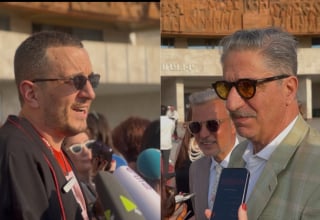
The 23rd "Golden Apricot" Yerevan International Film Festival has kicked off

NEWS.am STYLE
NEWS.am STYLE

NEWS.am STYLE
NEWS.am STYLE
Nikos Vertis to perform in Armenia for the 3rd time at the invitation of “ACVA BUILDINGS”
NEWS.am STYLE
NEWS.am STYLE



"AI Is a Great Tool for Professionals, but Trouble for Beginners": Akob Muradyan on Working on Superman, Behind the Scenes of Hollywood Animation
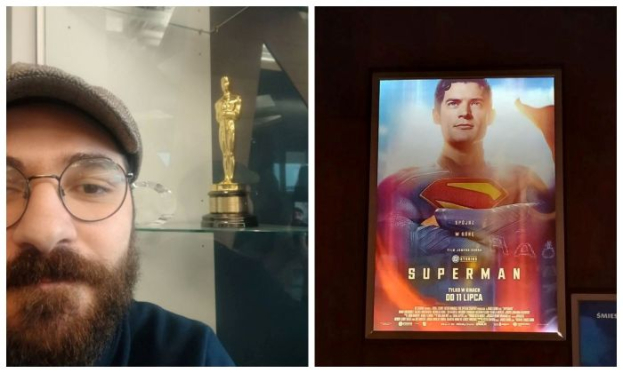
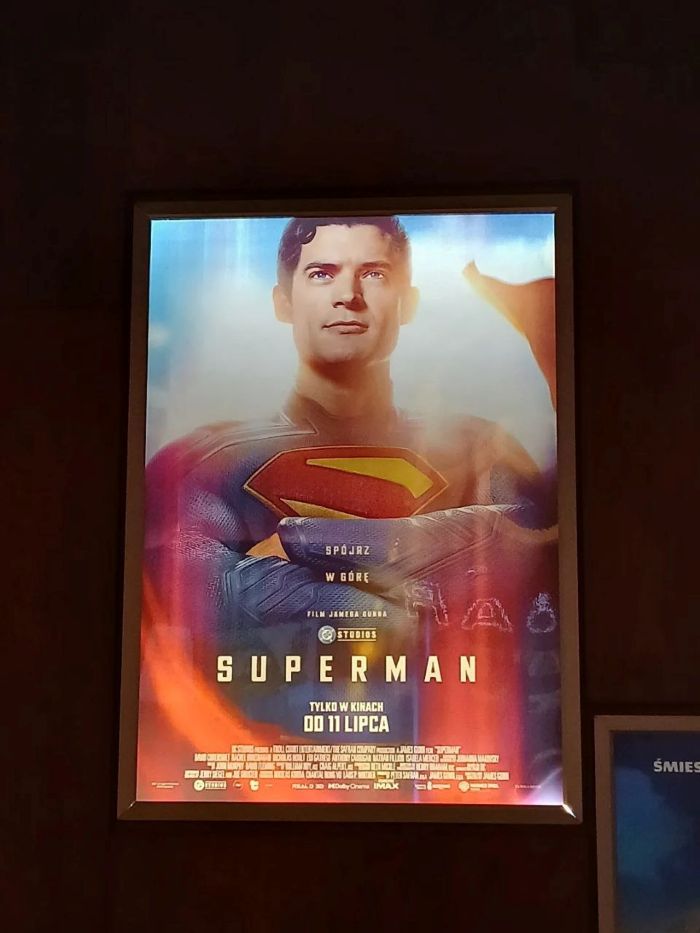
If you’ve already seen the new Superman (2025), know that one of our compatriots contributed to its animation. The scenes with robots, the fight sequences, and some key frames bear the name of Akob Muradyan — an artist who never dreamed of becoming an animator... until he walked into TUMO one day.
In an interview with NEWS.am STYLE, Akob admitted he was only 16 when he first discovered animation — and it was one of those rare moments when everything inside you says, “This is it. This is mine.” Today, Akob works on international projects ranging from ambitious games to Hollywood films.
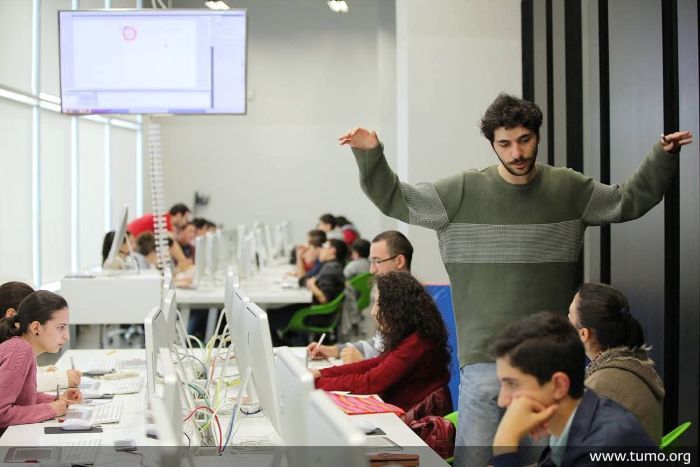
“Later, when I started applying my knowledge, I was offered a position as a mentor-trainer. Some time after that, I returned there as an animation instructor,” Muradyan shares.
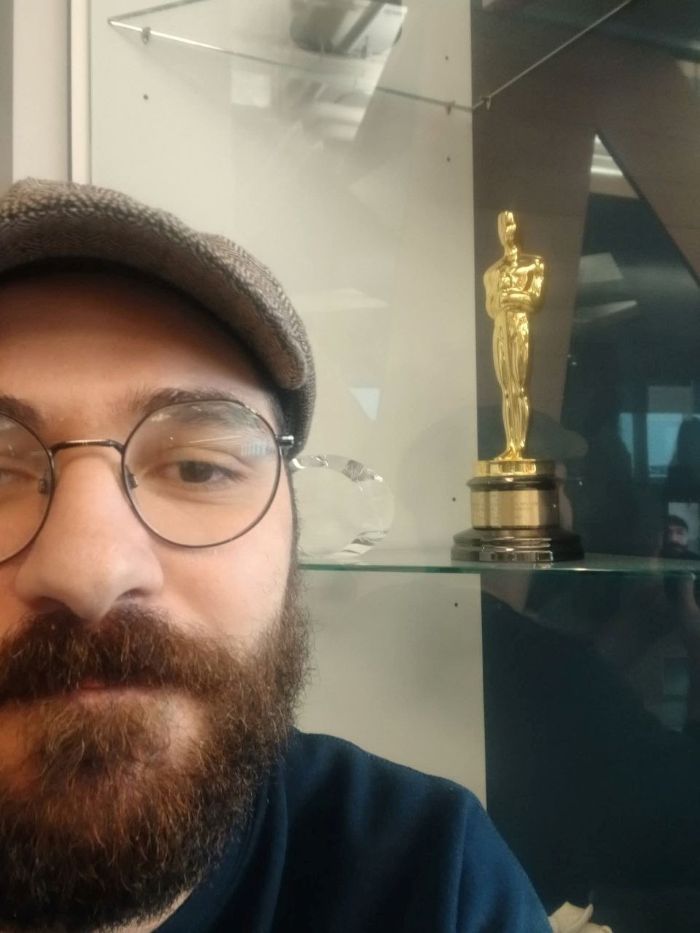
“The role of TUMO in my career — and not just mine but thousands of others — is indescribable because it’s enormous. They don’t just provide knowledge — they teach you how to self-educate, and that is perhaps the most important skill a professional can acquire.”
When and how did the transition happen from student projects to major international films and trailers? Do you remember your first serious step?
My first animation project was at the studio named after the legendary animator Robert Saakyan. There, under the guidance of David and Aik Saakyants, I worked on the cartoon Ananit. After that, I returned to TUMO, but this time as an animation teacher.
But my real entry into the world of international animation began at Griffin Animation Academy, where my mentor was Eddie Chu — a man who worked on films like Spider-Man: Into the Spider-Verse, Man of Steel, Transformers, and more. Having gained incredible knowledge from him, I applied to MPC studio in Canada, which creates visual effects for Hollywood films. I was lucky — I got accepted and moved to Canada.
You’ve worked on dozens of projects — from The Witcher and Transformers to Superman 2025. What has been the most difficult and the most exciting moment in your career?
Each film holds a special place in my heart. They all have their fun and challenging sides. But if I had to single out the most difficult project, it’s one that hasn’t been released or even announced yet, so unfortunately, I can’t name it.
The second most difficult was Transformers — it involved many creative and technical challenges. Cars turning into robots and back, all animated frame by frame — it was incredibly interesting.
As for the most exciting experience, there are two films that stand on equal footing for me. The first is Gladiator II, on which we worked alongside the legendary Ridley Scott. That film was very important to me. The second is The Gorge. What makes it special is that the animation supervisor had previously worked on The Lord of the Rings, and every note from him was a huge learning opportunity.
Let’s talk a bit about Superman. Which scenes did you work on and what tasks did you face on this project? What really goes on behind the scenes of superhero blockbusters?
When I started working on Superman, it was my last month at Framestore studio, which was handling the visual effects for the film. So, unfortunately, I didn’t work on it for very long.
But here’s an interesting detail: when I first opened the film file to see which scene I’d animate, I saw Angela Sarafyan in it. And immediately thought, “Wow, our Angela is in Superman!” And then I couldn’t tell anyone about it for five months!
I managed to animate six scenes — I’ll definitely share them once I get permission. Mostly, these were battle scenes involving robots and an engineer character.
Good animation requires a huge amount of knowledge and experience: keen observation, acting skills, an understanding of physics, chemistry — anything you can imagine. Because we animate life, and to make animation believable, you need to study it carefully. Often, before animating, we film ourselves performing the required movements, analyze how everything works, and only then transfer it to the characters.
A brilliant animator once said: animators are actors, just with a pencil in their hand. What actors perform on screen, we make our characters perform.
How do you see the inner workings of the film industry today? Who really makes the key creative decisions — the director, producer, studio, marketing, or algorithms?
Making a film is like a huge organism, or if you will, a system where everyone is important and each person has their role. On average, 2,000 to 3,000 people work on a single film. Saying one person is more important than the rest would be wrong. The director, of course, is at the top of this hierarchy. But if you go down the chain, every person’s work contributes to the final result.
Marketing is also incredibly important. People need to know about the film to go watch it. Without good advertising, even the best film in the world won’t reach a wide audience. In short: the creative and logistical parts of production are tightly connected — without mutual support, they don’t work.
Have you already encountered artificial intelligence in your field? Do animators use it? Is it perceived positively or still considered a "dirty trick"?
AI is everywhere now. Even a simple Google search is already interaction with AI.
In film work, many processes are automated, and there are tools that help speed up results. But the AI we see all over the internet today is still far from really impacting film production.
For example, in animation: when working on a scene, we get tons of corrections — details, clarifications, adjustments. The AI “roaming” the internet can’t yet be that flexible.
Although I believe that in 5 to 10 years, it may be widely used.
And personally, how do you feel about AI in animation? Is it a threat to the profession or just a new tool, like Photoshop once was?
I avoid using AI whenever possible. You see, in my opinion, people aren’t born with creative thinking — it develops over years, through repetition, work, overcoming challenges, and finding solutions.
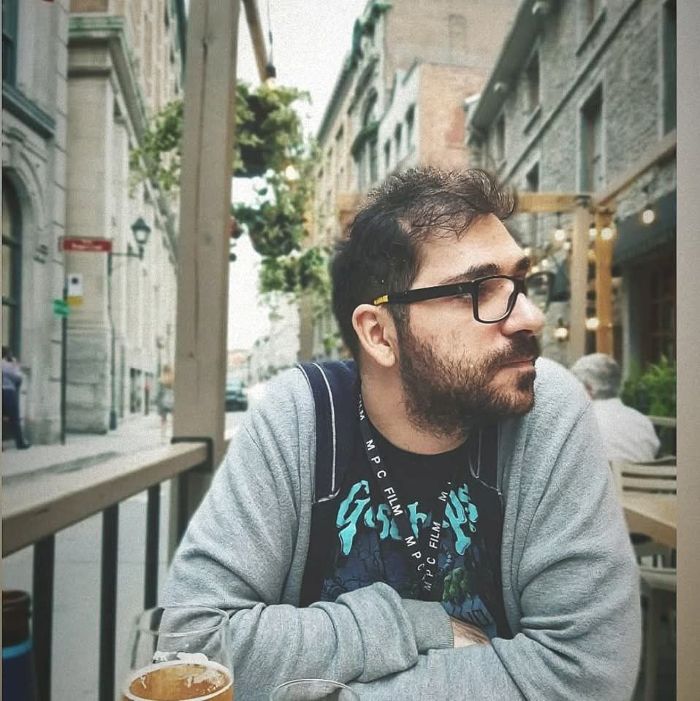
At some point, you start distinguishing beautiful from ugly, quickly understanding what works and what doesn’t. AI takes away this development tool — practice, routine work. And my concern is about the younger generation. They want fast results, take the easy way, don’t develop their thinking — and we end up with an army of mediocre specialists.
So, to put it briefly: for experienced professionals, it’s a good tool; for beginners, it’s a big problem.
Many viewers today complain: "Graphics used to be better, now everything looks like plastic." Why is that if we have millions of dollars and super technologies? Is it true? And if so — why?
We have both excellent and very poor graphics today. The same was true in the past.
But I agree: the visual effects in Pirates of the Caribbean still look stunning. That’s because the director and the client studio back then understood that quality visual effects and animation require time.
Today, the demand for films is very high, projects are constantly launching that require visual effects. In many cases, artists simply don’t have time or budget to do what they could.
You participated in ReAnimania. How do you feel about Armenian animation and cinema? Do you see growth points, potential, or mostly problems?
I know ReAnimania founder Vrej Kasuni well and respect him a lot. This festival does a huge service for Armenian animation, and I’m very glad it exists. I try to be involved as much as time allows.
As for Armenian animation — it’s on a growth path now. I see many positive changes, both on international and local platforms, and that makes me very happy.
Follow NEWS.am STYLE on Facebook, Twitter and Instagram

- Armenia wins Junior Eurovision 2026 The Junior Eurovision 2026 contest has ended in Malta, with Armenia's representative Nare being declared the winner with the song Boo…
- Armenia's Representative Nare's Performance at the Junior Eurovision Song Contest 2026 The Junior Eurovision Song Contest 2026 is underway in Malta…
- LIVE: Junior Eurovision 2026 has started in Malta. Armenia will perform under the number 8 The “Junior Eurovision” song contest is currently taking place in Malta, where Armenia is represented by Naré with the song Boo…
- “Kim Kardashian Could Become President”: Biographer Reveals Her Family Secrets, Scandalous Past and Obsession with Fame For years, Kim Kardashian was dismissed as a celebrity with no particular talent who rose to fame thanks to an intimate video and her marriage to Kanye West. But journalist Jonathan Van Meter, who spent five years studying the star’s life and gained unprecedented access to her inner circle, argues that Kardashian is vastly underestimated. In his view, she is not merely a media personality but one of the most influential women of our time, having transformed her fame into a multibillion-dollar business...
- Salma Hayek’s Daughter Tops Britain’s Most Eligible List: Billionaire Parents, Pubs and Vodka Valentina Pinault, the 19-year-old daughter of Hollywood actress Salma Hayek and French billionaire François-Henri Pinault, has topped Tatler magazine’s list of Britain’s 200 most eligible young people. Despite her parents’ immense fortune, Valentina reportedly prefers London pubs, underground parties and trips to IKEA to exclusive luxury clubs...




-
01:22, October 25
Armenia wins Junior Eurovision 2026
-
00:16, October 25
Armenia's Representative Nare's Performance at the Junior Eurovision Song Contest 2026 -
23:00, October 24
LIVE: Junior Eurovision 2026 has started in Malta. Armenia will perform under the number 8 -
19:30, October 24
“Kim Kardashian Could Become President”: Biographer Reveals Her Family Secrets, Scandalous Past and Obsession with Fame -
17:25, October 24
AI-Generated Singer Announces Pregnancy and Quits Band — Fans Didn’t Realize She Wasn’t Real -
16:34, October 24
Salma Hayek’s Daughter Tops Britain’s Most Eligible List: Billionaire Parents, Pubs and Vodka -
15:10, October 24
Timothée Chalamet Ignores Victoria’s Secret Models for Kylie Jenner — His Reaction Goes Viral -
14:20, October 24
Queen Elizabeth II Bragged About Helen Mirren to a Sheikh — But He Didn’t Recognize the Actress -
13:49, October 24
Why Did Tom Cruise Punch Jack Nicholson? -
13:15, October 24
“I Know Where You Are”: Hunter Biden Accused of Threatening Sex Worker -
12:12, October 24
Kim Kardashian Opens Up About Her Romance with Lewis Hamilton: “I’m Very, Very Happy” -
11:19, October 24
A $3 Million Rolex, a $200,000 Hermès Bag and a 7-Carat Diamond: Cardi B Spoils Herself with Lavish Birthday Gifts
All materials

@NEWSam_STYLE
@NEWSam_STYLE
- Archive