NEWS.am STYLE

NEWS.am STYLE

NEWS.am STYLE
NEWS.am STYLE

The 23rd "Golden Apricot" Yerevan International Film Festival has kicked off

NEWS.am STYLE

NEWS.am STYLE

NEWS.am STYLE

NEWS.am STYLE

Nikos Vertis to perform in Armenia for the 3rd time at the invitation of “ACVA BUILDINGS”

NEWS.am STYLE

NEWS.am STYLE

NEWS.am STYLE

NEWS.am STYLE

NEWS.am STYLE

NEWS.am STYLE
NEWS.am STYLE

NEWS.am STYLE

How U.S. and French First Ladies Use Fashion as a Political Weapon

15:38, May 26
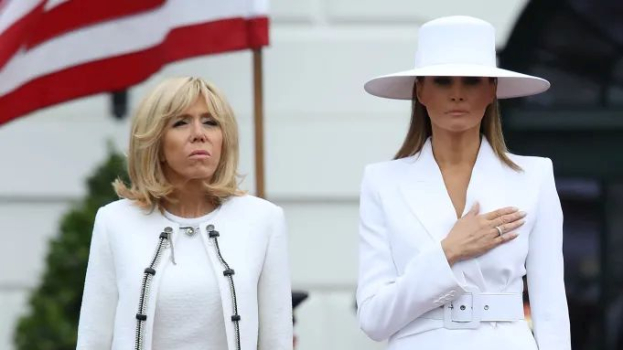
Since the 18th century, diplomatic messages have regularly circulated between France and the United States. The American Founding Fathers, including Benjamin Franklin, Thomas Jefferson, and John Adams, traveled on diplomatic missions to their French counterparts, striking deals and seeking support for the revolution in North America.
While the men were engaged in high politics, women carefully observed the style of their transatlantic counterparts — and none did so with more enthusiasm than Dolley Madison. As First Lady, the wife of James Madison decisively abandoned strict Quaker dress codes and adopted empire-line gowns with deep necklines, emulating Joséphine de Beauharnais. She also added exotic continental touches such as feather- and jewel-adorned turbans, WWD reports.

A Francophile like her husband, Madison learned about French trends through fashion dolls (“pandoras”) regularly shipped across the Atlantic to showcase the latest Parisian styles.

Over the two centuries since Madison hosted her famous lavish receptions at the White House — where dishes prepared by French chefs were served — the relationship between American First Ladies and French fashion has experienced both highs and lows. Elizabeth Monroe and Edith Wilson adored Parisian style, while many others remained indifferent and followed their own fashion paths.

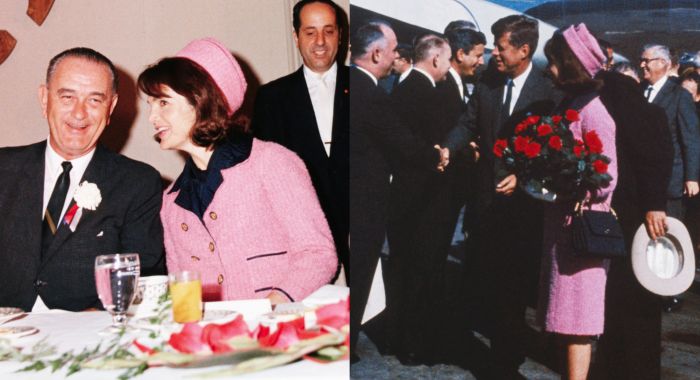
The transatlantic romance reignited when 31-year-old Jacqueline Kennedy entered the White House. Yet the dynamic remained largely unchanged since Dolley Madison’s era: the French continued to set the fashion agenda and promote national talent, while American First Ladies had to balance their admiration for Paris couture with pressure to support domestic designers.

An image for the television era

In her youth, Jacqueline Kennedy traveled extensively in Europe, spoke fluent French, and genuinely loved French culture and fashion. In June 1961, she turned to Hubert de Givenchy to design her wardrobe for her first official overseas visit as First Lady — to France.

At the same time, Jackie faced constant pressure from American public opinion to support local manufacturers. As a result, she often worked with American designers such as Oleg Cassini, Norman Norell, and the New York atelier Chez Ninon, which created garments that closely replicated French haute couture stitch by stitch. However, her famous pillbox hats were entirely American, created by young designer Halston.

педи1.jpg (46 KB)

Balancing French and American styles was not her only challenge. Highly conscious of her public image, Kennedy relied on bold colors and clean lines to create a modern, memorable silhouette.

Fashion historian and former chief curator of fashion and textiles at the Musée des Arts Décoratifs in Paris, Pamela Golbin, notes that Kennedy became First Lady at a time “when television had firmly entered the lives of millions of people, so the visual message had to be strong, clear, and striking.” She adds that Jackie instinctively understood the language of clothing and used her wardrobe to express the modernist spirit her husband brought to politics.

Valerie Steele, director and chief curator of the Museum at the Fashion Institute of Technology (FIT) in New York, adds that Kennedy, like Queen Elizabeth II, excelled at standing out in a crowd through bold colors and clean silhouettes.

“Mrs. Kennedy was brilliant at this. During her visit to India, she wore bright traditional Indian colors. She understood that if you choose a saturated tone and a simple cut, people immediately know who you are. It’s about ‘fashion at a distance’ — how an image reads in photographs. The semiotics of dress must be extremely simple,” Steele explains.

Golbin agrees that Kennedy successfully merged French and American styles. However, she was not the only one to use fashion in this way. A similar approach was seen in Claude Pompidou, wife of French President Georges Pompidou (1969–1974).

“With her, France fully launched the platform of fashion diplomacy. Her wardrobe reflected the avant-garde spirit of postwar France. She chose couture from then-emerging designers such as Yves Saint Laurent, Pierre Cardin, and André Courrèges, establishing fashion as a visual language for expressing her husband’s political ideas. All subsequent French First Ladies continued this tradition,” Golbin notes.

Under the French flag

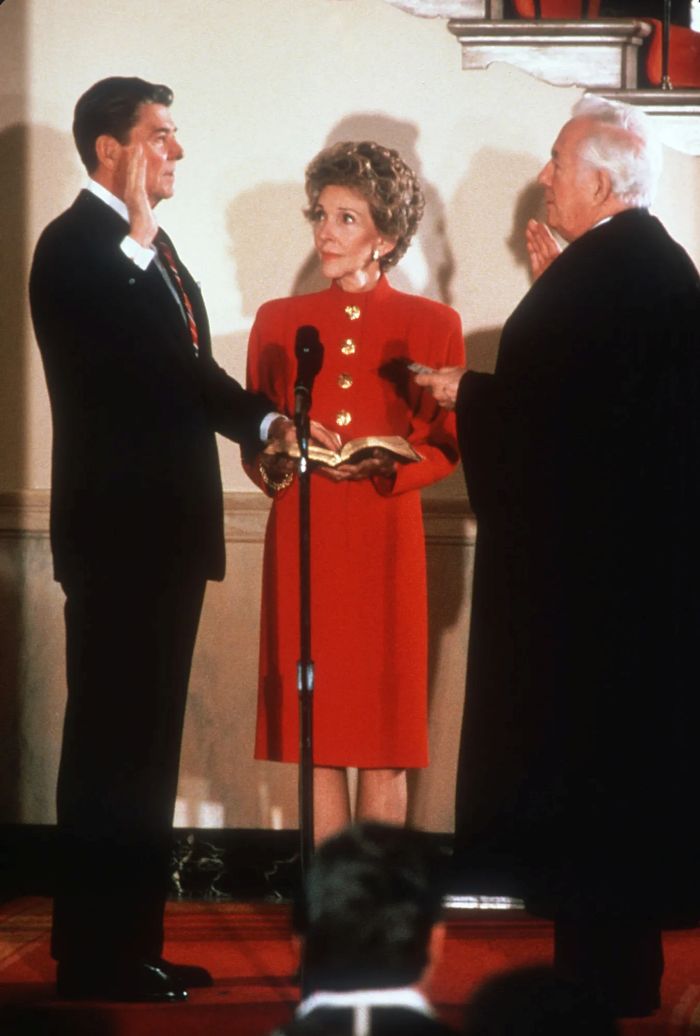
After Jacqueline Kennedy, admiration for French fashion continued with Nancy Reagan and Melania Trump, though to a lesser extent. Reagan, alongside Californian favorites James Galanos and Adolfo, also wore Chanel, Yves Saint Laurent, and Valentino.

Melania Trump frequently chooses Christian Dior for official events. At a state dinner at the White House with King Charles III and Queen Camilla, she appeared in a pale pink silk floor-length gown from Jonathan Anderson’s couture collection. She is also often seen in Louis Vuitton and Givenchy, and her stylist is French-born Hervé Pierre.

Unlike their American counterparts, French First Ladies demonstrate almost absolute loyalty to domestic brands.

“Fashion and luxury are among France’s most important economic sectors, both symbolically and financially. First Ladies aim to actively promote this industry,” says Élisabeth Pineau, political journalist at Reuters and co-author of Le Vestiaire des Politiques.

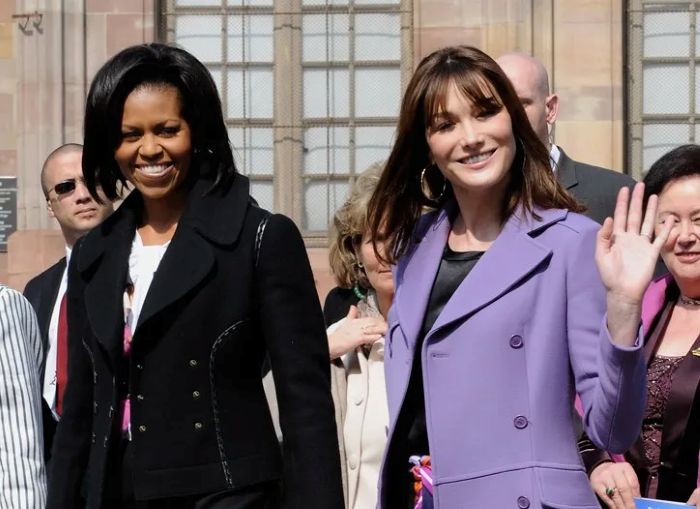
Each French First Lady has had her own favorites. Brigitte Macron prefers Louis Vuitton and is close to the house’s creative director Nicolas Ghesquière, and also wears Balmain and Alexandre Vauthier. Carla Bruni-Sarkozy’s wardrobe included Dior, Chanel, and Christian Louboutin shoes. Bernadette Chirac wore exclusively Chanel and Dior (then under John Galliano) from the beginning of her husband’s presidency. She was also the one who gifted Princess Diana the bag that later became the iconic Lady Dior, after the British royal repeatedly carried it in different colors.

педи2.jpg (59 KB)

If a French First Lady chooses a foreign designer, it can quickly become a scandal. Pineau recalls the reaction to Cecilia Attias wearing a champagne silk Prada dress at Nicolas Sarkozy’s inauguration in May 2007. It was so unusual for the Élysée Palace that the press debated the choice for weeks. However, the Sarkozy couple divorced the same year, suggesting national fashion concerns were likely the least of her priorities.

Different languages of fashion

Élisabeth Pineau believes American First Ladies are more flexible in diplomatic dress: “When Melania Trump visits France, she pays tribute to her hosts by wearing Dior. French women, wherever they are in the world, focus only on promoting their own luxury industry.”

Michelle Obama, meanwhile, elevated fashion into a completely different language. As First Lady, she championed young, independent American designers, often immigrants or designers of color.

“Many First Ladies, including Hillary Clinton, chose safe American classics like Oscar de la Renta for formal occasions. But Michelle Obama’s approach was far more original and significant for the industry. She brought little-known but talented designers into the spotlight,” notes Valerie Steele.

Steele recalls Barack Obama’s inauguration in January 2009, when the First Lady appeared in a golden-yellow ensemble by Cuban immigrant designer Isabel Toledo. “It was extraordinary. Isabel was a genius, but little known. Later we exhibited that dress at the FIT museum, and the exhibition drew huge crowds.” That evening, at the inaugural ball, Michelle wore another rising talent — Jason Wu.

педи3.jpg (63 KB)

Nancy Reagan expressed her patriotic duty differently. As a Californian, she strongly supported local designers. She also played a role in transforming the color red — once associated in the West with communism — into a Republican Party signature, simply by wearing it consistently.

Despite the importance of these nonverbal signals, Valerie Steele admits that fashion messages are not always interpreted as intended.

“Clothing is one of the simplest forms of communication, but we never know exactly how much of the message is received. When Michelle Obama wore Isabel Toledo, as a fashion historian I was thrilled. But ordinary people probably just thought, ‘Who is that?’ or ‘What an unusual color.’ When people say fashion is a language, I always respond that it is more like music. It creates a mood, but rarely speaks directly.”


Follow NEWS.am STYLE on Facebook, Twitter and Instagram


  • Related News


@NEWSam_STYLE

  • Archive
Search