


NEWS.am STYLE
NEWS.am STYLE
NEWS.am STYLE

NEWS.am STYLE

NEWS.am STYLE

NEWS.am STYLE
NEWS.am STYLE

NEWS.am STYLE

NEWS.am STYLE
NEWS.am STYLE

The 23rd "Golden Apricot" Yerevan International Film Festival has kicked off

NEWS.am STYLE
NEWS.am STYLE

NEWS.am STYLE
NEWS.am STYLE

Nikos Vertis to perform in Armenia for the 3rd time at the invitation of “ACVA BUILDINGS”

NEWS.am STYLE

NEWS.am STYLE
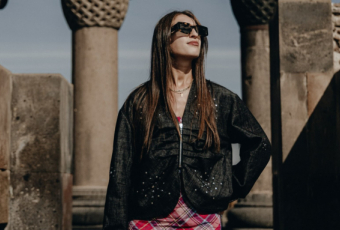



Yerevan Wine Days 2026: A Toast to Ten Years and a Look into the Future
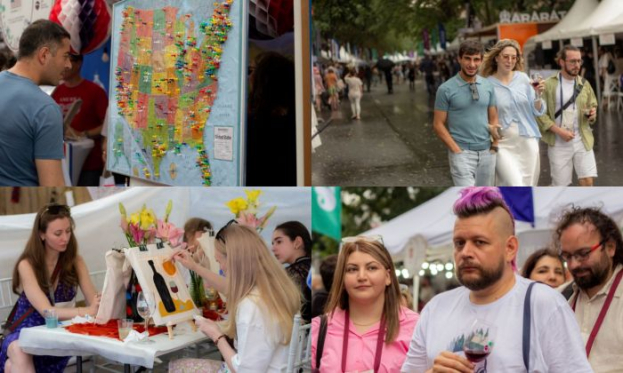
For three days, the central streets of Yerevan were once again packed with people holding wine glasses. The milestone jubilee edition of Yerevan Wine Days drew tens of thousands of visitors, solidifying its status as one of Armenia’s premier tourism highlights. Once more, it served as a vital launchpad for local winemakers to showcase their craft to a global audience. Yet, alongside its undeniable success, the festival brought long-standing debates back to the forefront: Is it time for a conceptual overhaul? Should the festival expand its geographical footprint? And did this tenth edition truly set itself apart from the previous nine?
Throughout the three-day event, Saryan, Tumanyan, and Moskovyan streets transformed into a massive pedestrian artery, carrying a non-stop flow of people. Tourists snapping photos, locals unwinding after work, winemakers, bloggers, and journalists drifted between dozens of pavilions, live music stages, and food zones.

One of the most notable upgrades this year was the expanded culinary lineup and the wealth of side activities. Beyond the standard tastings, guests could enjoy gaming zones, masterclasses, and various interactive hubs. The festival is steadily evolving into a full-scale urban celebration where wine, while remaining the centerpiece, is no longer the sole reason to attend.
That said, the booths that fared best were those offering a story rather than just a product. The longest lines formed not simply around famous labels, but around winemakers who brought an engaging concept, an unusual presentation, or a distinct brand atmosphere. With dozens of wineries competing in one space, capturing guest attention has become a resource just as critical as the quality of the wine itself.
Humanity in a Bottle: Reimagining Armenian Gastronomy
A compelling highlight of this year’s festival was the series of business meetings and public panels dedicated to wine, gastronomy, and tourism. While weather conditions forced some schedule adjustments, several key talks successfully took place. Among them, a presentation by photo artist, essayist, and traveler Nata Brettell left a lasting impression. Speaking on food journalism, she proposed looking at food and wine not merely as commodities, but as vehicles for human storytelling. "The word 'delicious' alone doesn't make a story interesting," Brettell noted.

In her view, readers and travelers are drawn less to dishes and drinks themselves, and more to the people, memories, and heritages behind them. To illustrate this, she shared her experience visiting an Armenian restaurant in Toronto. Ultimately, the venue’s history unfolded as a story of family, a tribute to a mother’s memory, and a meaningful attempt to introduce the world to the Armenian people through food.
Brettel also touched upon the future of Armenian gastronomy. She noted that while Armenia's culinary scene has long been quite conservative, recent years have seen a surge of young chefs eager to experiment, explore new formats, and reinterpret traditional recipes. "We are still at the beginning of this journey, but every year brings more daring and fascinating projects," she remarked.

In a sense, this conversation mirrored the evolution of the festival itself. Over the past decade, Yerevan Wine Days has outgrown a simple series of tastings, transforming into a space where the dialogue increasingly centers on the people, culture, and narratives behind the wine.
A Global Magnet with Local Growing Pains
The festival’s crowning achievement remains its impact on Armenia’s tourism profile. For thousands of foreign visitors, Yerevan Wine Days offers a primary introduction to Armenian winemaking, cuisine, and urban culture. Over a decade, it has become one of the country's most recognizable signature events, proving it can draw tourists just as effectively as major international fixtures.
View this post on Instagram
It was particularly encouraging to hear a diverse tapestry of foreign languages on the streets—reaching far beyond Armenia’s typical tourism markets. Visitors speaking Arabic, Chinese, Vietnamese, Japanese, Portuguese, Greek, and many other languages filled the venue. Guests snapped photos by the wine booths, browsed the selections meticulously, and closely questioned producers about grape varieties and the unique terroirs of Armenian wine. Witnessing this genuine interest in Armenia, as people from all corners of the globe discovered the country through its wine culture, was incredibly rewarding.
On the flip side, certain sectors of the festival grounds became so heavily congested that moving around meant literally drifting with the crowd. Long queues formed not only at the most popular wineries but also across the food stands. On one hand, this high turnout confirms the festival's massive demand and surging popularity. On the other, it reopens the question of whether the current venue fits the scale of an event that continues to expand year after year.

This is precisely why expectations for this jubilee year were exceptionally high. Over the past ten years, Yerevan Wine Days has become a true staple of the Armenian tourism calendar. Consequently, there was a palpable desire to see something more than just another successful iteration—people wanted an event that actively marked the significance of its first major double-digit milestone.
However, this is where the primary critique of the 2026 festival arises. The tenth festival was a hit by nearly every standard metric. Attendance was massive, tourist interest remained high, and wineries successfully put their products before a broad audience. Yet, the sense of a grand jubilee was largely absent. Guests were met with the exact same trusted template: tastings, concerts, food zones, masterclasses, and evening sets. While it all functioned seamlessly, it barely differed from what the festival offers year in and year out.
For a ten-year anniversary, many anticipated a grander program. This wouldn't necessarily require budget-heavy solutions; it could have taken the form of a retrospective exhibition tracking the festival's history, a unique opening ceremony, an urban performance, a light show, or other curated projects to elevate the date. As a result, the tenth Yerevan Wine Days went down as both one of the most successful and one of the most predictable editions in recent history.
Geography and the Political Backdrop
Another topic gaining traction among Yerevan residents involves the festival's location. Saryan, Tumanyan, and Moskovyan streets have long been synonymous with the Yerevan Wine Days brand. However, while the festival has grown exponentially since its inception, these central city streets have remained fixed in size.

Every year, hosting the festival places a heavy burden on the downtown transit system. Street closures cause significant disruptions for residents, and the sheer density of people in certain sectors makes navigating the space difficult.
If the festival's core mission is to introduce tourists to Armenia, why has it spent years showcasing the exact same small pocket of central Yerevan? Perhaps the next logical step in its evolution lies in expanding its geography and integrating other urban spaces. Such a move would not only relieve pressure on the city center but also introduce visitors to new neighborhoods that rarely make it onto standard tourist itineraries.
Adding to the distinct atmosphere this year was its alignment with one of the most politically charged periods in recent months. The final day of the festival unfolded amid intense anticipation of the upcoming elections, a time when public discourse was almost entirely consumed by the political agenda. After a tense week, many likely sought out the venue not just for the wine, but for a chance to disconnect from the endless news cycle—perhaps looking for a bit of liquid courage on the eve of a night that would decide the country's path.

The ultimate takeaway of this jubilee Yerevan Wine Days is that the festival no longer needs to prove its relevance. It has firmly established itself as one of Armenia's largest tourism drivers, a household brand, and a powerful platform for championing local winemaking.
Today, the challenge is different. While its formative years were defined by growth and audience acquisition, the coming chapter will demand fresh concepts and bolder choices. Yerevan Wine Days has mastered the art of gathering tens of thousands of guests; now, the real question is whether it can continue to surprise those who keep coming back year after year.
Follow NEWS.am STYLE on Facebook, Twitter and Instagram

- Dior at $800, Maison Francis Kurkdjian at $1,200: The Most Luxurious Advent Calendars of 2026 From thousand-dollar fragrances to high-end skincare, luxury brands have turned the countdown to the holidays into an indulgence for affluent shoppers...
- Outrage Over Inaccessible Luxury: Why Dior and Hermès Boutiques Were Looted in France Riots in France have led to the looting of boutiques belonging to Dior, Celine, Hermès, Louis Vuitton and Saint Laurent. Images of ransacked stores have become some of the most widely discussed scenes from the protests sweeping the country. But, as The New York Times fashion critic Vanessa Friedman observes, the attacks on luxury brands may reflect not only street violence but also growing resentment over social inequality...
- Luxury Yachts, Secret Palaces and Private Hunting Grounds: How the World’s Most Brutal Dictators Spent Their Holidays While millions of North Koreans struggle with hardship, Kim Jong Un appears to spend his summers very differently — aboard a luxury yacht equipped with swimming pools and water slides, the Daily Mail reports...
- Bugatti Restores One-of-a-Kind $5 Million Veyron With a Polished Aluminum Body The hypercar shines like a mirror once again. Bugatti has completed the restoration of a unique Veyron Grand Sport Vitesse featuring a polished aluminum body. Once regarded as the most expensive version of the model ever made, the car has now regained its original brilliance thanks to specialists from the brand’s bespoke division, La Maison Pur Sang...
- Kylie Jenner’s $50 Million Fantasy Bra Set for Private Sale: Who Could Own the Most Expensive Victoria’s Secret Showpiece? The $50 million Fantasy Bra worn by Kylie Jenner during her Victoria’s Secret runway debut in 2026 is being prepared for a private sale. According to Page Six Style, the extraordinary piece will return to Jacob & Co.’s New York boutique, where wealthy buyers will have the opportunity to purchase it...




-
23:01, October 22
Dior at $800, Maison Francis Kurkdjian at $1,200: The Most Luxurious Advent Calendars of 2026 -
22:18, October 22
Outrage Over Inaccessible Luxury: Why Dior and Hermès Boutiques Were Looted in France -
21:33, October 22
Luxury Yachts, Secret Palaces and Private Hunting Grounds: How the World’s Most Brutal Dictators Spent Their Holidays -
20:26, October 22
Sharon Stone, 68, Recreates Iconic Basic Instinct Scene 34 Years Later -
19:39, October 22
Bugatti Restores One-of-a-Kind $5 Million Veyron With a Polished Aluminum Body -
19:17, October 22
Dolce&Gabbana and Mytheresa Unveil Luxurious Christmas 2026 Collection -
16:27, October 22
Is the Birkin Era Coming to an End? Hermès’ Iconic Bag Is Losing Its Appeal as Resale Prices Plunge -
15:40, October 22
“He Is Becoming More Dangerous”: Psychologist Says Trump Displays Signs of Psychopathy -
15:18, October 22
Queen Camilla Distrusted Meghan Markle From the Start and Believed She Had “Zombified” Prince Harry -
14:32, October 22
“Money Will Become Irrelevant”: Elon Musk Predicts a Currency-Free Future and Reveals What Will Happen to His Billions -
14:09, October 22
Mark Zuckerberg Threatens to Leave California and Sell His $110 Million Mansion Over Proposed Billionaires’ Tax -
13:19, October 22
Kylie Jenner’s $50 Million Fantasy Bra Set for Private Sale: Who Could Own the Most Expensive Victoria’s Secret Showpiece?
All materials

@NEWSam_STYLE
@NEWSam_STYLE
- Archive