



NEWS.am STYLE

NEWS.am STYLE

NEWS.am STYLE

NEWS.am STYLE
NEWS.am STYLE

NEWS.am STYLE

NEWS.am STYLE

NEWS.am STYLE

The 23rd "Golden Apricot" Yerevan International Film Festival has kicked off

NEWS.am STYLE

NEWS.am STYLE

NEWS.am STYLE

NEWS.am STYLE

Nikos Vertis to perform in Armenia for the 3rd time at the invitation of “ACVA BUILDINGS”

NEWS.am STYLE

NEWS.am STYLE

NEWS.am STYLE

NEWS.am STYLE


WSJ: Are designer handbags more like luxury real estate or pineapples?
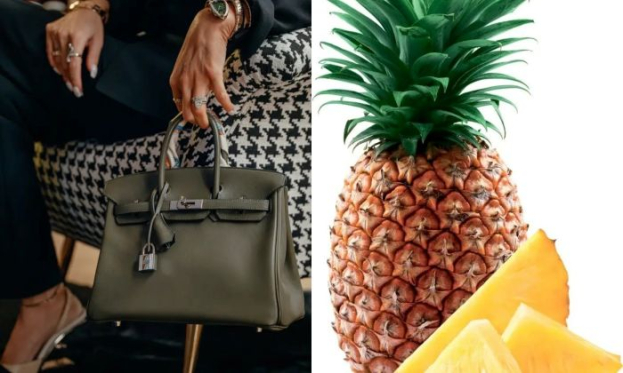
Status symbols are a fickle thing. Some, like luxury real estate, never lose their power. Others, like pineapples—which in the 17th century were so rare and expensive that they served as the equivalent of today’s Birkin bag—depreciated as soon as supply grew and the middle class could afford them, The Wall Street Journal writes.
The central question now facing luxury brands and their shareholders is this: Are designer handbags closer to prime real estate or to pineapples?
Something is clearly shifting in the industry. After years of explosive growth, customers are beginning to slip away. According to the consulting firm Bain & Company, sales of luxury bags have dropped by nearly 10% from their 2023 peak, equivalent to a loss of roughly $8 billion in annual spending.
The brands' version: Blame aggressive pricing
The fashion houses themselves are confident the issue can be fixed. They concede that they raised prices too aggressively during the pandemic and must now win back disgruntled shoppers. Their bet is on innovation and design overhauls.
While brands launched 80% fewer new bag models between 2023 and 2025 compared to pre-pandemic years, a wave of fresh creative directors is currently trying to remedy the situation. For instance, according to an analysis by Bernstein, entirely new designs now make up a staggering 74% of the handbag assortment on Chanel's website.
The analysts' version: The magic of exclusivity is dead
The pessimistic view circulating within the industry is far harsher: consumers have simply grown tired of luxury bags, and the market is oversaturated. Social media feeds are completely flooded with photos of once-scarce Hermès Birkin and Chanel Classic Flap bags, entirely killing the sense of elitism.
"You are selling the promise of exclusivity. In our business, anything that creates excessive visibility and availability is not always beneficial," notes Luca Solca, a leading luxury goods analyst at Bernstein.
Resale market data and social media monitoring tools show that while consumers remain obsessed with expensive bags, their tastes are evolving in a direction that poses a threat to brand profits:
-
Demand has shifted from boutiques to the secondary market. On the resale platform The RealReal, handbag sales have surged 20% since 2023.
-
Carrying an old, archival bag is now considered more prestigious and "cool" than buying a new one in a boutique. In May 2026, search queries for vintage bags skyrocketed by 131% compared to May 2025.
Silvia Bellezza, a marketing professor at Columbia Business School, attributes this shift to growing disillusionment with modern, mass-produced luxury. Buyers are convinced that older items boast superior quality. Furthermore, vintage allows individuals to stand out in an era when fashion trends are dictated by social media algorithms, turning knowledge of fashion history itself into the new status symbol.
Why this deals a heavy blow to fashion houses' bottom lines
Handbags have been the bread and butter of hard luxury since the 1990s. Last year, sales of bags (such as the Birkin and Kelly) accounted for 44% of Hermès' total group revenue. At Saint Laurent, that figure stands at 65%, while at Bottega Veneta, it reaches an astronomical 77% of total sales.
A loss of interest in new bags hits brand economics on three fronts simultaneously:
-
Square-footage profitability: Handbags generate the highest revenue per square meter in a boutique, which is critical given the world's highest commercial rent costs.
-
Acquiring newcomers: A designer bag is traditionally the initial "entry-level" purchase an individual makes to signal their rising social status.
-
No markdowns: Unlike shoes or apparel, bags do not suffer from sizing issues, rarely get stuck in inventory, and almost never go on sale, ensuring pure profit margins.
Against this backdrop, share prices of European luxury conglomerates most reliant on leather goods (LVMH, Kering, and Hermès) have fallen by an average of 27% since the beginning of 2024.
Is there light at the end of the tunnel?
History shows that luxury is adept at navigating such crises. In 2015, handbag sales stagnated due to consumer fatigue over logomania. Back then, a wave of innovation returned the industry to growth.
A prime example of a reset happening right now is at the fashion house Chanel. The private brand hired designer Matthieu Blazy for a large-scale overhaul of its lineup, and the market reaction has been powerful: shoppers are practically sweeping new models off the shelves, and scarce pieces are being resold at massive premiums. This proves that if a design is truly excellent and fresh, the audience's desire to own a new bag is instantly reawakened.
The fundamental drivers of demand remain intact. Thanks to social media, the younger generation cares more about its image than ever before the Instagram era. The ultimate challenge for luxury giants has simply changed: they must now accept the fact that their biggest and most dangerous competitors on the market are their own products released a few years ago.
Follow NEWS.am STYLE on Facebook, Twitter and Instagram

- Audemars Piguet Turns the Legendary Royal Oak into Luxurious Jewelry with Diamonds, Sapphires and Emeralds At the height of Paris Fashion Week, Audemars Piguet unveiled its first-ever Royal Oak Joaillerie jewelry collection. The irony? There isn’t a single watch in it. The debut line comprises 18 pieces — necklaces, earrings, cuffs and chokers, Robb Report writes...
- Pierpaolo Piccioli Reimagines Balenciaga with Couture Techniques, Bold Color and New Lightness Pierpaolo Piccioli continues to develop his concept of “couture as culture,” bringing sophisticated haute couture techniques into the realm of everyday dressing...
- Chloé Makes Us Fall in Love All Over Again: Chemena Kamali Celebrates Femininity on the Runway In recent seasons, the fashion world has been playing a veritable game of musical chairs, with creative directors landing at legendary fashion houses whose aesthetics do not always align with their own creative language...
- John Galliano Reimagines Zara, Turning Everyday Clothes Into Fashion Fantasies John Galliano has had an exceptionally busy year. In March, the designer, often described as one of the most talented fashion designers of his generation, announced a creative collaboration with global fashion giant Zara. Now, the result of that partnership has finally been unveiled: a collection titled Re{form}, reports Harper’s Bazaar...
- Sheer, Daring, Sexy: Kim Kardashian Unveils Provocative New SKIMS Collection Kim Kardashian’s SKIMS is pushing the boundaries of its signature aesthetic with an even more provocative edge. The entrepreneur has teamed up with French designer Ludovic de Saint Sernin to create a limited-edition collection that brings together the designer’s signature sensuality and SKIMS’ instantly recognizable style...




-
23:01, October 2
Popular Weight-Loss Drugs Could Deprive the Brain of Energy, Expert Warns -
22:31, October 2
Erling Haaland Sues Airline Over His Famous Hairstyle -
21:22, October 2
Audemars Piguet Turns the Legendary Royal Oak into Luxurious Jewelry with Diamonds, Sapphires and Emeralds -
20:14, October 2
Pierpaolo Piccioli Reimagines Balenciaga with Couture Techniques, Bold Color and New Lightness
-
16:31, October 2
Dom Pérignon Teams Up with Damien Hirst as Iconic Champagne Becomes a Work of Art -
15:40, October 2
Chloé Makes Us Fall in Love All Over Again: Chemena Kamali Celebrates Femininity on the Runway -
15:13, October 2
“Cinematic, Cosmopolitan and Wonderful”: Vogue France Features a Dream Wedding in Armenia -
14:34, October 2
‘I’d Kill Him’: Groom Calls Bride by Her Sister’s Name at the Altar, Leaving Guests Stunned -
14:16, October 2
Christina Aguilera Recreates Her Iconic Lady Marmalade Look 25 Years Later -
13:18, October 2
TikTok Star with Millions of Followers Admits She Has Never Read a Book -
12:32, October 2
DNA Test Uncovers Incredible Family Secret: Man Discovers His Biological Father Is a Five-Time Grammy Winner -
12:16, October 2
Megan Fox Stars in Revealing Erectile Dysfunction Campaign and Calls for Sexual Taboos to Be Broken
All materials

@NEWSam_STYLE
@NEWSam_STYLE
- Archive