


NEWS.am STYLE

NEWS.am STYLE

NEWS.am STYLE

NEWS.am STYLE

The 23rd "Golden Apricot" Yerevan International Film Festival has kicked off

NEWS.am STYLE

NEWS.am STYLE

NEWS.am STYLE
NEWS.am STYLE

Nikos Vertis to perform in Armenia for the 3rd time at the invitation of “ACVA BUILDINGS”
NEWS.am STYLE

NEWS.am STYLE
NEWS.am STYLE
NEWS.am STYLE

NEWS.am STYLE

NEWS.am STYLE

NEWS.am STYLE

NEWS.am STYLE


Charisma Instead of a Knife: Leading Expert Names the Non-Obvious Signs of a Psychopath
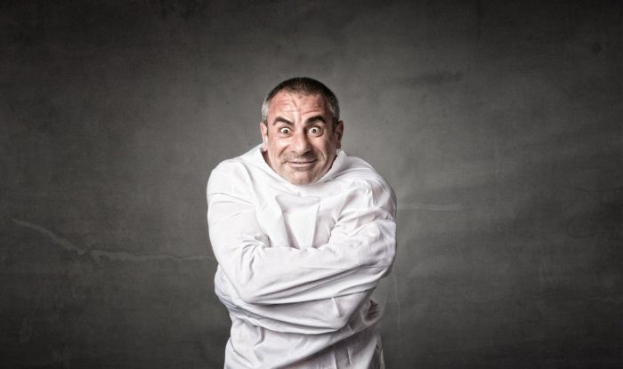
Thanks to Hollywood movies and chilling media headlines, the word "psychopath" instantly conjures up images of crime scenes, brutal killers, and people with an entirely dead-eyed stare. Anyone familiar with Patrick Bateman from American Psycho has a general idea of this trope.
However, a leading expert told The Post that in real life, psychopaths are far more likely to be armed with personal charm, making them dangerous in a completely different way.
"People tend to think that all psychopaths are violent," explains Leanne ten Brinke, an associate professor of psychology at the University of British Columbia (Okanagan) and author of the book Poisonous People. "While psychopathy is indeed a risk factor for violence, violence itself is not considered a defining characteristic of the condition."
According to ten Brinke, by limiting our understanding of psychopaths to violent criminals, we overlook the manipulative, callous, impulsive, and antisocial behaviors that can destroy our relationships and cause deep psychological trauma.
Contrary to cultural stereotypes, most psychopaths don’t carry a knife in their pocket—they carry charisma. They are confident, charming, and highly socially adapted. To mask their lack of empathy, a psychopath develops superficial charm and manipulation skills to appear as the perfect partner, boss, or job candidate. This also explains recent studies showing that individuals with psychopathic traits are incredibly successful on dating apps.
Psychopathy, along with sadism, narcissism, and Machiavellianism, is part of the so-called "Dark Tetrad" of personality traits. Despite their differences, they share two core characteristics: emotional callousness and a propensity for manipulation.
Leanne ten Brinke emphasizes that psychopathy manifests in enduring patterns that can be traced over years and across various life contexts. "Anyone can lie or act selfishly once in a while. But people with a psychopathic personality structure do this constantly, without experiencing the slightest remorse, taking responsibility, or even attempting to change. Track the system," the expert advises.
Key Red Flags
While diagnoses should be made exclusively by licensed professionals, ten Brinke highlighted key markers that should put you on alert:
-
Conflict of Interest: Observe how a person behaves when your goals, needs, or well-being clash with their desires. Do they resort to manipulation, lying, gaslighting, blame-shifting, and striving to "win" at all costs?
-
Rule-Breaking: Psychopaths regularly violate laws, job descriptions, unwritten social norms, and the personal boundaries of those around them.
-
Eerie Coolness (Biological Marker): Absolute emotional calmness in an objectively frightening or stressful situation is one of the clearest biological indicators. In most people, stress alters the voice, accelerates the heart rate, and causes sweating. In psychopaths, this "internal alarm button" doesn't work—their bodies do not react to fear or the threat of punishment; they are virtually impossible to catch off guard or frighten.
-
Lack of Pupil Response: Another physiological cue is that their pupils do not dilate when viewing shocking or terrifying images.
The Evolutionary "Fast Life" Strategy
The promiscuity often associated with psychopathy is explained by the expert as an evolutionary "fast life strategy."
"While most people are wired for cooperation, honesty, generosity, and investing resources into long-term relationships, psychopaths choose the opposite path. Their strategy is riskier, focusing on immediate gratification and short-term connections," says ten Brinke.
This strategy works precisely because it is an anomaly. If there were too many psychopaths, society would lose trust, and deceiving people would become much harder. Fortunately, in its clinical form, psychopathy is rare—the expert estimates it affects only about 1% of the population.
To spot a "poisonous" personality, Leanne ten Brinke recommends using the "transcript test" method: "Forget about the pleasant emotions you felt during the interaction, and focus exclusively on the dry facts: specific words, statements, and promises. If you have a recording of the conversation, transcribe it into text. You'll be surprised by how vague, contradictory, or completely meaningless the person's statements turn out to be, even though you left the meeting completely captivated by them."
If the text of the conversation radically contradicts your pleasant impression of it, there is a high probability that you were just sold a dose of superficial charm. In such situations, the expert also advises involving third parties: groups of people are much more effective at detecting deception than individuals.
Follow NEWS.am STYLE on Facebook, Twitter and Instagram

- The Boy Who Looks Like Boris Johnson: Why Steal Renoir at All? A robbery at the Louvre is easy enough to understand. Surely there isn’t a person alive who wouldn’t fancy hanging a Gericault or Leonardo in the guest bathroom. The same goes for the Musée d’Orsay and even the Centre Pompidou — French treasure houses crammed with extraordinary art practically begging for a daring heist. But the Renoir Museum? It is hard to imagine why anyone would bother, writes The Guardian...
- Labubu Meets LVMH: Pop Mart Opens Flagship Store in Paris Chinese collectible designer-toy maker Pop Mart International is continuing its aggressive global expansion despite some cooling in overseas sales. The company has announced the opening of its first European flagship store in Paris, on the prestigious Boulevard Haussmann, next door to the iconic department stores Galeries Lafayette and Printemps, according to the South China Morning Post...
- A year aboard a luxury liner: £56,000 cruise spans the globe from Alaska to Zanzibar A two-week cruise may sound like the ultimate luxury. But what if you could spend an entire year at sea, waking up every day in a different corner of the planet...
- The garden’s fussy aristocrat: Essential Japanese maple care tips for a flawless red color Japanese maples (Japanese Acers) are true aristocrats of the garden — but they can be remarkably temperamental. To keep your tree displaying luxurious wine-red foliage, it needs the right care, the perfect location and one particularly important treatment...
- Buying century-old trees is the new status symbol among billionaires Today’s super-rich don’t want to spend years waiting for saplings to grow. The luxury landscaping industry is booming with a new obsession: transplanting enormous mature trees — from oaks and palms to baobabs and magnolias — directly into the estates of the wealthy, The New York Times reports...




-
16:29, September 9
The Boy Who Looks Like Boris Johnson: Why Steal Renoir at All? -
15:49, September 9
Labubu Meets LVMH: Pop Mart Opens Flagship Store in Paris -
15:22, September 9
Where Has Lady Gaga Gone? Singer’s Disappearance Sparks Secret Wedding Rumors -
14:37, September 9
Current “Miss Austria” Dies Suddenly at 22 -
14:10, September 9
Cardi B Shows Off Her $15,000 Diamond Butt Piercing -
13:22, September 9
“No Kissing”: Billy Baldwin Vows Never to Work With Sharon Stone Again -
12:38, September 9
A Joke That Went Too Far: Gwyneth Paltrow Reveals How Her Viral “Vagina-Scented” Candle Came to Be -
12:17, September 9
Nicolas Cage’s $10.5 Million Luxury Malibu Mansion Nearly Swallowed by Giant Sinkhole -
11:51, September 9
Trump’s Generous Gifts to Young Female Aides: Each Received $45,000 -
11:36, September 9
Elon Musk Wanted Children “Before the Civil War” and Offered $40 Million for Silence: Shocking Claims by His Former Partner -
10:43, September 9
Deep Plunges, Sheer Looks and Barely Any Fabric: Kim Kardashian Shares Archive of Revealing Fittings -
23:01, September 8
A year aboard a luxury liner: £56,000 cruise spans the globe from Alaska to Zanzibar
All materials

@NEWSam_STYLE
@NEWSam_STYLE
- Archive