


NEWS.am STYLE

NEWS.am STYLE

NEWS.am STYLE
NEWS.am STYLE

The 23rd "Golden Apricot" Yerevan International Film Festival has kicked off

NEWS.am STYLE

NEWS.am STYLE

NEWS.am STYLE

NEWS.am STYLE

Nikos Vertis to perform in Armenia for the 3rd time at the invitation of “ACVA BUILDINGS”

NEWS.am STYLE

NEWS.am STYLE

NEWS.am STYLE

NEWS.am STYLE

NEWS.am STYLE

NEWS.am STYLE

NEWS.am STYLE

NEWS.am STYLE


Global Luxury Spending Reaches $1.67 Trillion, But the Consumer Has Changed
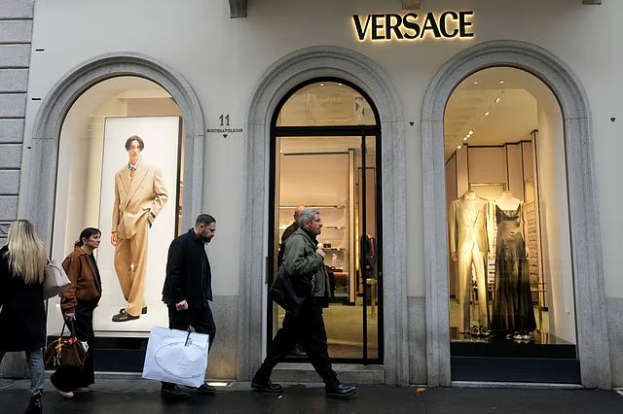
In 2025, global luxury spending reached an impressive $1.64 trillion. However, the industry enters the second half of 2026 with a fundamentally different type of consumer compared to the one that fueled the explosive growth of the post-pandemic era.
According to a new study by the consulting firm Bain & Company and the Altagamma association, the market is stabilizing in 2026, with total spending projected to land between $1.64 trillion and $1.67 trillion. This represents a net growth of just 1% to 3% (at constant exchange rates), Gulf News reports.
While the final figure remains massive, winning over clients is becoming increasingly difficult for brands. Consumers have become more selective, tourist flows are uneven, China’s recovery remains slow, and luxury houses are forced to re-prove their relevance to consumers who now have more choices and less patience.
Personal Luxury: Steering Toward a Slow Recovery
The personal luxury goods market (apparel, leather goods, watches, jewelry, and beauty) dipped slightly in 2025 to $407.78 billion (down from $414.62 billion in 2024). In 2026, Bain expects a moderate recovery for this segment of 1% to 4%, reaching between $415.75 billion and $424.87 billion.
This rebound depends on several factors. The analysts' baseline scenario assumes that tensions in the Middle East will continue to ease, local spending will remain stable, and demand in China will improve. A more powerful push, however, would require the US market to regain its former momentum. "The luxury market is stabilizing, but it's not a return to the old rhythm—it's the emergence of a new one," notes Claudia D’Arpizio, a senior partner at Bain & Company. "Luxury is still highly desirable, but consumers are less willing to overpay for products that feel derivative, over-distributed, or disconnected from their real lifestyle."
Experiences Over Things: The Experiential Economy Leads the Way
The overarching trend of 2026 is a shift in focus from material goods to experiences. Consumer interest in premium experiences is growing 1.5 times faster than demand for physical products.
This is precisely why categories like luxury hospitality, private jet rentals, yachting, cruises, and fine dining are holding their ground much better than traditional retail. Affluent individuals continue to spend, but they are now investing their money in travel, wellness, and memories.
Amid a rebalancing of investment portfolios, the art market is returning to growth. Conversely, luxury car manufacturers remain under pressure due to the industry’s complex transition to electric vehicles.
Geographical Breakdown: US on the Rise, Europe Awaits Tourists
-
United States: Demonstrating solid dynamics driven by rising sales in apparel, jewelry, and beauty. In the first quarter, American luxury brands grew by 4%. Notably, younger consumers are spending more actively than the older generation, and spending among upper-middle-class households is rising nearly twice as fast as that of ultra-high-net-worth individuals. This provides the US market with a broader foundation.
-
China: The recovery is proceeding cautiously. Online luxury sales grew by 8% in the first quarter, with consumers showing the most interest in ready-to-wear rather than status bags and leather accessories.
-
Europe: Currently lagging behind due to its heavy reliance on tourism. In February, spending by foreign travelers dropped by about 7%. Due to regional conflicts, the Middle Eastern luxury consumer base shrank by 30% at the start of 2026. However, May tax-free shopping data has already indicated a resurgence among American, Chinese, and Middle Eastern tourists.
In Trend: Fine Jewelry and Vintage
Consumer selectivity is clearly visible across product categories:
-
The jewelry sector leads the market. Apparel, fragrances, and eyewear are holding their ground better than color cosmetics.
-
Leather goods and footwear remain under pressure, though the situation is beginning to improve.
-
The watch market is transforming: after a period driven by hype, collectors are once again valuing rare craftsmanship and uniqueness.
The resale (secondary) market has emerged as a major challenge for fashion houses. Online search queries for vintage bags have more than doubled compared to last year. Roughly half of all luxury shoppers now check the secondary market before buying a new item. As a result, brands are increasingly competing with their own archival collections.
The Role of AI and the "Sportification" of Luxury
Artificial intelligence has firmly integrated into the purchasing process. Around half of luxury goods consumers already use AI while shopping, and almost all plan to continue doing so. One in four uses AI to discover new brands and products, while two out of three use it to compare product specifications.
For luxury brands, this highlights the need to look beyond traditional boutiques and social networks. If a client filters and compares products through AI, a brand must be visible to these algorithms. "The appetite for luxury remains strong, but tolerance for disappointing experiences or products has vanished," summarizes Federica Levato, a senior partner at Bain & Company EMEA. "Over 70% of clients who have drifted away from brands plan to return to luxury shopping, but it is by no means guaranteed that they will return to the same labels."
The industry is actively searching for new touchpoints with its audience. Sport has become a crucial platform: over 60% of the luxury market's total value today is represented by brands that have sponsored sporting events over the past 12 months. Additionally, bookings for immersive dining and entertainment experiences have jumped by 15%, while demand for off-the-beaten-path luxury travel has risen by 11%.
Follow NEWS.am STYLE on Facebook, Twitter and Instagram

- The Boy Who Looks Like Boris Johnson: Why Steal Renoir at All? A robbery at the Louvre is easy enough to understand. Surely there isn’t a person alive who wouldn’t fancy hanging a Gericault or Leonardo in the guest bathroom. The same goes for the Musée d’Orsay and even the Centre Pompidou — French treasure houses crammed with extraordinary art practically begging for a daring heist. But the Renoir Museum? It is hard to imagine why anyone would bother, writes The Guardian...
- Labubu Meets LVMH: Pop Mart Opens Flagship Store in Paris Chinese collectible designer-toy maker Pop Mart International is continuing its aggressive global expansion despite some cooling in overseas sales. The company has announced the opening of its first European flagship store in Paris, on the prestigious Boulevard Haussmann, next door to the iconic department stores Galeries Lafayette and Printemps, according to the South China Morning Post...
- A year aboard a luxury liner: £56,000 cruise spans the globe from Alaska to Zanzibar A two-week cruise may sound like the ultimate luxury. But what if you could spend an entire year at sea, waking up every day in a different corner of the planet...
- The garden’s fussy aristocrat: Essential Japanese maple care tips for a flawless red color Japanese maples (Japanese Acers) are true aristocrats of the garden — but they can be remarkably temperamental. To keep your tree displaying luxurious wine-red foliage, it needs the right care, the perfect location and one particularly important treatment...
- Buying century-old trees is the new status symbol among billionaires Today’s super-rich don’t want to spend years waiting for saplings to grow. The luxury landscaping industry is booming with a new obsession: transplanting enormous mature trees — from oaks and palms to baobabs and magnolias — directly into the estates of the wealthy, The New York Times reports...




-
16:29, September 9
The Boy Who Looks Like Boris Johnson: Why Steal Renoir at All? -
15:49, September 9
Labubu Meets LVMH: Pop Mart Opens Flagship Store in Paris -
15:22, September 9
Where Has Lady Gaga Gone? Singer’s Disappearance Sparks Secret Wedding Rumors -
14:37, September 9
Current “Miss Austria” Dies Suddenly at 22 -
14:10, September 9
Cardi B Shows Off Her $15,000 Diamond Butt Piercing -
13:22, September 9
“No Kissing”: Billy Baldwin Vows Never to Work With Sharon Stone Again -
12:38, September 9
A Joke That Went Too Far: Gwyneth Paltrow Reveals How Her Viral “Vagina-Scented” Candle Came to Be -
12:17, September 9
Nicolas Cage’s $10.5 Million Luxury Malibu Mansion Nearly Swallowed by Giant Sinkhole -
11:51, September 9
Trump’s Generous Gifts to Young Female Aides: Each Received $45,000 -
11:36, September 9
Elon Musk Wanted Children “Before the Civil War” and Offered $40 Million for Silence: Shocking Claims by His Former Partner -
10:43, September 9
Deep Plunges, Sheer Looks and Barely Any Fabric: Kim Kardashian Shares Archive of Revealing Fittings -
23:01, September 8
A year aboard a luxury liner: £56,000 cruise spans the globe from Alaska to Zanzibar
All materials

@NEWSam_STYLE
@NEWSam_STYLE
- Archive